In many textile printing units, rising ink costs quietly eat into profit margins every single month. Most businesses initially assume the solution is simple — buy cheaper ink or reduce ink density. However, that approach usually creates bigger problems like dull colors, unstable shades, and customer complaints.
The real challenge is not using less ink. The real challenge is learning how to reduce textile ink usage while still maintaining sharp output, proper color depth, and production consistency.
Interestingly, a large amount of ink wastage happens long before the final fabric even reaches dispatch.
The Problem Often Starts with Incorrect Machine Settings
Many operators increase ink levels thinking it will improve brightness or richness. In reality, excessive ink application often creates oversaturation instead of better quality.
You can usually notice this when:
- colors start bleeding slightly,
- drying time increases,
- or fabrics feel overloaded after printing.
Digital textile printing works best when ink deposition remains balanced and controlled. Proper machine calibration helps achieve cleaner output while consuming less ink overall.
Poor Maintenance Creates Hidden Ink Loss
One of the most overlooked reasons behind high ink consumption is inconsistent machine maintenance.
When print heads are partially clogged or misaligned, operators often compensate by increasing print passes or ink flow. This temporarily hides the issue but silently increases ink wastage throughout production.
Regular maintenance helps maintain:
- accurate droplet placement,
- smoother ink flow,
- stable print consistency,
- and cleaner color reproduction.
As a result, machines perform more efficiently without unnecessary ink usage.
Color Profiles Matter More Than Most Businesses Realize
In many factories, production teams repeatedly adjust colors manually during printing. This trial-and-error method wastes both ink and production time.
Proper color profiling creates a more predictable workflow. Once profiles are optimized correctly:
- shades become easier to repeat,
- sampling becomes faster,
- and fewer corrections are needed during production.
This directly helps businesses reduce textile ink usage without affecting visual quality.
Fabric and Paper Selection Also Affect Consumption
Not every fabric behaves the same way during printing. Some materials absorb excessive ink, while poor transfer paper may fail to release ink efficiently during sublimation.
Because of this, compatible fabrics and reliable paper play a major role in controlling ink consumption.
Better material compatibility improves:
- transfer efficiency,
- shade stability,
- print sharpness,
- and overall resource utilization.
Reducing Rework Improves Profitability
In textile printing, rework is one of the biggest sources of hidden cost. A rejected batch does not only waste fabric — it also wastes ink, production hours, and machine capacity.
Businesses that maintain stable workflows usually experience:
- fewer print rejections,
- lower sampling waste,
- and more predictable production output.
Over time, this creates a significant difference in operational profitability.
Conclusion
Trying to reduce ink consumption by simply lowering ink density rarely creates long-term improvements in professional textile printing. Real efficiency comes from understanding how the entire production process works together — machine calibration, print settings, maintenance, color control, and material compatibility.
Businesses that focus on process optimization instead of shortcuts are generally able to reduce textile ink usage while maintaining stronger print quality, better consistency, and more stable production performance.
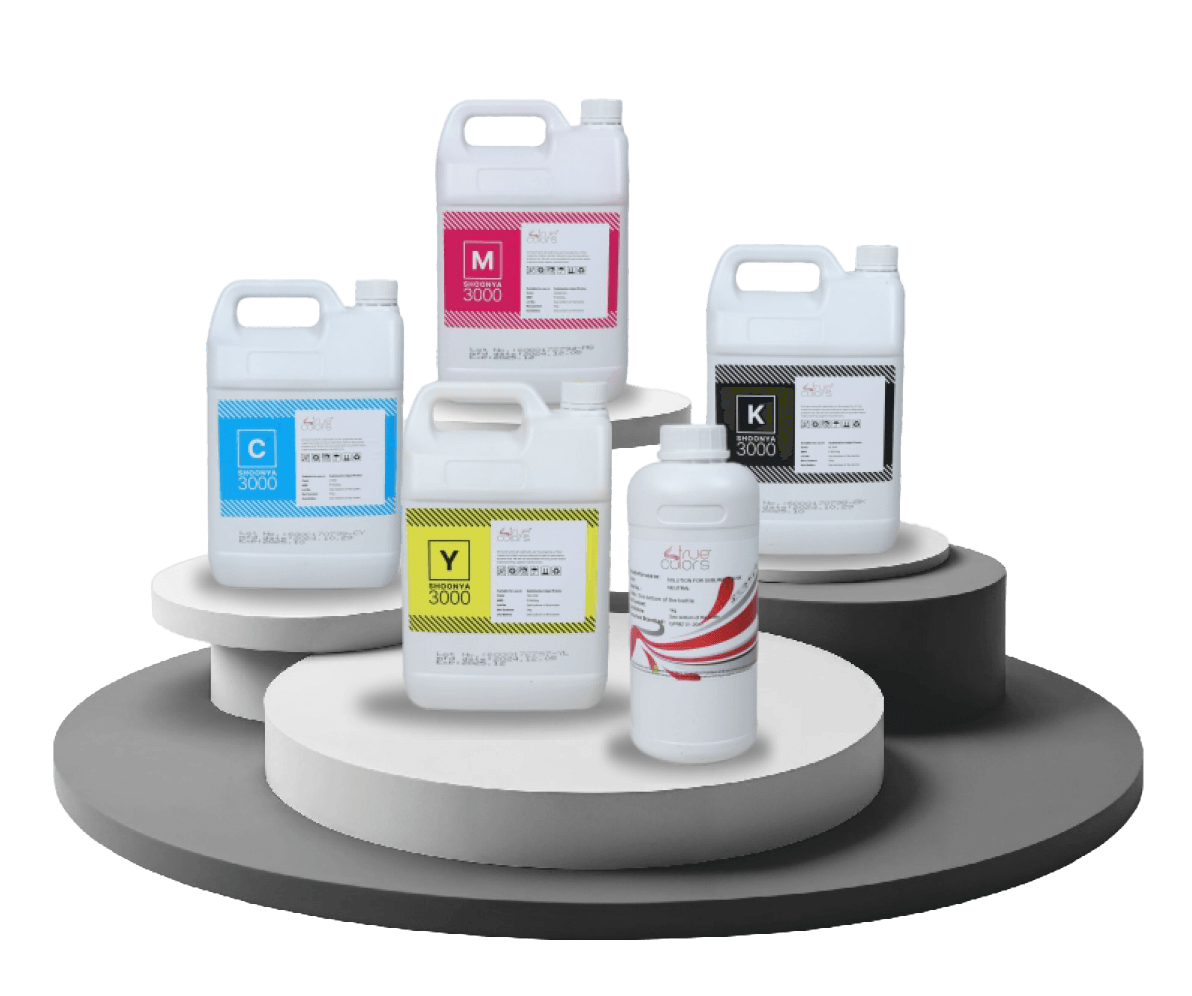
This is where the role of the ink itself becomes equally important. Inkia by True Colors is developed to support controlled ink behavior, stable color output, and smoother production efficiency across printing operations. Combined with the right workflow and printing conditions, the objective is not just reducing ink usage — but achieving more predictable and reliable textile printing results over time.