Stable Ink Creates Stable Production
In digital textile printing, ink is often discussed only in terms of color strength and price. Many manufacturers compare inks based on shade, vibrancy, or cost per litre. While these factors matter, they do not show the complete picture.
For production units that run machines for long hours, ink stability becomes one of the most important factors in daily printing performance.
Ink stability in digital textile printing refers to how consistently the ink behaves during storage, circulation, printing, and long production runs. A stable ink should maintain proper flow, color behavior, viscosity, and print performance over time.
When ink remains stable, the machine can run with fewer interruptions and the printed fabric can maintain more predictable quality.
Long-Run Printing Reveals Ink Performance
Short sampling runs rarely expose the full behavior of an ink. A print may look good during a trial, but the real test begins when the machine runs continuously for several hours.
During long-run production, unstable ink may create issues such as shade variation, weak flow, nozzle disturbance, inconsistent droplet formation, or print defects. These issues may not appear immediately, but they can gradually affect output quality as the production continues.
For textile manufacturers handling bulk orders, this becomes a serious concern. Even a small change in color or print sharpness across a long order can lead to rejection, reprinting, and loss of production time.
This is why ink selection should be based on production reliability and not only on the first sample result.
Ink Stability Protects Printheads
Printheads are one of the most sensitive and valuable components in a digital textile printing machine. Their performance depends heavily on ink quality, filtration, flow behavior, and machine maintenance.
If the ink does not remain stable, it can increase the risk of nozzle clogging, uneven firing, and flow-related problems. These issues can affect print quality and may also increase maintenance pressure on the production team.
Stable ink supports smoother movement through the system and helps maintain more consistent printhead performance during daily production. It also reduces unnecessary cleaning cycles, which can save time and improve machine availability.
For manufacturers, this means ink stability is not just a quality issue. It is also connected to machine health and long-term production cost.
Color Consistency Depends on Ink Behavior
In textile printing, color consistency is a major requirement, especially for bulk fabric orders, export production, fashion repeats, and brand-approved shades.
When ink behavior changes during production, the final fabric may show visible shade differences. This can become a major challenge when a customer expects the same design to match across different lots.
Ink stability helps reduce such variation by maintaining predictable color behavior across production cycles. The machine settings, fabric type, environmental conditions, and ink profile all play a role, but the ink itself must remain dependable.
A good digital textile printing setup should therefore consider ink as part of the complete production system, not as a standalone consumable.
Storage and Handling Also Matter
Even good-quality ink can perform poorly if it is not stored or handled properly. Temperature, dust, contamination, exposure, and poor handling practices can affect ink behavior before it reaches the machine.
Manufacturers should maintain clean storage conditions and ensure that operators follow proper ink handling discipline. The goal should be to protect the ink from unnecessary instability and maintain its expected performance throughout production.
Ink stability is built through both product quality and production discipline. When both work together, manufacturers can achieve better print reliability.
Conclusion
Ink stability in digital textile printing directly affects long-run performance, printhead reliability, color consistency, and production confidence. For manufacturers who print continuously, the right ink can help reduce interruptions, avoid repeated corrections, and support more predictable fabric output.
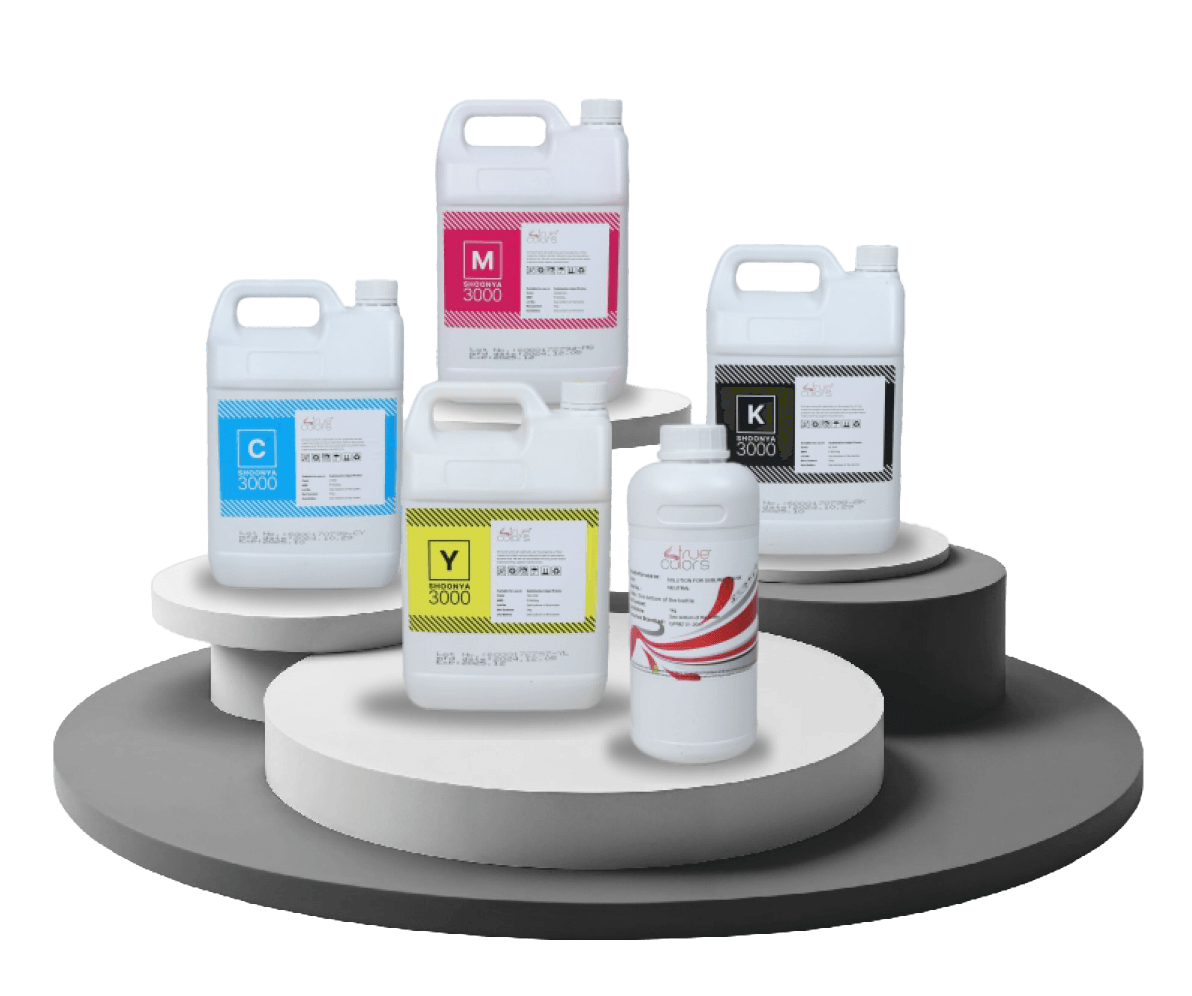
This is where Inkia by True Colors becomes relevant for textile printers looking at production-focused ink performance. Instead of treating ink as only a consumable, True Colors connects ink with the larger printing ecosystem of machines, fabrics, sublimation paper, and service support. This helps manufacturers evaluate ink in the way it actually performs on the production floor.
For businesses running long production cycles, True Colors’ ecosystem approach allows better coordination between machine performance, ink behavior, and technical support. This makes ink selection a more reliable production decision rather than a trial-and-error activity.