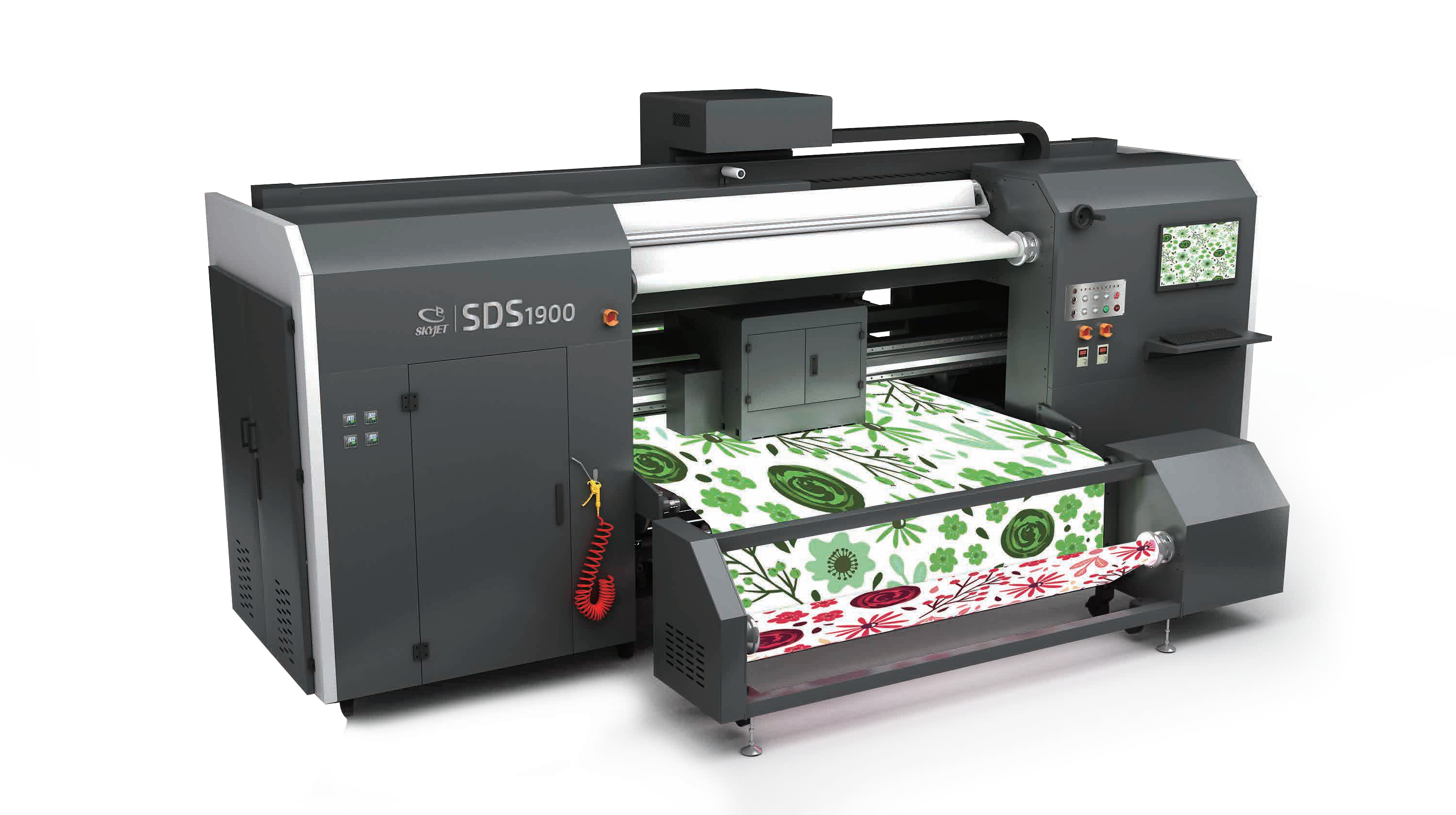
Digital textile printing units are built for speed.
But speed alone does not guarantee efficiency.
Many factories invest in advanced machines, yet still struggle with delays, rising costs, and inconsistent output. The reason often lies in unresolved digital textile printing bottlenecks — hidden inefficiencies that silently impact production.
Understanding these bottlenecks is the first step toward eliminating them.
Ink Consumption & Cost Misalignment
One of the most overlooked bottlenecks is uncontrolled ink consumption.
Factories often focus on:
- Ink price per litre
But ignore:
- Ink usage per meter
Incorrect profiling or suboptimal machine settings increase ink consumption, raising the overall cost per meter. This directly tightens profit margins even when production volume appears healthy.
Unchecked ink behavior becomes a recurring operational bottleneck.
Machine Downtime & Service Delays
Even high-speed digital printers require:
- Calibration
- Preventive maintenance
- Printhead checks
- Mechanical inspections
Delayed technical support or unplanned stoppages interrupt production cycles. In bulk textile operations, even a few hours of downtime can disrupt delivery schedules.
Service gaps are a major contributor to digital textile printing bottlenecks.
Printhead & Ink Compatibility Issues
When ink configuration does not align perfectly with machine specifications, it may lead to:
- Increased cleaning cycles
- Irregular droplet formation
- Nozzle blockages
- Output inconsistency
These issues slow down throughput and increase maintenance frequency, affecting daily meter targets.
Fabric Feeding & Alignment Errors
Digital printing is highly sensitive to:
- Fabric tension
- Feeding accuracy
- Roll stability
Even slight misalignment can cause:
- Banding
- Registration shifts
- Repeat mismatches
Such defects lead to reprints and material wastage — reducing effective production capacity.
Inconsistent Color Output Across Batches
Export-focused units face another challenge: repeatability.
If color calibration drifts over time, it results in:
- Shade variation
- Buyer rejection
- Fabric reprocessing
Inconsistent color control slows down approvals and impacts long-term buyer trust.
Lack of Production Data Monitoring
Modern digital textile production should be data-driven.
Without tracking:
- Ink consumption trends
- Output per shift
- Maintenance intervals
- Efficiency metrics
Factories operate reactively instead of proactively.
Lack of monitoring creates invisible inefficiencies that accumulate over time.
The Real Impact of Production Bottlenecks
When digital textile printing bottlenecks go unresolved, factories experience:
- Higher cost per meter
- Reduced daily output
- Increased machine wear
- Tightened profit margins
- Delivery delays
The problem is rarely one major failure.
It is usually multiple small inefficiencies working together.
Eliminating Bottlenecks: A System Approach
To overcome bottlenecks, digital textile units must focus on:
- Correct ink profiling
- Optimised machine configuration
- Regular preventive service
- Operator training
- Continuous performance analysis
Production efficiency improves when machine, ink, and service systems work in alignment.
Conclusion
Digital textile printing is a high-speed industry — but without control, speed turns into cost.
Identifying and resolving digital textile printing bottlenecks allows manufacturers to:
- Stabilize production
- Protect margins
- Increase output consistency
- Improve long-term operational reliability
Efficiency is not just about installing advanced machinery — it is about managing the entire production ecosystem. True Colors helps textile manufacturers optimise their digital printing processes for stable and efficient production.