How Digital Printing Helps Textile Businesses Serve Multiple Industries
Textile Printing Is Serving More Markets Than Ever Digital textile printing is no longer limited to one type of fabric or one kind of customer. Today, textile businesses use digital printing to serve fashion, home textiles, sportswear, advertising, exports, uniforms, décor, and custom product categories. This makes digital printing for textile industries a strong growth opportunity. The same printing business can serve multiple markets if it has the right technology, fabric understanding, ink system, workflow, and production planning. For manufacturers, this creates a chance to diversify and reduce dependency on only one customer segment. Fashion Requires Speed and Design Flexibility Fashion brands need fresh prints, faster sampling, shorter runs, and frequent collection updates. Digital printing supports this by allowing manufacturers to print different designs without long setup delays. This helps brands test more ideas and respond faster to market trends. For textile printers, fashion can become a strong segment when they can maintain color consistency, fabric feel, and quick turnaround. Home Textiles Need Coordinated Collections Home textile businesses need printed fabrics for curtains, cushions, bedsheets, table linen, and décor products. Digital printing helps create coordinated collections with matching patterns and multiple colorways. This gives brands more creative freedom and helps manufacturers offer design variety across product categories. For home textile applications, fabric selection and print consistency are especially important because products are often sold as part of a visual theme. Sportswear and Advertising Need Polyester Printing Strength Sportswear, activewear, flags, banners, and soft signage often use polyester-based fabrics. Sublimation printing is commonly used in these segments because it can support vibrant color and durable transfer when the process is controlled well. For manufacturers, these industries offer opportunities in teamwear, promotional displays, event branding, fitness apparel, and performance fabrics. The right sublimation paper, ink, fabric, and transfer process are important for stable output. Export and Custom Production Need Reliability Export buyers need consistency, quality control, and timely delivery. Custom production needs flexibility and smaller batch handling. Digital printing can serve both types of demand when the production system is stable. Manufacturers who can manage different industries with proper process control can create stronger business opportunities. However, diversification should be planned carefully. Each industry has different expectations, and production should be aligned accordingly. Conclusion Digital printing for textile industries allows businesses to serve fashion, home textiles, sportswear, advertising, exports, and custom production with greater flexibility. It helps manufacturers diversify, respond faster, and build new revenue opportunities. True Colors supports this multi-industry approach through a complete digital printing ecosystem. With digital textile printing machines, Inkia by True Colors inks, True Colors Sublimation Paper, fabrics, commercial inkjet expansion, and TRUE TEAM service support, True Colors helps businesses prepare for different market applications. For textile manufacturers looking to grow across multiple industries, True Colors provides the ecosystem needed to move with flexibility while maintaining production reliability.
Why Fabric Testing Matters Before Bulk Digital Textile Printing
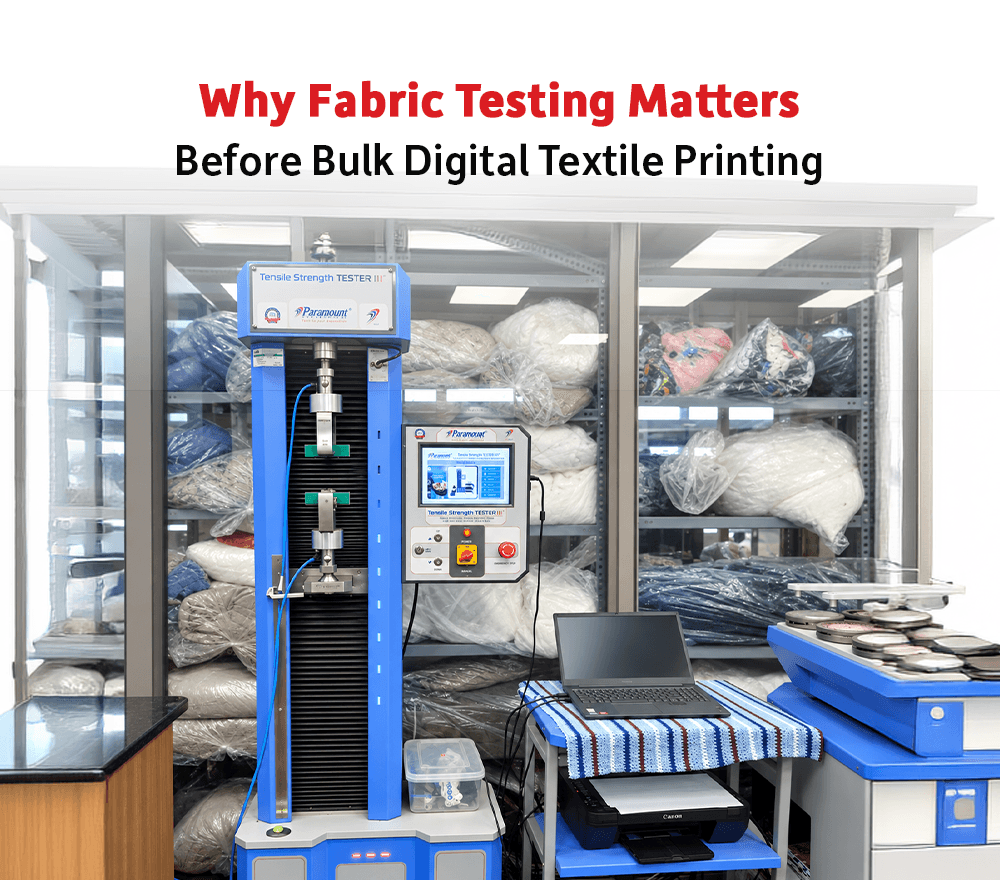
Bulk Printing Should Never Start Without Fabric Testing In digital textile printing, fabric testing is one of the most important steps before bulk production. A fabric may look suitable at first, but its behavior during printing, transfer, drying, washing, or finishing may reveal problems later. Fabric testing before digital textile printing helps manufacturers understand how a fabric will respond before large quantities are produced. Skipping this step can lead to color mismatch, print defects, shrinkage, poor fastness, uneven absorption, or rejection. For manufacturers handling serious production, fabric testing is not an extra step. It is a risk-control measure. Fabric Behavior Can Change During Printing Different fabrics respond differently to ink, heat, pressure, moisture, and finishing. A polyester fabric may behave differently during sublimation transfer based on its construction and coating. A cotton fabric may respond differently depending on pre-treatment and ink system. A blended fabric may create additional challenges because more than one fiber is involved. Testing helps identify these differences early. When manufacturers understand fabric behavior before bulk production, they can choose the right printing method and settings. Testing Helps Control Color Expectations Color output is strongly affected by fabric type. The same artwork and ink may appear different on different fabrics. Texture, whiteness, absorbency, surface finish, and fiber composition can all influence final color. Before confirming bulk printing, manufacturers should test the design on the actual fabric that will be used for production. This helps improve communication with customers and reduces the chances of shade disputes later. Shrinkage and Finishing Must Be Checked Printing is not the only stage where fabric changes. Drying, steaming, heat transfer, washing, curing, and finishing can also affect fabric size, feel, and appearance. Testing helps identify whether the fabric will shrink, distort, lose softness, or show color change after processing. This is especially important for garments, home textiles, export fabrics, and products where final measurement and feel matter. A fabric that prints well but performs poorly after finishing can still create production problems. Testing Reduces Wastage and Rework Bulk rejection is expensive. It affects fabric cost, ink cost, machine time, labor, delivery timelines, and customer trust. Fabric testing helps reduce this risk by allowing problems to be corrected before large-scale production begins. It gives manufacturers a clearer understanding of which fabric, ink, process, and settings should be used. This leads to better planning and more predictable output. Conclusion Fabric testing before digital textile printing helps manufacturers avoid color variation, shrinkage, poor fastness, wastage, and production rejection. It supports better decision-making before bulk orders begin. True Colors is strongly relevant in this area because the brand works across fabrics, digital printing machines, inks, sublimation paper, and technical support. This gives manufacturers a more complete way to evaluate fabric performance before scaling production. For businesses that want fewer surprises during bulk printing, True Colors can help connect fabric testing with the larger production ecosystem, making output more controlled and reliable.
How Commercial Inkjet Helps Businesses Manage Personalized Print Communication
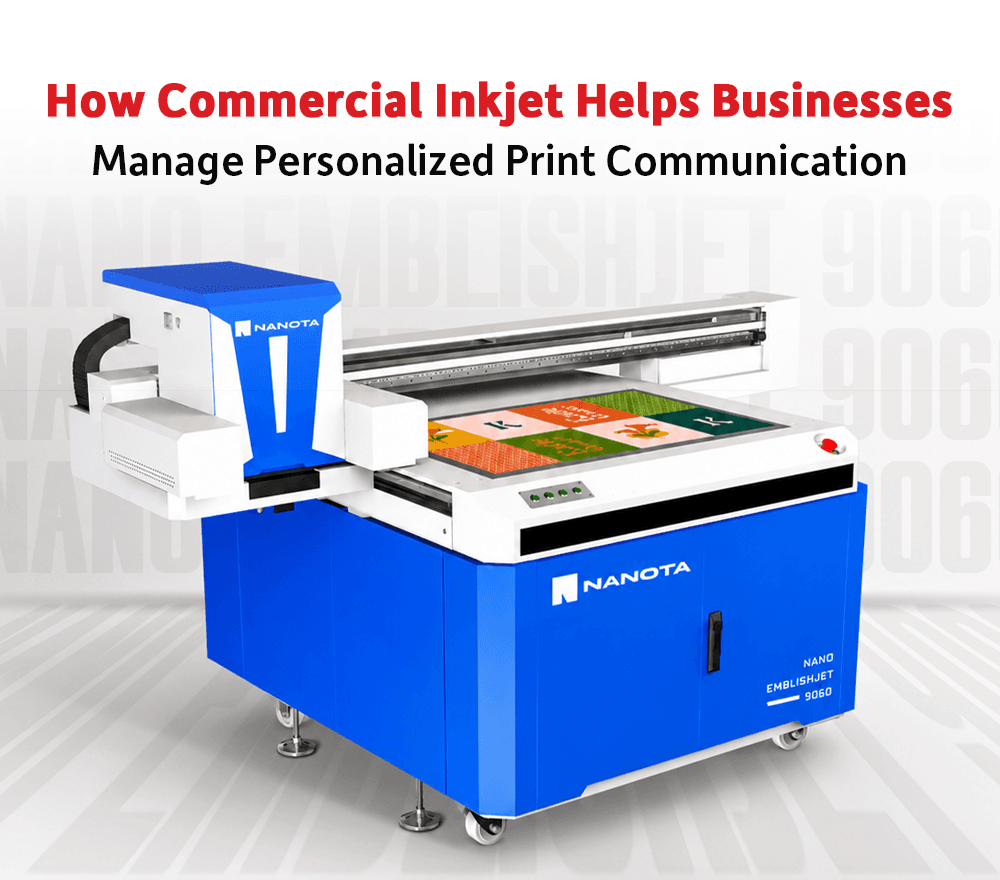
Print Communication Is Becoming More Personal Brands no longer communicate with every customer in the same way. Marketing, billing, education, publishing, finance, and service communication are becoming more targeted and data-driven. This has increased demand for personalized print communication. Commercial inkjet printing supports this shift because it allows print businesses to produce variable content at scale. Names, addresses, offers, codes, messages, images, and other details can change from one printed piece to another without stopping the production flow. For print businesses, this opens a strong opportunity in modern communication printing. Variable Data Printing Creates More Relevance Personalized print communication becomes powerful when printed material feels relevant to the recipient. A direct mail piece with a personalized offer, a statement with specific customer information, or an educational document customized for a group can create better engagement than generic communication. Commercial inkjet makes variable data printing practical because digital files can be connected with customer data and printed efficiently. This allows businesses to move beyond standard bulk printing into more targeted print solutions. Speed Helps Meet Campaign Timelines Marketing and communication campaigns often work with fixed dates. A delayed print job can affect the entire campaign. Commercial inkjet printing can help reduce turnaround time by supporting faster job changes and digital production workflows. This is useful for banks, telecom companies, retailers, publishers, educational institutions, and brands that need quick and accurate printed communication. Speed becomes more valuable when it is supported by consistency and reliable production. Short Runs Become More Practical Traditional print production may not always be suitable for small personalized batches because setup time and fixed costs can be high. Commercial inkjet makes short-run personalized printing more practical. Print businesses can produce smaller campaigns, segmented customer communication, regional content, or test campaigns without depending on large-volume commitments. This helps brands communicate more intelligently and helps printers offer more flexible services. Quality and Data Accuracy Must Work Together Personalized print communication requires both print quality and data accuracy. Even if the print looks good, incorrect personalization can damage customer trust. Print businesses must manage files, data, workflow, machine performance, and quality checks carefully. A successful personalized print job depends on technology as well as process discipline. Conclusion Personalized print communication is becoming more important as brands move toward targeted and customer-specific messaging. Commercial inkjet printing supports this need through variable data, faster production, short runs, and flexible campaign execution. True Colors Commercial Inkjet Printing division can help print businesses explore this opportunity with a solutions-focused approach. With digital printing experience and understanding of production reliability, True Colors supports businesses that want to move into modern commercial print applications. For printers looking to expand beyond standard jobs, True Colors can help build the foundation for personalized, flexible, and future-ready print communication.
Digital Printing for Activewear Fabrics: What Manufacturers Should Consider
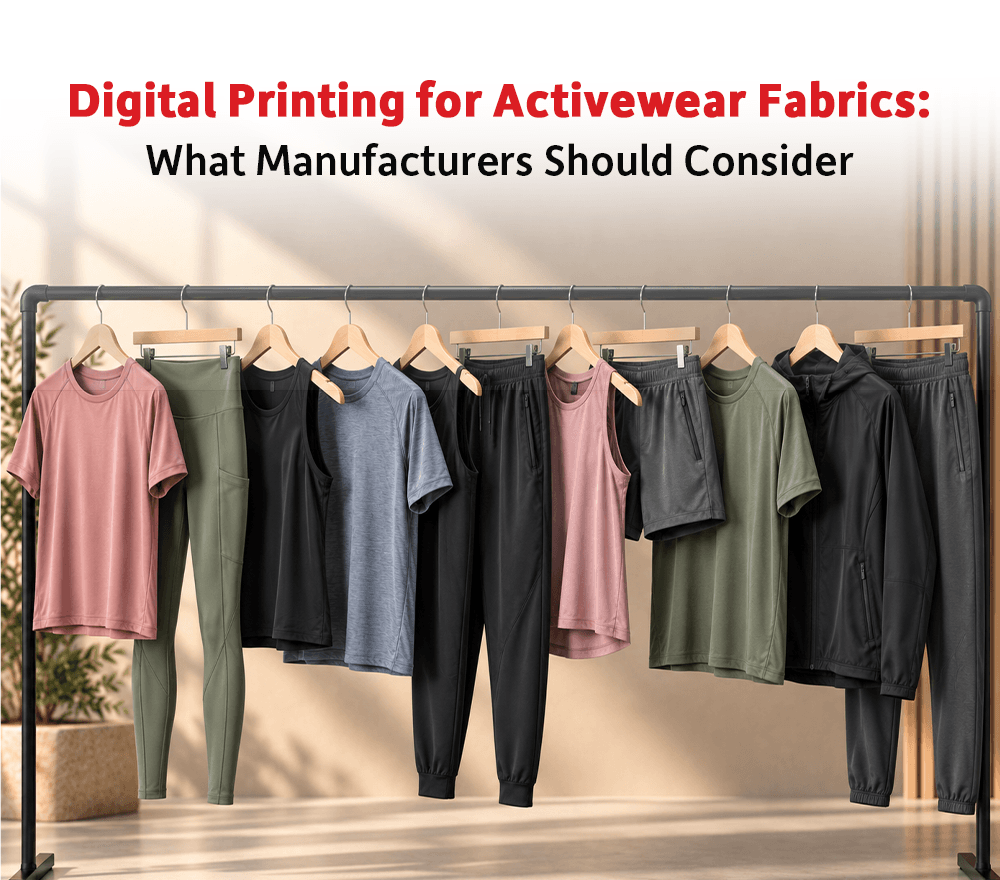
Activewear Needs Performance and Design Together Activewear has become one of the fastest-moving categories in textile and apparel. Customers want clothing that looks stylish but also performs well during movement, fitness, sports, travel, and daily wear. This makes digital printing for activewear fabrics an important opportunity for textile manufacturers. Activewear fabrics often require stretch, comfort, durability, color appeal, and repeated wash performance. The print should not only look attractive; it should also support the purpose of the garment. For manufacturers, activewear printing requires a balance between design flexibility and fabric performance. Polyester-Based Fabrics Are Common in Activewear Many activewear products use polyester or polyester-blend fabrics because of their lightweight feel, moisture handling, durability, and performance properties. For polyester-based activewear, sublimation printing is widely used because it can create vibrant prints while becoming part of the fabric surface during transfer. This makes sublimation suitable for leggings, jerseys, sports t-shirts, cycling wear, gym wear, and athleisure products. However, the final output depends on fabric quality, stretch behavior, ink performance, sublimation paper, and heat transfer control. Stretch Behavior Must Be Considered Activewear fabrics move with the body. This means the print must be suitable for stretch and repeated use. If the printing method or fabric selection is not correct, the final garment may show distortion, cracking, shade change, or uneven appearance when stretched. Manufacturers should test print behavior on the actual activewear fabric before bulk production. Testing helps check color output, stretch appearance, hand feel, wash result, and overall product performance. Design Flexibility Helps Brands Stand Out Activewear brands often use bold patterns, gradients, custom graphics, team prints, and limited edition designs. Digital printing supports this requirement by allowing detailed artwork and faster design changes. This is useful for sports teams, fitness brands, running clubs, yoga wear companies, and fashion-led athleisure labels. With digital printing, manufacturers can support both bulk activewear production and custom team or event-based designs. Consistency Is Important in Repeat Orders Activewear brands often reorder successful designs. When repeat orders come in, the new production should match the approved design and color as closely as possible. This requires stable ink, correct paper, controlled transfer settings, and reliable fabric quality. Manufacturers should maintain standard production records so that repeated activewear designs can be reproduced with better accuracy. Conclusion Digital printing for activewear fabrics helps manufacturers serve sportswear, athleisure, teamwear, and performance clothing markets with more design flexibility. However, activewear printing requires careful attention to fabric stretch, ink behavior, transfer quality, and repeat consistency. True Colors can support activewear manufacturers through a combination of digital textile printing machines, True Colors Sublimation Paper, Inkia by True Colors inks, fabrics, and technical support. This combination is especially useful for polyester-based activewear where transfer quality and color consistency matter. For businesses entering or expanding in activewear printing, True Colors helps connect performance fabric requirements with practical digital printing solutions.
Why Operator Training Is Important for Digital Textile Printing Success
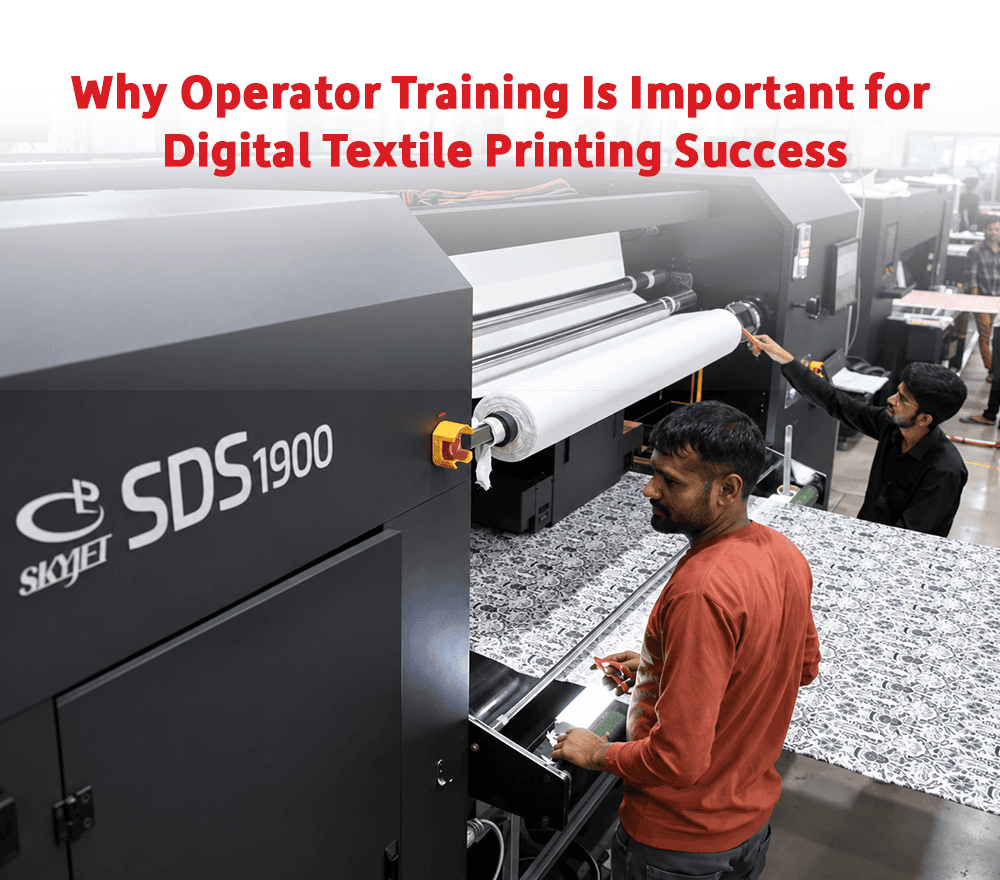
Good Machines Need Skilled Operators Digital textile printing machines are advanced production systems, but their performance depends heavily on the people who operate them. A good machine can still produce poor results if the operator does not understand file handling, machine settings, fabric loading, ink behavior, cleaning routines, and basic troubleshooting. Digital textile printing operator training is therefore essential for print quality, machine uptime, and production efficiency. In many factories, avoidable mistakes happen not because the machine is weak but because operators have not been trained properly for digital production. Operators Influence Print Quality Every Day Operators make several decisions during daily production. They load fabric, check nozzles, monitor print movement, adjust settings, observe ink flow, and respond to defects. If the operator does not understand the printing process, small issues can go unnoticed until they affect a larger quantity of fabric. A trained operator can identify early signs of problems such as missing lines, shade variation, fabric movement issues, paper handling problems, or unusual machine behavior. This helps reduce wastage and improves first-time-right production. Training Helps Reduce Downtime Downtime is one of the biggest challenges in textile printing. Some downtime is caused by technical faults, but a significant part can also come from incorrect handling or delayed response. Trained operators understand daily maintenance routines, cleaning discipline, shutdown procedures, and basic troubleshooting. They are more likely to prevent small issues from becoming major breakdowns. For manufacturers, this means better machine availability and more stable production planning. Digital Printing Requires Process Understanding Digital printing is not only mechanical operation. It also involves understanding design files, color expectations, fabric behavior, ink compatibility, and finishing impact. Operators should know how their actions affect final fabric quality. For example, improper fabric loading can affect alignment. Wrong file handling can affect print scale. Poor cleaning habits can affect nozzle performance. Incorrect settings can affect color or sharpness. When operators understand the complete process, they become more responsible and effective on the production floor. Training Supports Business Growth As production grows, businesses may add more machines, shifts, operators, and order categories. Without proper training, quality can become inconsistent between teams. Standardized operator training helps maintain discipline across shifts and supports business expansion. A trained production team gives management more confidence to handle larger orders and tighter timelines. For digital textile printing businesses, operator skill is not a secondary factor. It is part of production strength. Conclusion Digital textile printing operator training is important for machine handling, quality control, maintenance, downtime reduction, and long-term production efficiency. A skilled operator can protect machine performance and improve daily output reliability. True Colors adds value through TRUE TEAM by supporting businesses beyond machine installation. Operator guidance, service support, maintenance understanding, and production assistance help manufacturers use their machines more effectively. For businesses investing in digital textile printing, True Colors helps ensure that technology is supported by trained people, making production more dependable and scalable.
What Textile Manufacturers Should Know Before Expanding Into Digital Printing
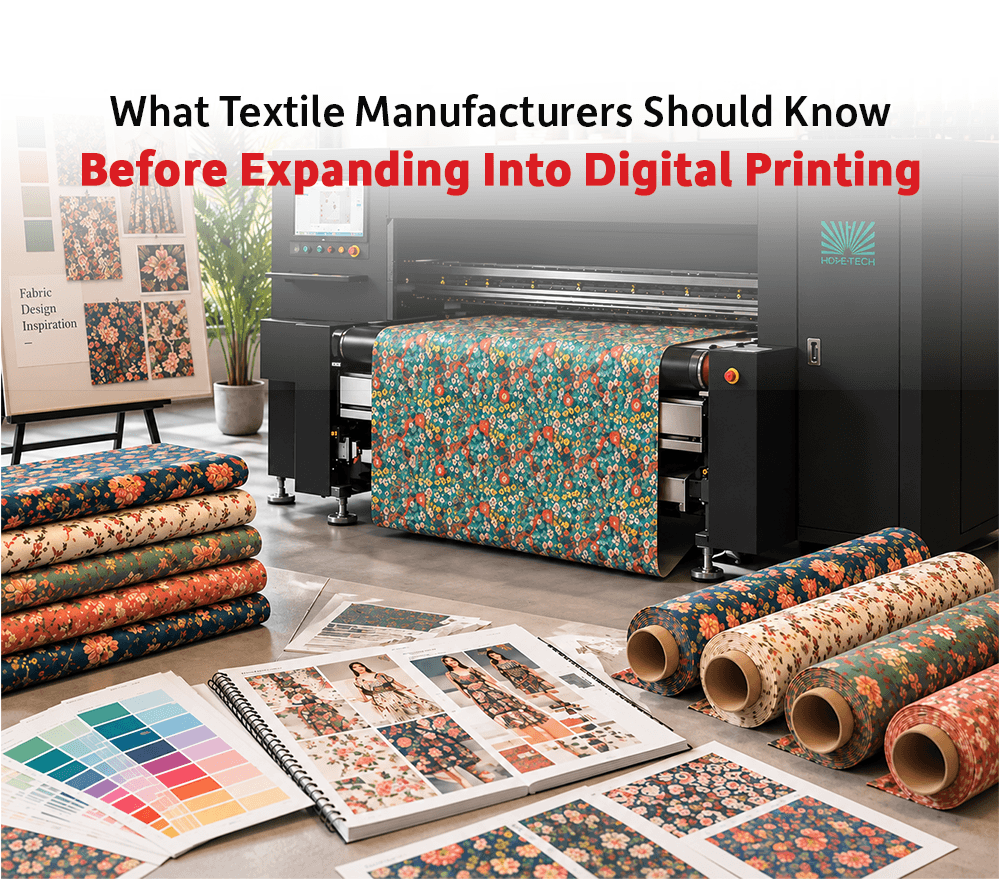
Digital Printing Expansion Needs Careful Planning Many textile manufacturers are exploring digital printing because it offers speed, design flexibility, shorter runs, and better response to changing market demand. For businesses already working in fabric trading, processing, garmenting, or traditional printing, expanding into digital textile printing can open new opportunities. However, this expansion should not be rushed. Digital printing is not only about installing a new machine. It requires planning across workflow, fabric selection, ink compatibility, operator training, color management, finishing, and service support. Manufacturers who prepare properly are more likely to build a stable and profitable digital printing operation. Understanding the Business Purpose Is Important Before investing in digital textile printing, manufacturers should define the purpose of expansion. Some businesses may want to serve fashion brands with faster sampling. Others may want to handle short-run orders, home textile collections, export fabrics, sportswear, or customized printing. The right machine and production setup depend on the intended market. A business focused on sampling may not need the same setup as a business planning high-volume fabric production. Similarly, a unit printing polyester may need a different route compared to one focusing on cotton. Clear business direction helps avoid incorrect investment decisions. Workflow Readiness Matters Digital printing requires a different workflow from many traditional printing processes. Design file preparation, color profiling, fabric handling, machine operation, sample approval, and post-processing must be coordinated properly. If the workflow is not ready, production may face delays even after the machine is installed. Manufacturers should prepare their team, space, materials, and process before starting commercial production. A good setup reduces trial-and-error and improves confidence in early orders. Consumables Should Be Planned from the Start Ink, sublimation paper, fabric, pre-treatment materials, and finishing inputs should be selected carefully. Many businesses underestimate how much consumables affect output quality and production cost. Poor compatibility can lead to rejection, downtime, color variation, and customer dissatisfaction. When expanding into digital printing, manufacturers should test and standardize material combinations before taking larger orders. This helps create predictable output and improves long-term production control. Service Support Should Be Considered Before Purchase New digital printing businesses often need guidance during installation, operator training, maintenance, and early production. Reliable service support can reduce the learning curve and help the business respond faster to technical issues. Manufacturers should evaluate the service strength of the technology partner before making an investment. A machine may be purchased once, but service support influences its performance throughout its working life. Conclusion Expanding into digital textile printing can help manufacturers enter faster, more flexible, and more design-driven markets. However, success depends on planning the machine, workflow, consumables, fabric route, team training, and service support together. True Colors can support manufacturers at this stage by helping them look at digital printing as a complete business expansion rather than only a machine purchase. With digital textile printing machines, Inkia by True Colors inks, True Colors Sublimation Paper, fabrics, and TRUE TEAM support, True Colors provides guidance across key parts of the setup. For textile manufacturers entering digital printing, True Colors can help build a stronger foundation from the first step of expansion.
How Reliable Sublimation Paper Improves Production Speed and Transfer Quality
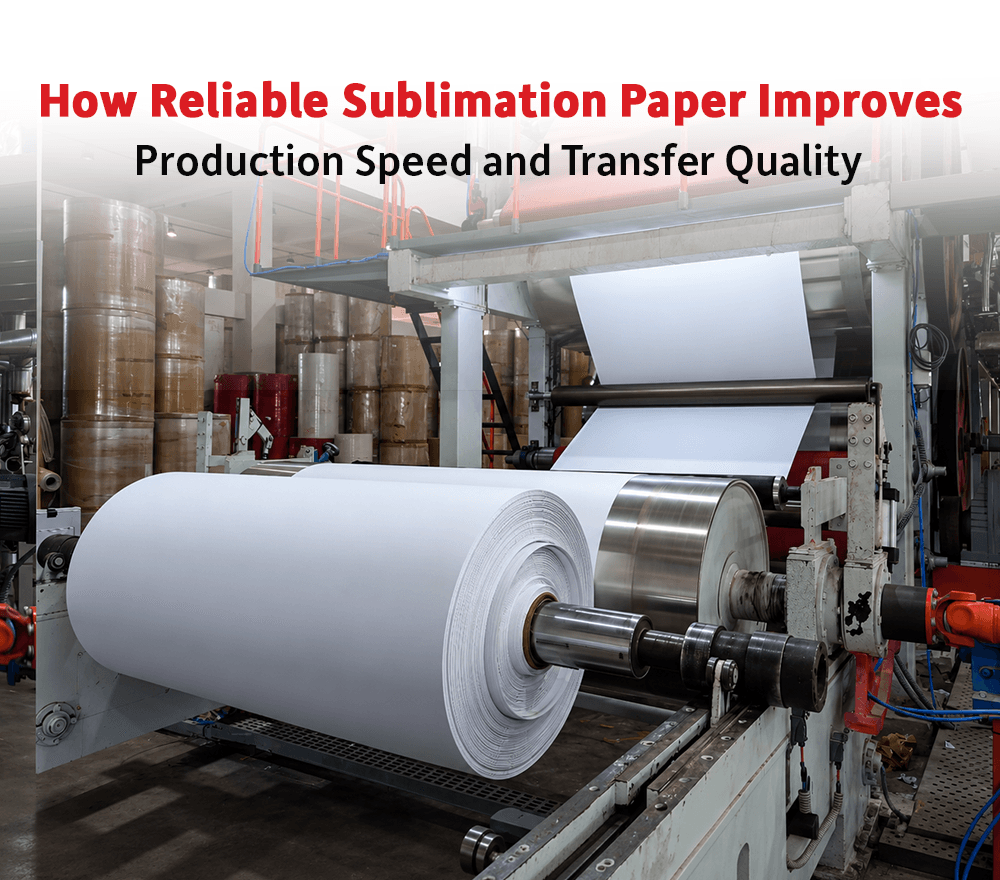
Sublimation Paper Has a Bigger Role Than Many Printers Realize In sublimation printing, the final fabric output depends on a chain of connected factors. The machine, ink, paper, heat press or calendar, fabric, and operator settings all affect the result. Among these, sublimation paper is sometimes treated as a simple consumable. In reality, reliable sublimation paper plays a direct role in production speed, transfer quality, color release, and consistency. If the paper does not perform well, even good ink and a good printer may fail to deliver the expected output. This is why sublimation paper should be selected based on performance, not only price. Transfer Quality Depends on Paper Behavior Sublimation paper carries the printed image before transferring it to polyester fabric. During heat transfer, the paper must release ink efficiently and evenly. If ink release is weak, the final fabric may look dull. If the release is uneven, the print may show shade variation or patchiness. Reliable sublimation paper helps improve transfer consistency by supporting controlled ink release. This helps maintain sharper prints, stronger color output, and more predictable results across production runs. For printers handling repeat orders, this consistency becomes very important. Drying Speed Affects Production Flow In sublimation printing, paper drying behavior can influence production speed. If the paper takes too long to dry, the workflow slows down. If drying is uneven, it may create smudging, transfer defects, or handling issues. Reliable sublimation paper should support smooth printing and practical drying performance based on the production environment and ink load. Printers handling high-volume work need paper that supports their production rhythm without creating unnecessary delays. Paper Stability Reduces Operator Intervention Paper movement, curling, wrinkling, and feeding issues can reduce production efficiency. When sublimation paper behaves inconsistently, operators need to stop, adjust, or correct the process more frequently. This affects output speed and increases the chances of error. Stable paper handling allows the production team to run jobs with more confidence. For manufacturers, fewer interruptions mean better machine utilization and smoother delivery planning. Choosing Paper by Application Is Important Not every sublimation job requires the same paper. A light design, heavy ink design, fashion fabric, sportswear fabric, banner fabric, or home textile product may have different needs. Paper selection should consider GSM, coating, drying requirement, ink load, printer speed, and transfer process. Using the same paper for every job may not always give the best result. Manufacturers should select sublimation paper according to the actual application and production method. Conclusion Reliable sublimation paper improves production speed, transfer quality, color release, drying behavior, and print consistency. It helps printers reduce defects, avoid delays, and achieve more stable output in sublimation printing. True Colors Sublimation Paper is relevant for printers who need dependable paper performance across practical production requirements. Supported by the broader True Colors ecosystem of digital printing machines, Inkia by True Colors inks, fabrics, and technical support, the paper becomes part of a complete sublimation workflow. For businesses that depend on consistent polyester printing, True Colors helps connect paper choice with real production performance.
Choosing the Right Printing Route for Polyester, Cotton and Blended Fabrics
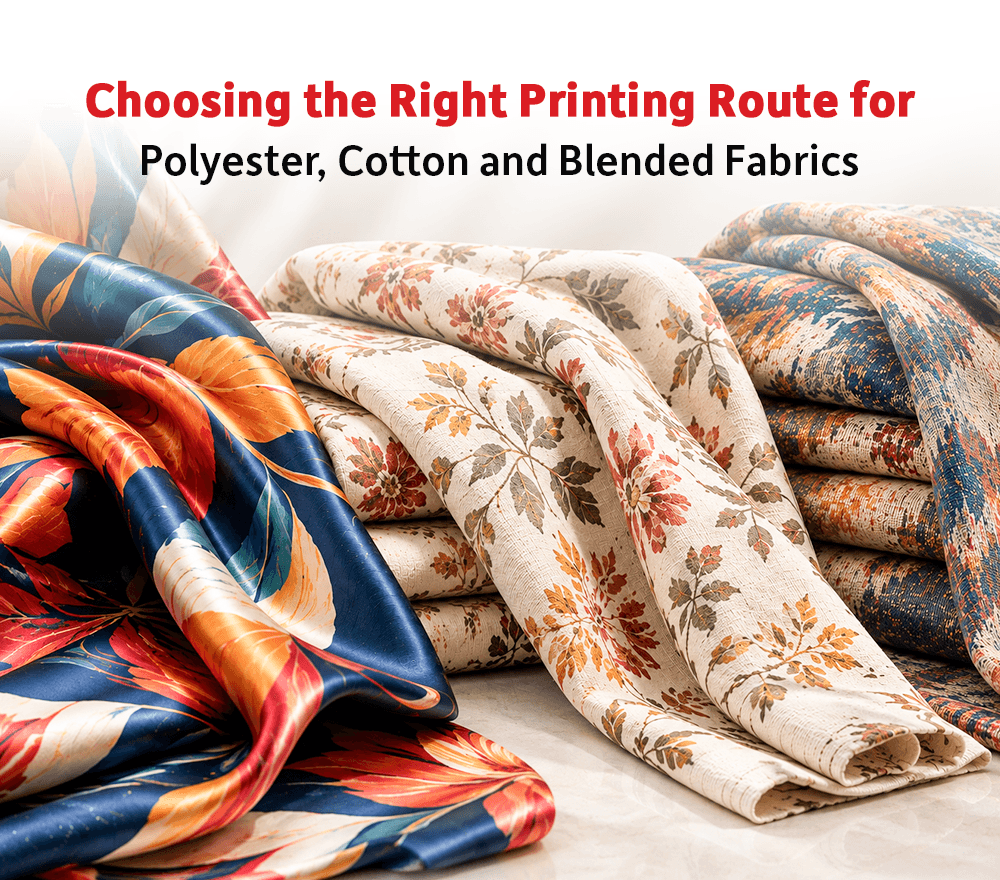
Every Fabric Needs a Different Printing Understanding In textile production, fabric selection is one of the first decisions that affects final print quality. A design may look strong digitally, but its final appearance depends heavily on the fabric on which it is printed. Digital printing for different fabrics requires a clear understanding of how polyester, cotton, blends, viscose, and other materials react during printing and finishing. No single printing route works equally well for every fabric. The right method depends on fiber type, surface texture, ink compatibility, production process, and final product use. Manufacturers who understand fabric behavior can avoid many quality issues before bulk production begins. Polyester Printing Often Works Well with Sublimation Polyester is widely used in sportswear, fashion, flags, advertising fabrics, home textiles, and soft signage. For many polyester-based applications, sublimation printing is a preferred method because it allows color to transfer into the fabric using heat. Sublimation can deliver bright colors and clean output when the machine, ink, sublimation paper, and transfer process are properly aligned. However, polyester fabric quality still matters. Fabric construction, coating, weight, moisture, and finishing can all influence the result. A good sublimation output depends on much more than just the printer. Cotton Requires a Different Approach Cotton behaves differently from polyester. Since it is a natural fiber, it usually needs a different ink system and processing route. Pigment or reactive printing may be used depending on the required output, hand feel, color depth, durability, and production workflow. Cotton printing often requires careful fabric preparation and finishing. If the process is not controlled, the fabric may show dull color, poor sharpness, uneven absorption, or weak performance. For cotton-based products, manufacturers should test fabric, ink, and finishing together before moving into bulk production. Blended Fabrics Need Extra Care Blended fabrics can be more complicated because they contain more than one fiber type. A fabric that includes polyester and cotton, for example, may not respond fully like pure polyester or pure cotton. The printing method must be selected based on the blend composition and final application. Manufacturers should not assume that a process suitable for one blend will automatically work on another. Testing is important because color output, hand feel, fastness, and finishing behavior can change from fabric to fabric. Blended fabrics require a more practical and production-focused approach. Final Application Should Guide the Decision The right printing route depends not only on fabric type but also on how the fabric will be used. A fabric for sportswear may need stretch comfort, color durability, and sweat resistance. A curtain fabric may need visual impact and light stability. A fashion scarf may require softness and detail. A promotional banner may need sharp color and easy handling. Printing decisions should therefore begin with the final product requirement. When manufacturers match fabric, ink, process, and application correctly, the final output becomes more reliable. Conclusion Digital printing for different fabrics requires more than choosing a machine setting. Polyester, cotton, blended fabrics, and specialty materials each need the right printing route, ink system, and process control. True Colors can help manufacturers make these decisions with a wider production understanding. Through digital textile printing machines, Inkia by True Colors inks, True Colors Sublimation Paper, fabrics, and technical guidance, True Colors supports businesses in matching fabric requirements with practical printing solutions. For manufacturers working across multiple fabric categories, True Colors offers the advantage of looking at fabric printing as a complete process rather than a one-method solution.
Why Printhead Protection Should Be a Priority in Digital Textile Printing
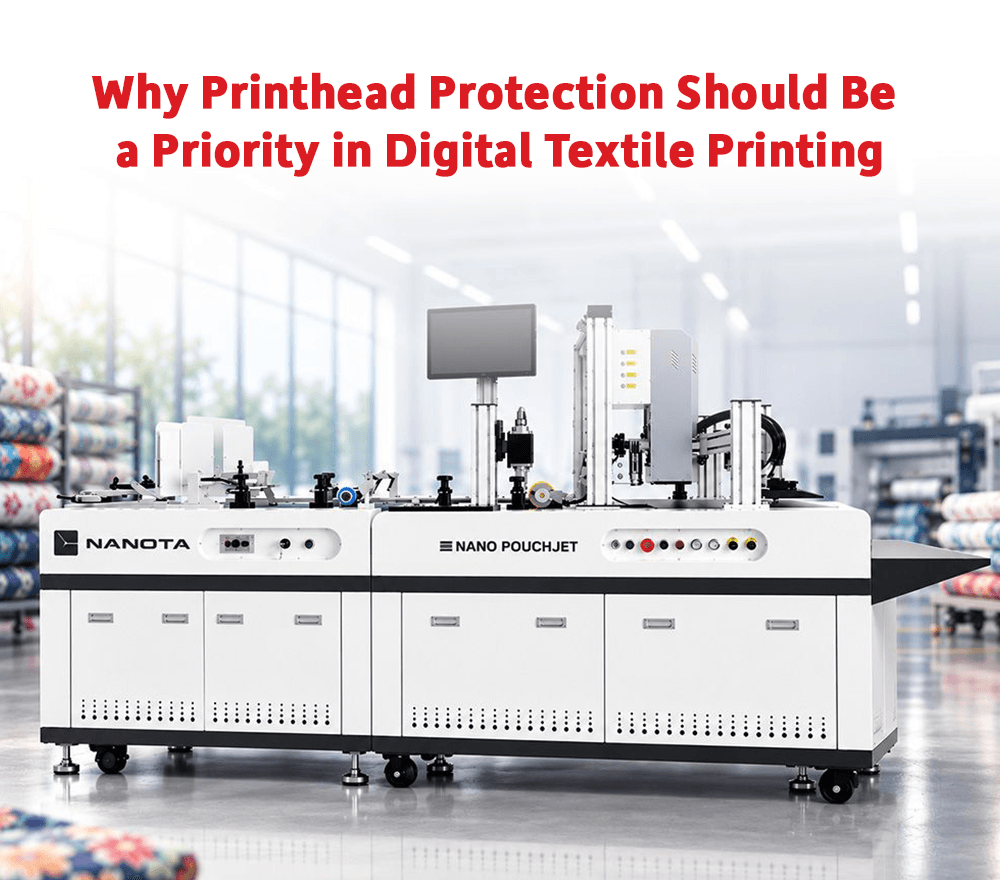
Printheads Are at the Center of Digital Printing Performance In a digital textile printing machine, the printhead plays one of the most important roles. It controls how ink is placed on the fabric or transfer medium and directly affects print sharpness, color consistency, line accuracy, and overall output quality. Printhead protection in digital textile printing should therefore be a major priority for every manufacturer. Many businesses focus on machine speed, print width, and production capacity, but printhead health decides how reliably the machine performs over time. If printheads are not maintained properly, the production team may face nozzle issues, missing lines, shade variation, rework, and downtime. Protecting the printhead means protecting the complete production flow. Ink Quality Has a Direct Impact on Printheads Printheads work with extremely fine ink movement. The ink must flow smoothly, remain stable, and perform consistently during printing. If the ink is unstable or poorly suited to the machine, it can increase the risk of clogging, uneven firing, or frequent cleaning cycles. These issues affect both print quality and machine availability. This is why ink selection should never be treated only as a cost decision. It should be evaluated based on printhead compatibility, stability, filtration, viscosity behavior, and long-run production performance. A good ink system helps reduce stress on printheads and supports smoother daily printing. Maintenance Habits Decide Long-Term Reliability Printhead protection depends heavily on daily production discipline. Regular cleaning, correct shutdown procedures, nozzle checks, proper ink handling, and controlled operating conditions all help maintain printhead performance. Many printhead problems develop gradually. A small nozzle issue that is ignored during early production can later become a larger quality problem. Operators should be trained to identify warning signs and respond before the issue affects bulk output. Maintenance should not be done only when print quality drops. It should be part of the daily printing routine. A disciplined production team can extend machine reliability and reduce avoidable interruptions. Environment Also Affects Printhead Health Factory conditions can influence printhead performance. Temperature, humidity, dust, and air movement can affect ink drying and nozzle behavior. In dry conditions, ink may dry faster near the nozzle surface. In humid or dusty environments, other issues may appear during printing and storage. A stable production environment helps reduce unnecessary variation and supports smoother ink flow. Manufacturers should therefore think beyond machine maintenance and also manage the surroundings in which the machine operates. Downtime Due to Printhead Issues Can Be Expensive When printhead problems occur, the impact is not limited to repair cost. Production may stop, delivery timelines may be affected, operators may lose time, and printed fabric may be rejected. For manufacturers handling bulk orders or export production, even a few hours of downtime can create serious pressure. This is why printhead protection is a business priority, not only a technical responsibility. A strong preventive approach helps manufacturers reduce breakdown risk and maintain better production confidence. Conclusion Printhead protection in digital textile printing is essential for machine uptime, print quality, ink flow, and long-term production reliability. Good ink selection, regular maintenance, operator discipline, and controlled factory conditions all contribute to better printhead performance. True Colors supports this need by looking at printhead performance as part of the complete printing ecosystem. With digital textile printing machines, Inkia by True Colors inks, service guidance, and production support, True Colors helps manufacturers understand the connection between ink behavior, machine care, and daily output quality. For businesses that depend on continuous production, True Colors can help make printhead protection a more structured part of the printing process.
How Digital Textile Printing Helps Brands Prepare Festival Collections Faster
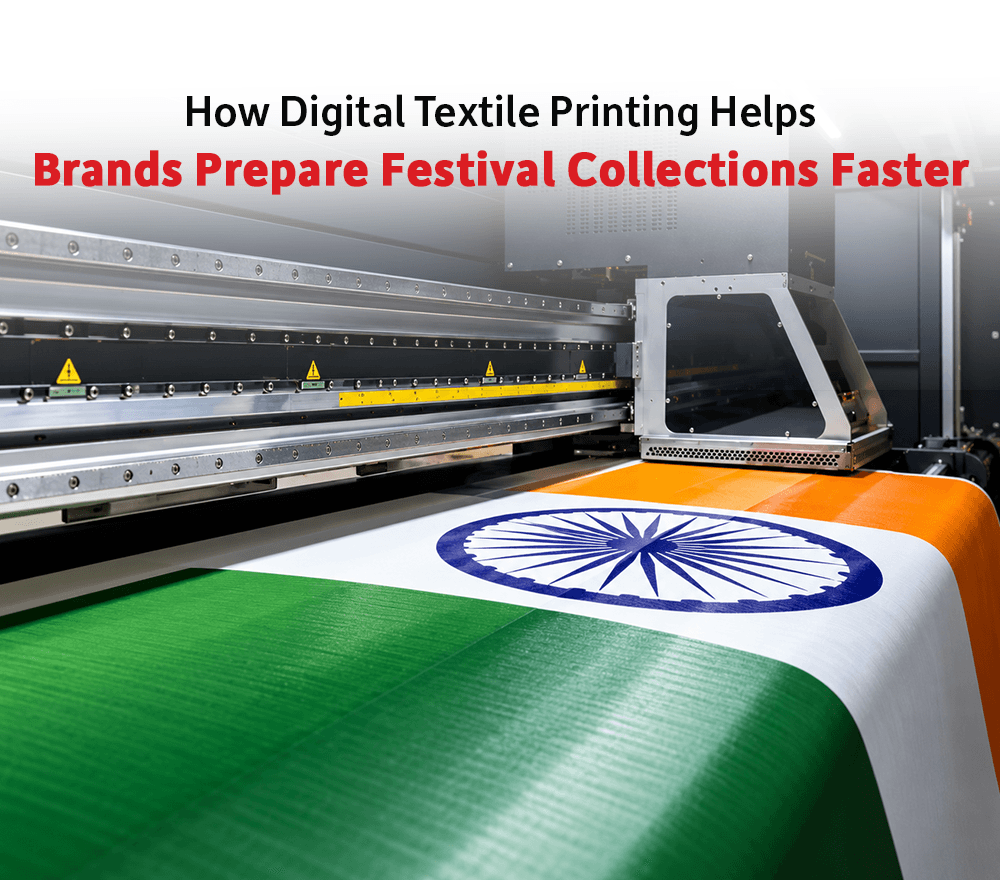
Festival Collections Need Speed and Variety Festival seasons are important for fashion, ethnic wear, home textiles, gifting, and lifestyle brands. During this period, customers look for fresh colors, new patterns, festive themes, and exclusive product ranges. For brands, this creates strong demand but also increases pressure on design and production timelines. Digital textile printing for festival collections helps brands and manufacturers respond faster to these seasonal requirements. Instead of depending on long setup processes for every new design, digital printing allows businesses to create multiple print options, test them quickly, and move approved designs into production with more flexibility. This is useful because festival collections are often trend-driven. A design that feels relevant today may lose its freshness if production takes too long. Digital printing helps reduce this delay and gives brands more freedom to launch timely collections. Faster Sampling Helps Brands Finalize Designs Earlier Sampling is one of the most important stages in festive collection planning. Brands usually want to test different motifs, colors, fabric bases, and product categories before finalizing the range. Digital textile printing makes sampling faster because artwork can be prepared digitally and printed without creating screens for every design. This helps brands compare multiple ideas and make decisions with greater confidence. For manufacturers, faster sampling also improves buyer communication. When samples are ready on time, production approvals move faster and last-minute pressure reduces. In festival season, where every week matters, faster sampling can directly improve business opportunities. Limited Runs Reduce Inventory Pressure Festival demand can be unpredictable. Some designs may sell quickly, while others may not perform as expected. Producing very large quantities in advance can create inventory risk for brands. Digital printing supports smaller production runs, which helps brands test demand before scaling. This is especially helpful for limited edition festive prints, region-specific collections, designer drops, and online-first launches. By producing closer to actual demand, brands can reduce overstock and respond better to customer preferences. This makes digital textile printing a practical solution for festive business planning. Color Consistency Is Important for Festive Products Festival collections often depend on strong color appeal. Bright tones, detailed motifs, metallic-inspired patterns, and rich festive shades need careful production control. Digital printing can support detailed artwork and vibrant output, but the final quality depends on fabric selection, ink stability, print settings, and finishing process. If the color changes between sample and bulk production, the collection may lose its intended look. This is why manufacturers must maintain proper color management and production discipline. A festive collection should not only look attractive in sampling. It should remain consistent during actual production. Fabric Choice Shapes the Final Collection Different festive products require different fabrics. Ethnic wear, scarves, home décor, cushion covers, drapes, and gifting fabrics may all need different printing approaches. The fabric selected for the collection influences color output, feel, durability, and final product appeal. Polyester-based fabrics may work well with sublimation printing, while cotton and other natural fabrics may require different ink systems and processes. Brands and manufacturers should choose the printing method based on final application, not only design preference. When fabric, ink, and process are aligned, the collection becomes more production-ready. Conclusion Digital textile printing for festival collections helps brands work faster, test more designs, reduce inventory risk, and launch seasonal products with better flexibility. It supports both creative freedom and practical production planning. True Colors can support festive collection development by bringing together digital textile printing machines, Inkia by True Colors inks, True Colors Sublimation Paper, fabrics, and technical guidance. For brands and manufacturers working on seasonal collections, this complete ecosystem helps connect design ideas with production reality. With True Colors, festive textile production can move from concept to sample to final fabric with better coordination, helping businesses stay ready for high-demand seasons.