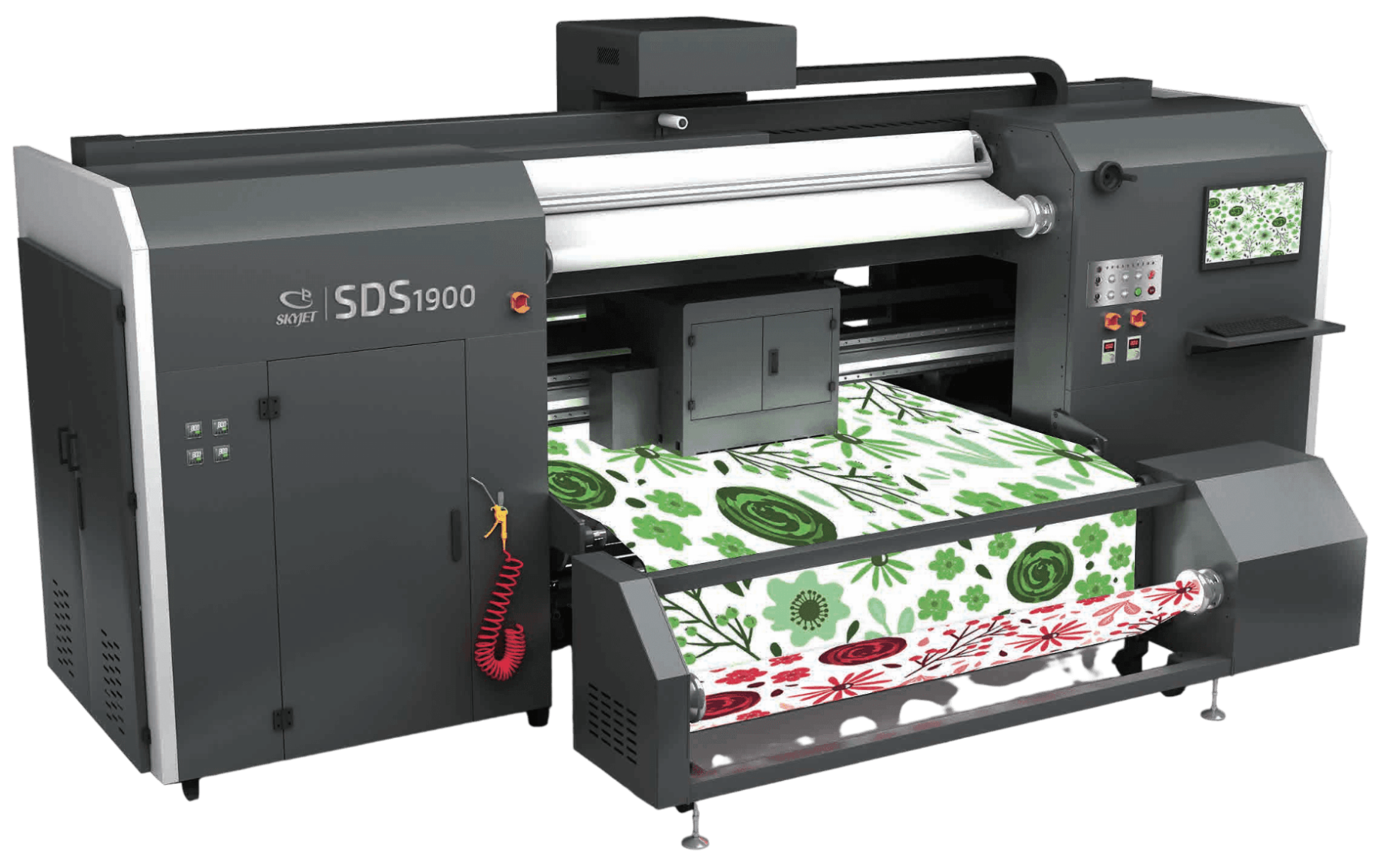
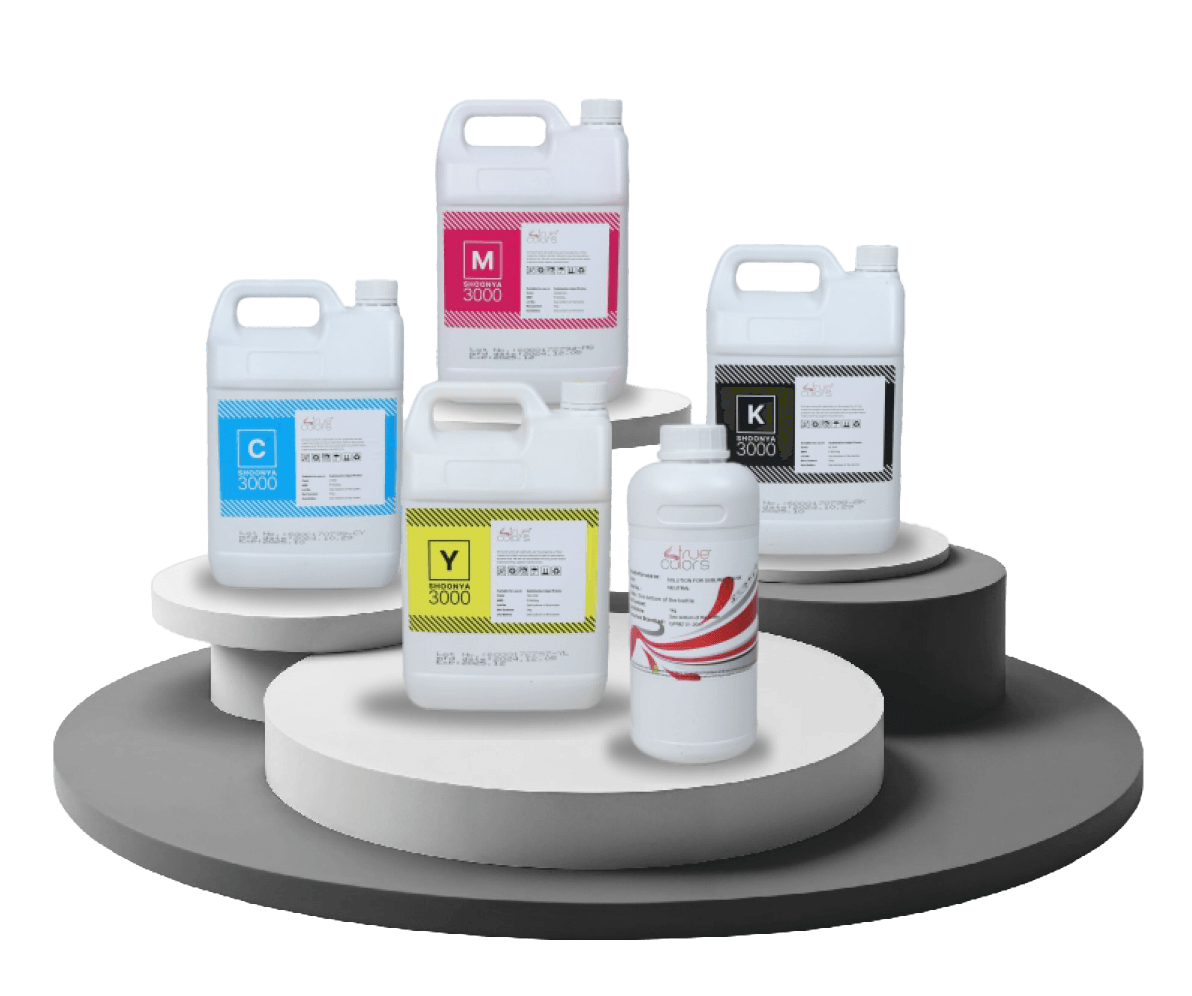
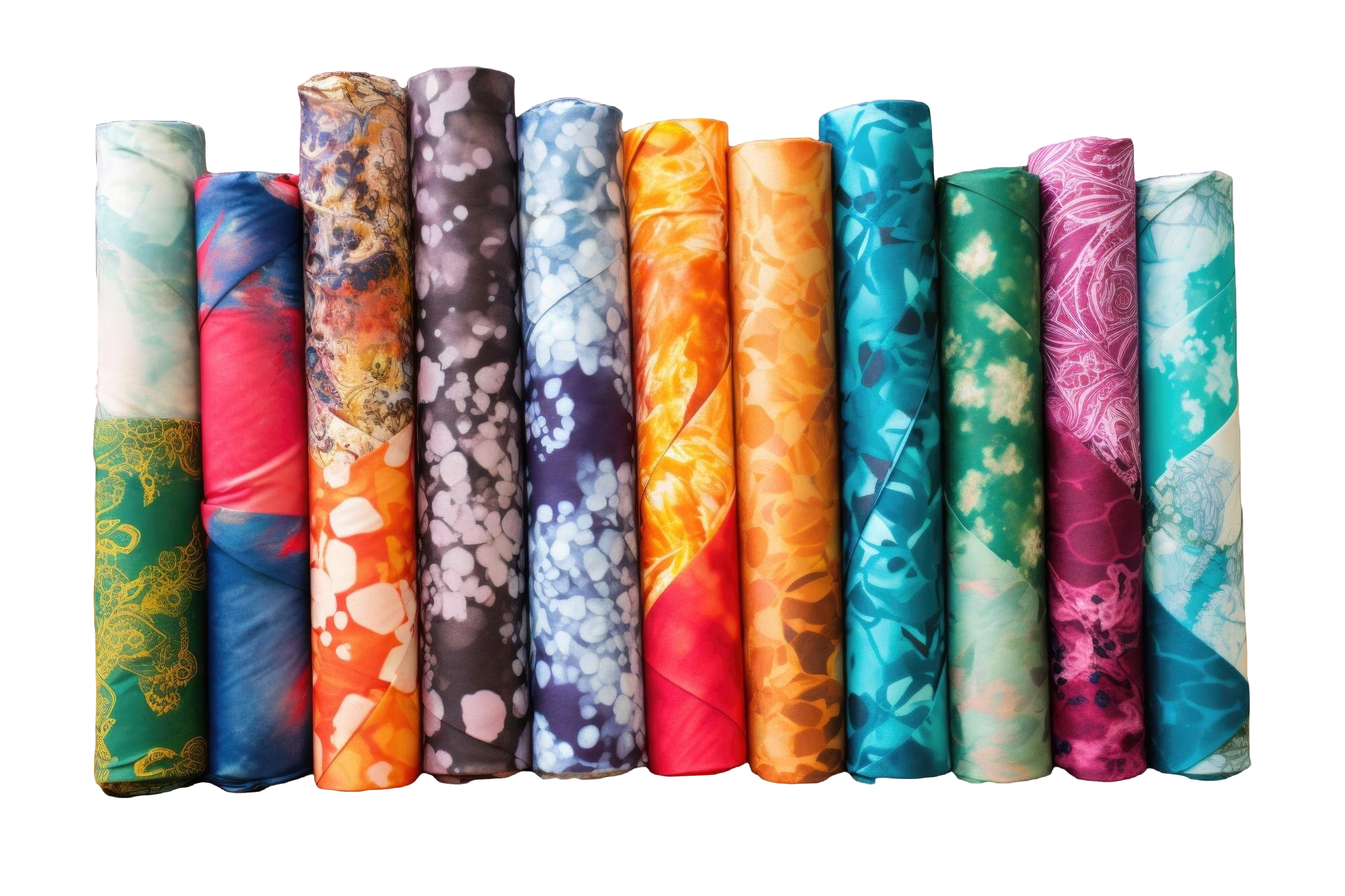
The Role of Color Accuracy in Export-Quality Textile Production

In export-driven textile manufacturing, quality is not negotiable — and color is at the centre of that quality. For global buyers, even slight shade variations can lead to rejections, delayed shipments, or loss of long-term contracts. This is why color accuracy in textile printing plays a decisive role in achieving export-grade production standards. In digital textile environments, consistency across meters of fabric is not just a technical parameter — it is a business requirement. Why Color Accuracy Matters in Export Markets International buyers demand: Even minor deviation from approved colors can cause: Maintaining strong color accuracy in textile printing ensures that production aligns precisely with buyer specifications. Digital Printing & Precision Control Modern digital textile printing systems offer greater control over color management compared to traditional methods. Viscosity Stability Advanced machines support: However, machine capability alone is not enough. Export-level production requires synchronized performance between: When these elements align, consistent output becomes achievable across long production runs. Batch Consistency: The True Test of Export Quality Producing one perfect sample is easy.Repeating that exact shade across thousands of meters is the real challenge. In export production, color consistency must be maintained: Strong process control ensures that color accuracy in textile printing remains stable from sampling to bulk production. Impact on Business Performance Accurate color reproduction directly affects: Inaccurate shades increase rejection rates and inflate operational costs due to reprinting and material waste. Export-focused textile units must therefore treat color control not as a technical detail — but as a competitive advantage. Supporting Scalable Export Production As textile exporters scale digital operations, the importance of color management becomes even more critical. Reliable digital infrastructure supports: Strong production systems ensure that exporters maintain credibility in global markets. Conclusion Export-quality textile production demands more than speed — it demands precision. Color accuracy in textile printing forms the backbone of reliable global supply chains. From sampling to bulk dispatch, maintaining shade consistency protects margins, strengthens buyer relationships, and supports scalable growth. For textile manufacturers competing internationally, color accuracy is not just about aesthetics — it is about operational excellence. True Colors helps textile manufacturers achieve this consistency through advanced printing technology, optimized systems, and expert technical support.
Inside a Digital Printing Ink Lab: How Testing Impacts Production Efficiency
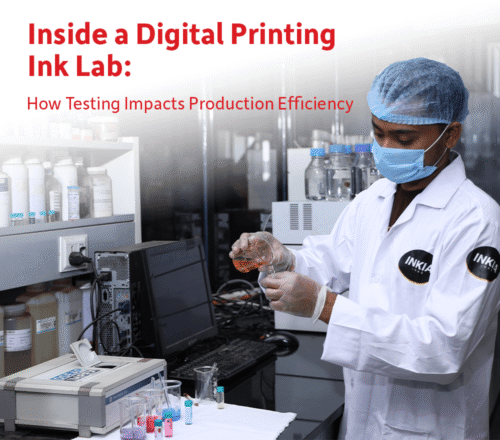
In digital textile printing, production efficiency does not begin on the factory floor — it begins inside the lab. Behind every stable production run, vibrant colour output, and uninterrupted printing cycle lies one critical process: digital textile ink testing. For textile manufacturers using advanced digital printing systems, proper ink validation directly influences machine stability, print quality, and operational uptime. Why Ink Testing Matters in Digital Textile Printing Digital textile printing machines operate at high speed with extreme precision. Any variation in ink formulation can affect: Without proper lab testing, even minor inconsistencies can lead to nozzle blockages, banding, colour shifts, or production downtime. That’s why structured digital textile ink testing is a key factor in maintaining production efficiency. What Happens Inside a Digital Printing Ink Lab? An ink lab typically evaluates multiple parameters before approving ink for industrial use: Viscosity Stability Ink must maintain consistent viscosity under varying production temperatures to ensure smooth jetting from high-speed printheads. Surface Tension Control Proper surface tension ensures accurate droplet formation, preventing misting or overspray during high-speed runs. Color Accuracy & Reproducibility Test prints are analysed to confirm repeatable shade matching across long production batches — critical for export-quality textiles. Printhead Compatibility Ink must be compatible with industrial printheads to avoid clogging or irregular firing patterns. Each of these checks directly impacts production uptime and output quality. How Ink Testing Improves Production Efficiency When ink is properly validated before entering production, manufacturers experience: Efficient digital textile ink testing ensures that printing machines operate at optimal speed without unexpected disruptions. Impact on Long-Run Industrial Production In high-volume textile units, even small inefficiencies multiply over thousands of meters of fabric. Poorly tested ink can cause: On the other hand, validated ink systems support: Efficiency, in digital textile printing, is not just about machine speed — it is about system reliability. Supporting Modern Digital Printing Infrastructure As digital textile printing continues to scale in India, the importance of controlled processes becomes even more critical. Production success depends not only on advanced printing machines but also on the quality and testing standards of the ink used. Proper lab validation ensures that industrial textile printers can maintain: Conclusion Inside every successful textile production line lies a foundation built in the lab. Digital textile ink testing plays a decisive role in safeguarding machine efficiency, production stability, and output consistency. For textile manufacturers focused on long-term scalability and export-grade performance, ink testing is not a background process — it is a production strategy. Visit Our website TrueColors
64-Head Kyocera Printhead Technology: How EX600RC Delivers 25% Higher Speed
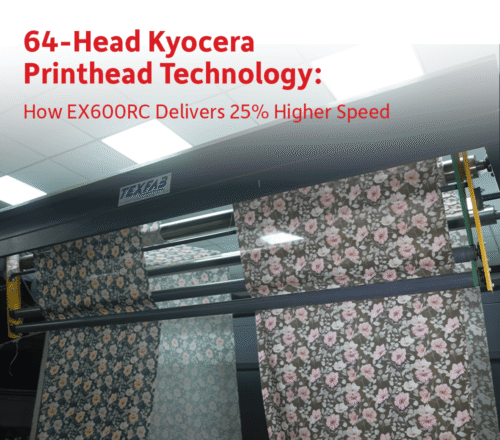
In digital textile printing, speed and consistency are critical. Production lines must deliver high output without compromising print quality. The Hopetech EX600RC, introduced by True Colors as India’s first 64-head Kyocera digital textile printer, is designed to meet this demand. With advanced engineering and a high-density printhead configuration, the EX600RC improves both productivity and operational stability. Reimagining Speed With 64-Head Kyocera Printheads At the core of the EX600RC is its 64-head Kyocera printhead configuration. This design significantly increases printing throughput while maintaining color accuracy. As a result, the system delivers up to 25% higher speed compared to conventional configurations. Consequently, textile manufacturers can process larger production volumes without compromising consistency. What Makes the 64-Head Kyocera System Faster? High-Density Printing Architecture The EX600RC distributes the printing workload across 64 printheads. Therefore, more ink droplets are deposited simultaneously across the fabric surface. This high-density architecture increases printing speed while preserving precision and stability. Optimized Working Width and Fabric Feeding Additionally, the machine supports a 3.2-meter working width. This allows continuous printing across wider fabric rolls. As a result, factories can process large batches efficiently and reduce overall production cycle time. Designed for Long and Stable Production Runs Moreover, the EX600RC is engineered for extended industrial operation. The machine maintains stable performance during long production shifts. Consequently, manufacturers experience fewer speed fluctuations and improved output consistency. The result is simple: the EX600RC does not only print faster — it prints consistently faster. Precision Meets Speed: Quality at Scale High production speed does not compromise print quality. The Kyocera printheads operate with precision up to 600 × 1800 dpi. Therefore, the system produces sharp lines, vibrant colors, and highly detailed designs. Furthermore, the machine maintains consistent reproduction across long production runs. This capability is especially important for exporters and textile brands that require accurate design replication. Built for Industrial Performance True Colors has enhanced the EX600RC with additional engineering features that support high-speed stability. These include: Together, these systems ensure stable operation throughout extended production cycles. Real-World Productivity Gains The EX600RC is designed for high-volume industrial output. Under optimized conditions, the machine can produce up to 24,000 meters of printed fabric per day. As a result, textile manufacturers can: Conclusion The 64-head Kyocera printhead technology in the Hopetech EX600RC represents a major advancement in digital textile printing. By delivering 25% higher production speed, the machine helps textile manufacturers increase output while maintaining precision and stability. For factories focused on scalable, high-speed production, the EX600RC provides the reliability and performance required to compete in global textile markets.
Hopetech EX600RC Digital Fabric Printing Machine: India’s First 64-Head Textile Printer
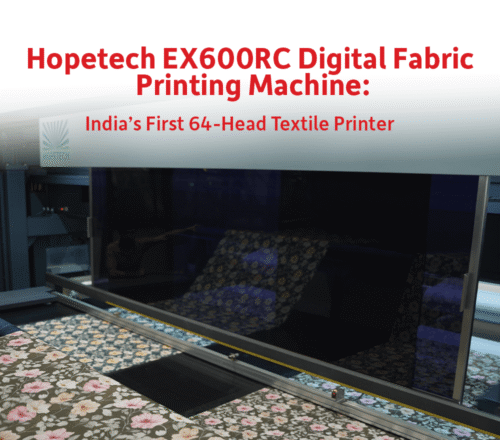
India’s textile industry is rapidly shifting toward high-speed digital infrastructure. At the forefront of this transformation stands the EX600RC textile printer, a 64-head industrial fabric printing system. Built for scale, precision, and reliability, this machine sets a new production benchmark for textile manufacturers seeking industrial-grade digital output. What Makes the EX600RC Textile Printer a Breakthrough? The defining strength of the EX600RC lies in its 64 industrial print heads — the first configuration of its kind in India. This advanced setup enables: For large-scale textile units, the EX600RC textile printer ensures uninterrupted high-volume printing with export-level precision. Engineered for Industrial Stability Digital printing at scale demands more than speed — it requires stability. The machine offers: Such engineering ensures consistent performance during bulk production cycles. Wide Format, Wider Possibilities The system supports wide-width textile printing, allowing manufacturers to produce: With increased width capacity and multi-head configuration, production time is significantly reduced. Strategic Advantage for Textile Businesses In competitive textile markets, faster turnaround equals higher profitability. The EX600RC textile printer allows manufacturers to: Through advanced digital systems like this, True Colors continues to support India’s textile evolution. Conclusion The EX600RC represents more than innovation — it represents scale. As India’s first 64-head digital fabric printer, it empowers textile businesses with speed, precision, and industrial-grade consistency. For manufacturers aiming to expand output while maintaining superior quality standards, this technology marks a decisive step forward.
Common Production Bottlenecks in Digital Textile Printing Units
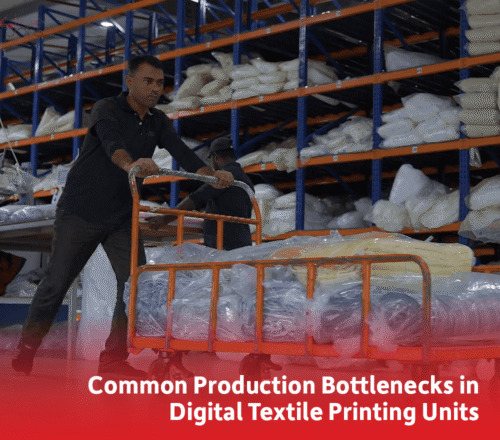
Digital textile printing units are built for speed.But speed alone does not guarantee efficiency. Many factories invest in advanced machines, yet still struggle with delays, rising costs, and inconsistent output. The reason often lies in unresolved digital textile printing bottlenecks — hidden inefficiencies that silently impact production. Understanding these bottlenecks is the first step toward eliminating them. Ink Consumption & Cost Misalignment One of the most overlooked bottlenecks is uncontrolled ink consumption. Factories often focus on: But ignore: Incorrect profiling or suboptimal machine settings increase ink consumption, raising the overall cost per meter. This directly tightens profit margins even when production volume appears healthy. Unchecked ink behavior becomes a recurring operational bottleneck. Machine Downtime & Service Delays Even high-speed digital printers require: Delayed technical support or unplanned stoppages interrupt production cycles. In bulk textile operations, even a few hours of downtime can disrupt delivery schedules. Service gaps are a major contributor to digital textile printing bottlenecks. Printhead & Ink Compatibility Issues When ink configuration does not align perfectly with machine specifications, it may lead to: These issues slow down throughput and increase maintenance frequency, affecting daily meter targets. Fabric Feeding & Alignment Errors Digital printing is highly sensitive to: Even slight misalignment can cause: Such defects lead to reprints and material wastage — reducing effective production capacity. Inconsistent Color Output Across Batches Export-focused units face another challenge: repeatability. If color calibration drifts over time, it results in: Inconsistent color control slows down approvals and impacts long-term buyer trust. Lack of Production Data Monitoring Modern digital textile production should be data-driven. Without tracking: Factories operate reactively instead of proactively. Lack of monitoring creates invisible inefficiencies that accumulate over time. The Real Impact of Production Bottlenecks When digital textile printing bottlenecks go unresolved, factories experience: The problem is rarely one major failure.It is usually multiple small inefficiencies working together. Eliminating Bottlenecks: A System Approach To overcome bottlenecks, digital textile units must focus on: Production efficiency improves when machine, ink, and service systems work in alignment. Conclusion Digital textile printing is a high-speed industry — but without control, speed turns into cost. Identifying and resolving digital textile printing bottlenecks allows manufacturers to: Efficiency is not just about installing advanced machinery — it is about managing the entire production ecosystem. True Colors helps textile manufacturers optimise their digital printing processes for stable and efficient production.
MALLARD 2.0: Designed for High-Speed Industrial Production
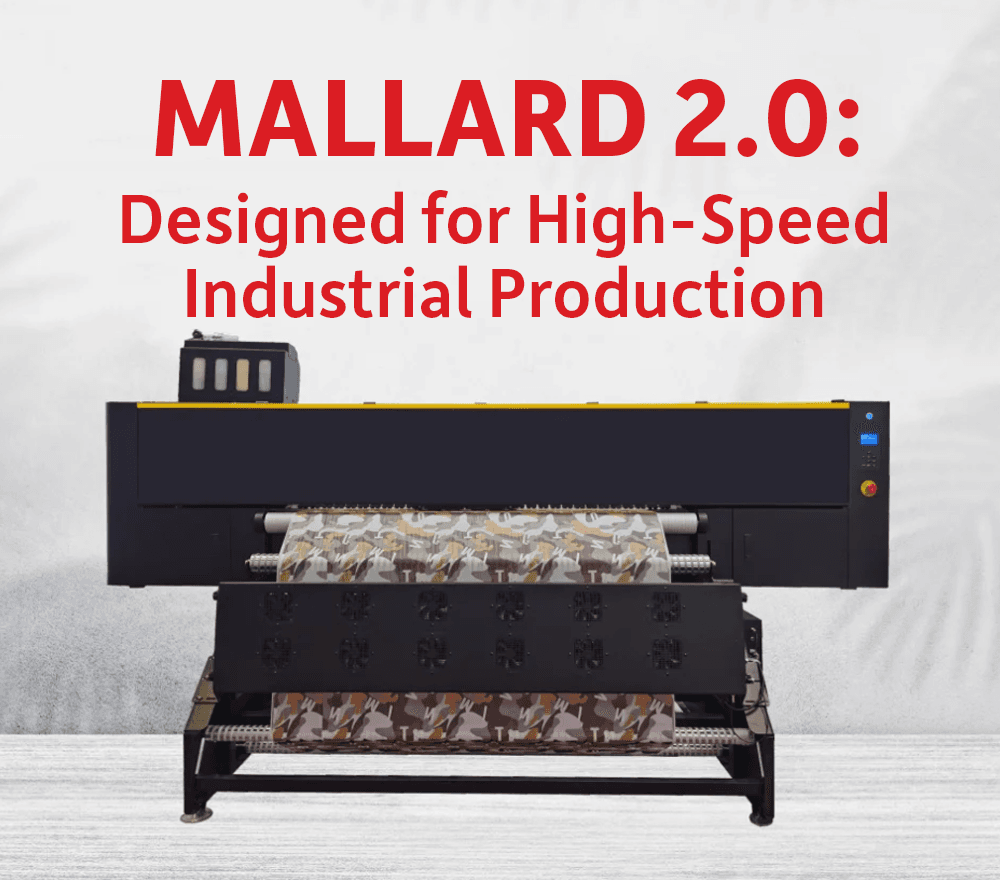
In today’s textile manufacturing landscape, speed alone is not enough.Production demands speed with stability, precision, and consistency. The MALLARD 2.0 textile printer, offered by True Colors, is engineered specifically for industrial-scale digital printing — where output volume, uptime, and performance reliability define success. Built for Industrial Throughput MALLARD 2.0 is not positioned as an entry-level machine.It is designed for textile units operating at scale. Industrial production requires: The MALLARD 2.0 textile printer supports these demands through a performance-driven design that prioritizes productivity across shifts. High-Speed Production Without Compromise In bulk textile manufacturing, even minor slowdowns impact dispatch timelines. MALLARD 2.0 focuses on: Speed becomes valuable only when it is sustainable.The machine’s structure supports long-duration printing without frequent recalibration. Stability That Supports Scale Industrial environments often deal with: The MALLARD 2.0 textile printer is built to maintain mechanical balance and print consistency even under continuous production pressure. This ensures predictable output and controlled operational efficiency. Precision Meets Production Efficiency High-speed output is meaningful only when: Digital textile production units require systems that minimize reprints and maximize usable output. MALLARD 2.0 enables textile businesses to reduce inefficiencies while scaling production capacity. Designed for Modern Textile Units As textile exporters and domestic manufacturers expand digital infrastructure, machine reliability becomes a strategic asset. MALLARD 2.0 supports: For units looking to upgrade from moderate-scale digital printing to industrial-grade output, the MALLARD 2.0 textile printer represents a performance-oriented solution. Conclusion Industrial textile production demands more than equipment — it demands endurance. The MALLARD 2.0 textile printer is designed to meet high-speed industrial requirements with stability and precision. For textile manufacturers aiming to scale operations without sacrificing consistency, this system supports sustained productivity and operational confidence.
Beyond Ink Supply: Why Service Support Is Critical for Digital Printers

In digital printing, ink is often seen as the most important input. Printers spend time comparing prices, shades, and availability. However, what many businesses underestimate is that ink alone does not guarantee stable production. The real differentiator lies in digital printing service support. Without the right service backing, even the best ink can become a production bottleneck. Ink Is a Product. Printing Is a Process. Ink supply solves only one part of the printing equation. Digital printing, especially at scale, is a sensitive process involving machines, software, fabrics, and operating conditions. When issues arise—such as shade variation, clogging, or inconsistent output—ink replacement alone rarely fixes the problem. This is where digital printing service support becomes critical. It bridges the gap between ink performance and real-world production challenges. Why Printers Face Issues Even With Good Ink Most printing issues are not caused by ink quality alone. They arise from factors such as: Without timely technical intervention, these issues escalate into downtime, wastage, and missed delivery timelines. Printers then lose productivity—not because of ink shortage, but because of insufficient support. Service Support Protects Print Consistency Consistent output depends on continuous monitoring and optimisation. When service teams understand machine behaviour, ink chemistry, and application requirements, they can identify root causes instead of offering temporary fixes. As a result, printers achieve: Strong digital printing service support turns reactive problem-solving into proactive performance management. Scaling Without Support Is Risky As businesses expand production or add new machines, complexities increase. Ink behaviour may change, profiling may need adjustment, and operators require guidance. Without service support, scaling often leads to inconsistent quality and operational stress. However, when service is integrated into the printing workflow, expansion becomes smoother and more predictable. How True Colors Supports Digital Printers Beyond Ink At True Colors, service is not an afterthought. It is a core part of the ink ecosystem. Through technical guidance, ink optimisation, machine-specific support, and process understanding, True Colors helps printers maintain consistency and efficiency at scale. If your operation depends on uninterrupted production, True Colors ensures you are supported not just with ink—but with expertise that keeps your printing running reliably.
How Ink Behaviour Changes Across Machines — And What to Do About It

In digital textile printing, one common assumption creates repeated production issues: the belief that ink will behave the same way across all machines. In reality, ink performance varies significantly depending on machine architecture, print heads, firing frequency, and operating conditions. This is why understanding digital printing ink compatibility is critical for stable production. Ignoring this factor often leads to inconsistent output, higher ink consumption, and frequent machine interruptions. Why the Same Ink Behaves Differently on Different Machines Every digital printing machine operates differently. Variations in print head technology, nozzle size, firing voltage, waveform settings, and temperature directly influence how ink performs during printing. When ink formulations are not aligned with machine-specific parameters, issues such as misting, satellite drops, clogging, or uneven colour density begin to appear. As a result, printers experience quality fluctuations even when using the same ink brand. This is where digital printing ink compatibility becomes a deciding factor in print stability. The Role of Ink Formulation and Dispersion Ink behaviour is largely driven by particle dispersion, viscosity, and surface tension. Poor dispersion can cause pigments to settle or agglomerate, leading to unstable jetting and inconsistent colour output. Well-engineered inks maintain controlled dispersion and flow characteristics, allowing them to adapt better across different machines. Consequently, printers achieve smoother jetting, consistent shades, and fewer maintenance cycles. Environmental and Operational Factors Matter Ink behaviour does not depend only on machines. Temperature, humidity, print speed, and fabric type also affect performance. When these factors change, inks react differently if they are not formulated with sufficient tolerance. Therefore, printers often face problems when switching machines, upgrading print heads, or scaling production without re-evaluating ink performance. Understanding digital printing ink compatibility helps businesses anticipate these challenges instead of reacting to them later. What Textile Businesses Can Do About It Rather than treating ink as a fixed input, textile businesses should evaluate it as a dynamic production component. This includes: This approach leads to better control over print quality and production efficiency. How True Colors Helps Printers Achieve Stability At True Colors, ink development focuses on compatibility, consistency, and controlled behaviour across machines. Through advanced formulation, lab testing, and machine-specific optimisation, True Colors helps textile printers achieve reliable output regardless of machine variations. digital printing ink compatibilityIf your production faces frequent inconsistencies due to machine changes, True Colors helps you align ink behaviour with your printing environment—so performance stays predictable and scalable.
Ink Cost vs Print Cost: The Difference Most Textile Businesses Overlook

In textile digital printing, cost decisions often begin with ink pricing. Many businesses compare suppliers based on the price per litre, assuming that lower ink prices automatically improve profitability. However, this approach misses a crucial reality—the real cost driver is not ink cost, but print cost vs ink cost. Understanding this difference can significantly impact long-term efficiency and margins. Understanding Ink Cost and Print Cost Ink cost is straightforward. It refers to the amount paid to purchase ink. Print cost, however, reflects the total expense involved in producing finished, usable printed fabric. Print cost includes: When businesses evaluate print cost vs ink cost, they begin to see how production inefficiencies quietly increase expenses. Why Low Ink Prices Can Increase Overall Costs Some inks appear economical on paper but behave inefficiently during printing. Poor dispersion or unstable formulations often lead to higher ink consumption per meter. As a result, more ink is used to achieve the same visual output. In contrast, technically optimized inks maintain controlled flow and uniform coverage. This directly reduces excess consumption and stabilizes production. Over time, the difference between print cost vs ink cost becomes clearly visible on the shop floor. Consistency Is a Cost Factor Inconsistent colour output leads to reprints, fabric wastage, and client dissatisfaction. Additionally, frequent corrections slow down production lines and reduce daily output capacity. When ink performance remains predictable, teams focus less on troubleshooting and more on consistent production. This stability plays a major role in controlling print cost. Looking Beyond the Invoice Successful textile businesses treat ink as a production tool, not a commodity. Instead of asking, “How cheap is the ink?”, they ask, “How efficiently does this ink help us print?” This shift in thinking allows businesses to evaluate print cost vs ink cost more accurately and make decisions that support scalability and reliability. A Smarter Approach to Printing Economics Ink cost is what appears on the invoice. Print cost is what determines profitability over time. By focusing on performance, consistency, and efficiency, textile businesses can protect margins and improve operational stability—especially in competitive and export-driven markets. How True Colors Supports Smarter Print Economics At True Colors, ink development focuses on performance, consistency, and controlled consumption. Through advanced formulation, testing, and process discipline, True Colors helps textile printers reduce print inefficiencies and achieve stable output at scale. If you are evaluating your printing performance beyond just ink pricing, True Colors helps you optimise what truly matters—your print cost.
The Role of Nano-Technology in High-Performance Digital Printing Inks

Why Ink Performance Matters in Modern Digital Printing Digital printing has evolved rapidly. Today, success depends not only on speed or colour vibrancy, but also on precision, consistency, and reliability at scale. As printing applications grow more demanding, ink quality has become a deciding factor in production efficiency. This is where nanotechnology in printing inks begins to redefine performance standards. At True Colors, ink is developed as a technology solution—not just a consumable. Every formulation is designed to support long print runs, stable output, and global quality expectations. How Nano-Technology Improves Ink Precision Nano-technology works at a microscopic level, where pigment particles are engineered to an ultra-fine and uniform size. Because of this controlled structure, dispersion remains stable throughout the printing process. As a result, ink flows smoothly through print heads, maintains consistent jetting, and produces sharper details. Furthermore, uniform particle size reduces common issues such as nozzle clogging and uneven colour output. Through nanotechnology in printing inks, True Colors ensures dependable performance across both short and extended production cycles. Consistency at Scale: From First Meter to Last One of the biggest challenges in digital printing is maintaining consistency during high-volume production. However, nano-dispersion enables inks to hold colour accuracy from the first print to the final output. Consequently, printers experience fewer stoppages, reduced wastage, and higher machine efficiency. In addition, this consistency becomes crucial for export-driven businesses. When quality needs to remain identical across regions, nano-engineered inks offer the required control and repeatability. The Role of R&D in Nano-Engineered Inks At True Colors, research and development drive every formulation. Each ink batch undergoes advanced testing—dispersion analysis, spectrophotometric colour checks, and performance validation. Therefore, every formulation delivers predictable results rather than variable outcomes. Because of this scientific approach, nanotechnology in printing inks transforms ink into a strategic asset that supports production planning, quality assurance, and long-term reliability. Efficiency, Sustainability, and Smarter Manufacturing Nano-engineered inks also improve transfer efficiency. Better dispersion means optimized ink usage, fewer reprints, and reduced material waste. As a result, printers gain improved cost control while aligning with responsible manufacturing practices. This balance between performance and efficiency reflects the future of industrial printing—where technology and sustainability move together. Engineering the Future of Digital Printing Ultimately, nano-technology is shaping the next generation of digital printing. It enables precision, scalability, and trust across global printing ecosystems. For True Colors, it represents a commitment to engineering inks that perform with intent, discipline, and scientific clarity.