Why Sublimation Paper Quality Decides the Final Output in Digital Fabric Printing
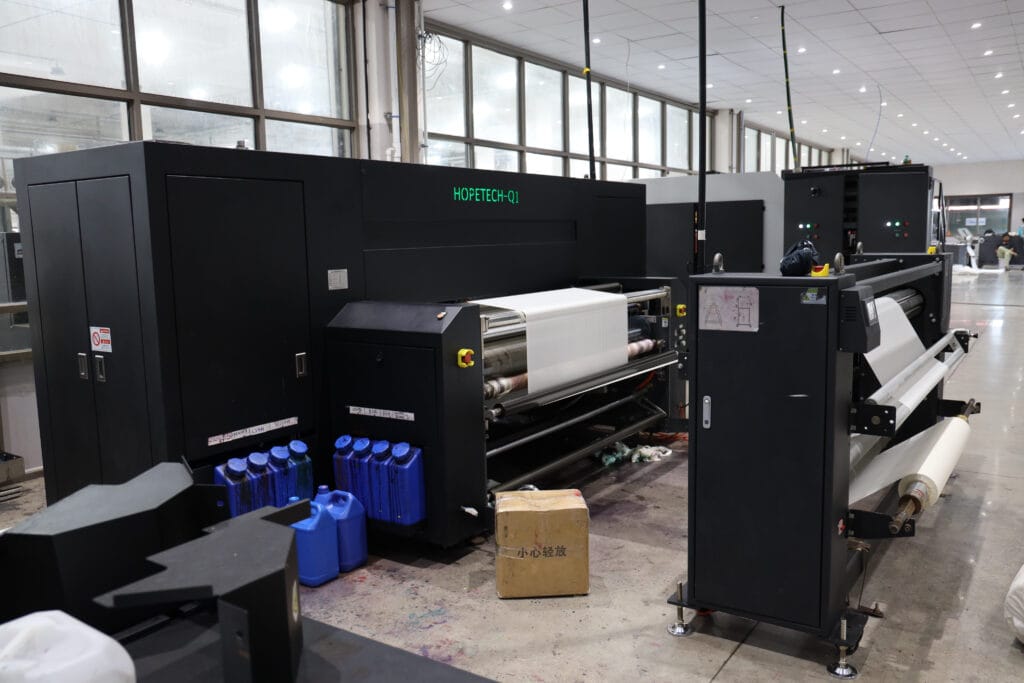
The Hidden Hero of Digital Fabric Printing When we talk about digital fabric printing, most attention goes to the machines and inks. But the truth is, sublimation paper quality plays an equally critical role in defining the final result. Acting as the carrier of ink before it transfers onto fabric, high-quality sublimation paper directly influences how vibrant, sharp, and consistent your designs appear. Poor-quality paper can mean wasted ink, blurred edges, or dull colors — no matter how advanced your printer is. How Sublimation Paper Impacts the Final Print The quality of sublimation paper determines: In short, sublimation paper is not just a medium — it’s the foundation of quality in digital fabric printing. Why TRUE COLORS Papers Stand Out? At TRUE COLORS, sublimation paper isn’t treated as a commodity — it’s a technology. Their in-house R&D and strict quality checks ensure every roll performs at production standards. Printers trust TRUE COLORS because their papers are engineered for: This integration ensures that printers achieve sharp, vibrant, and durable results, whether producing small runs or scaling to industrial volumes. Conclusion In digital fabric printing, the final output is only as good as the sublimation paper you use. Investing in high-quality paper like TRUE COLORS ensures that every design is transferred with clarity, vibrancy, and durability. For manufacturers, exporters, and fashion brands, the choice of paper can mean the difference between average results and standout quality — making it the cornerstone of successful digital printing.
Beyond Machines: How TRUE COLORS Ink Solutions Improve Print Quality
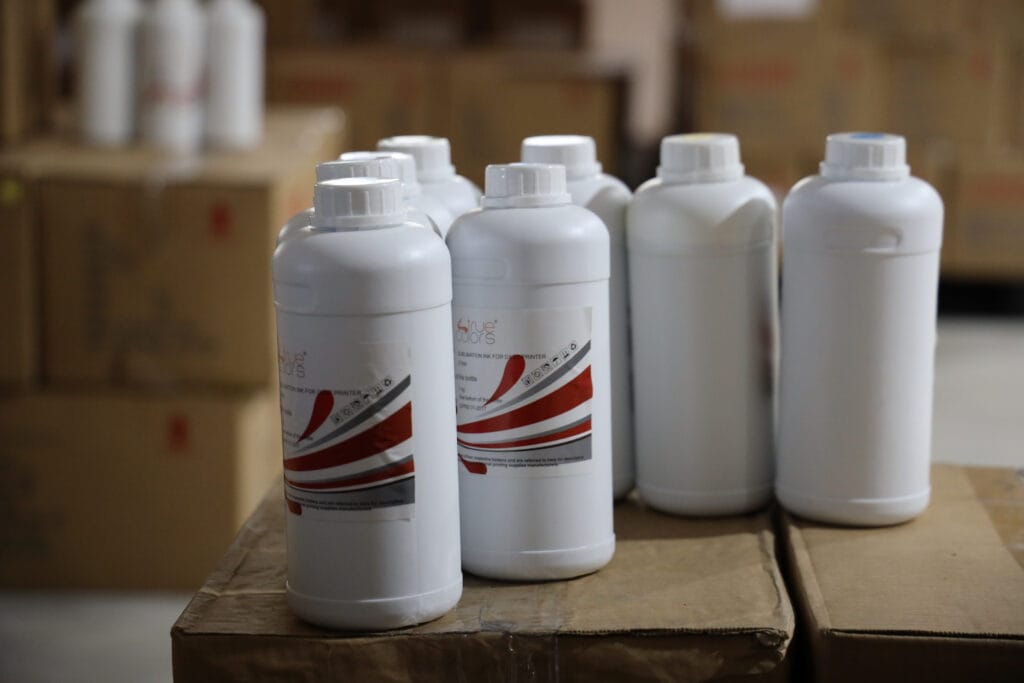
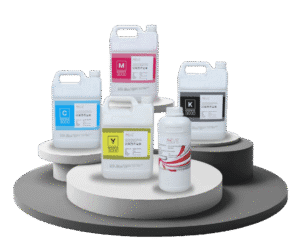
The Role of Ink in Digital Textile Printing In digital textile printing, machines and fabrics often get the spotlight. However, the real magic lies in the ink. It is the ink that carries color, defines sharpness, and ensures durability after washes. Even the most advanced printer cannot deliver high-quality results without the right ink. Therefore, selecting the correct ink becomes essential for top performance. For exporters and fashion brands, choosing the right ink partner is critical to achieving consistent, vibrant, and lasting prints. What Makes Ink Reliable? High-quality inks are defined by a few essentials: Without these qualities, even top-of-the-line machines may fall short of global export standards. Consequently, manufacturers risk inconsistent print quality. Why TRUE COLORS Inks Stand Out At TRUE COLORS, inks are engineered to go beyond ordinary printing needs. Because of in-house R&D and strict quality control, manufacturers, exporters, and fashion brands worldwide place their trust in them. Here’s why TRUE COLORS inks make the difference: With TRUE COLORS inks, print quality is not just enhanced — it is redefined. Best Practices for Using TRUE COLORS Inks Effectively To get the best results from digital printing inks: By following these practices, businesses ensure that ink performance translates into consistent, high-quality output. Conclusion In textile printing, machines may drive the process, but inks define the final impression. With TRUE COLORS ink solutions, manufacturers and exporters achieve unmatched vibrancy, consistency, and durability in every print. When paired with fabrics, machines, and sublimation papers, they create an ecosystem that guarantees reliability from design to delivery. For businesses aiming to elevate print quality, TRUE COLORS inks are the solution that goes beyond machines.
How Perfectly Wound Rolls Improve Printing Efficiency & Reduce Downtime
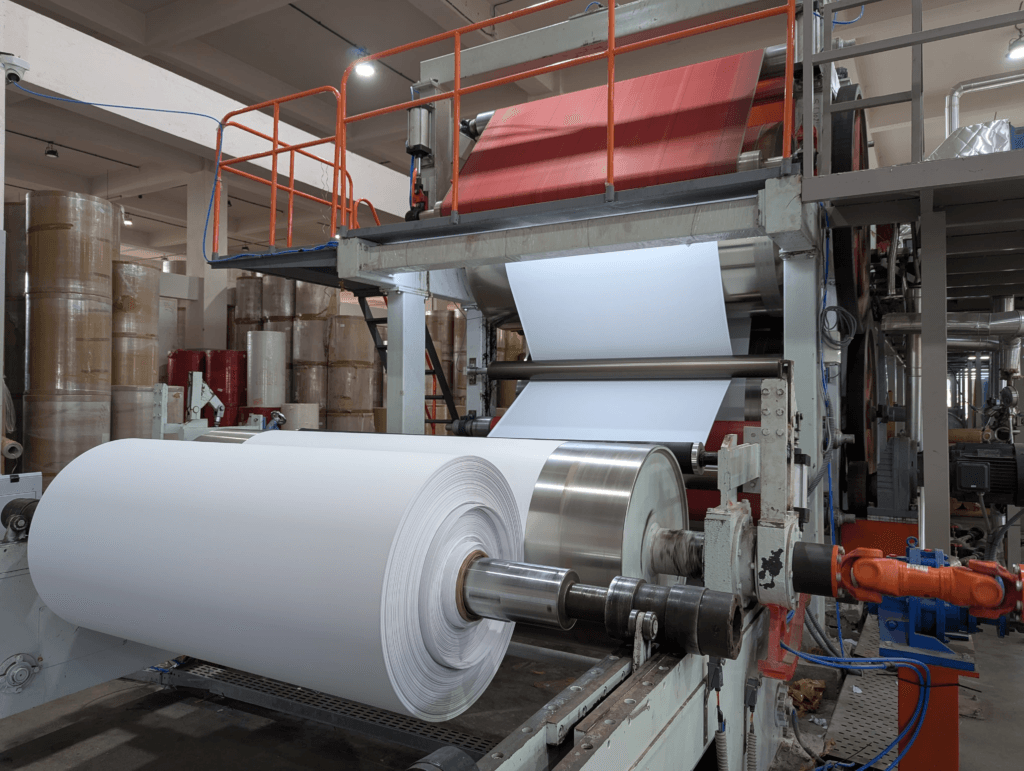
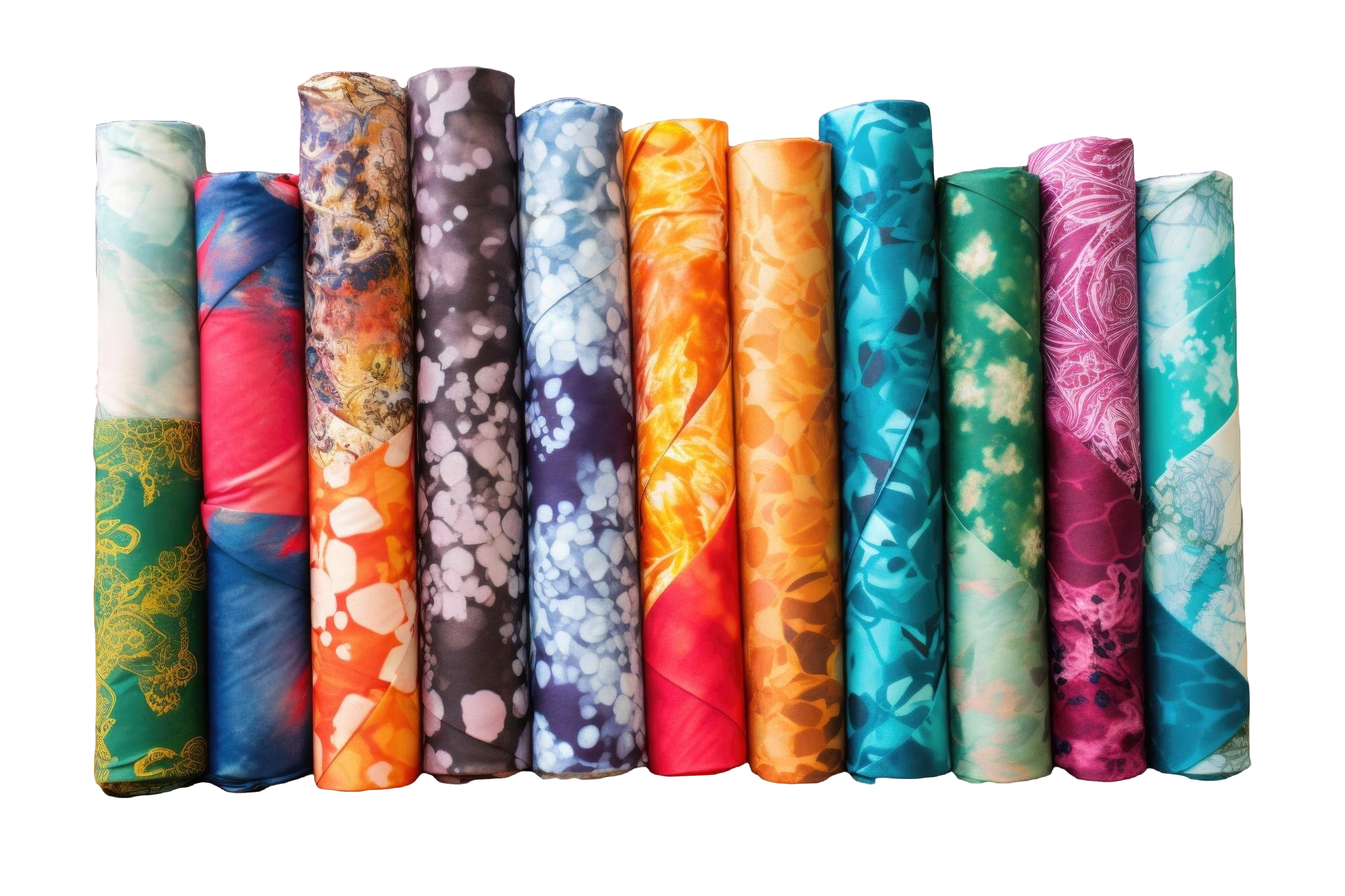
The Role of Roll Quality in Digital Printing In digital textile printing, the quality of your paper or fabric rolls is more important than most realize. For example, poorly wound rolls can cause misfeeds, wrinkles, and jams, leading to downtime and wasted material. In contrast, perfectly wound rolls ensure smooth feeding, precise alignment, and consistent print quality — essential for high-speed, high-volume production. What Makes a Roll Perfectly Wound? High-quality rolls are defined by: Together, these features also reduce the need for manual adjustments and allow printers to achieve consistent results across multiple batches. These characteristics improve efficiency, reduce errors, and save time during production runs. Why Printers Trust TRUE COLORS Rolls At TRUE COLORS, roll quality is a top priority. Our rolls are manufactured with precision and undergo rigorous quality checks, ensuring: Moreover, TRUE COLORS provides technical support and guidance to help printers optimize their workflow, making the entire printing process more reliable and stress-free. Using TRUE COLORS perfectly wound rolls means printers can focus on output, not troubleshooting. Conclusion For manufacturers and exporters, perfectly wound rolls are more than a convenience — they’re essential for smooth, high-quality, and uninterrupted printing. TRUE COLORS rolls deliver consistency, reliability, and efficiency, reducing downtime and ensuring every production run meets the highest standards. By choosing the right rolls, businesses can improve throughput, minimize waste, and consistently produce premium-quality prints that meet client expectations.
How TRUE COLORS Simplifies Machine Buying with Fabric, Ink & Paper Under One Roof
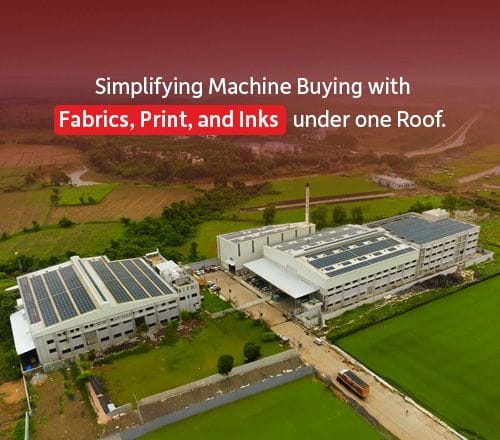
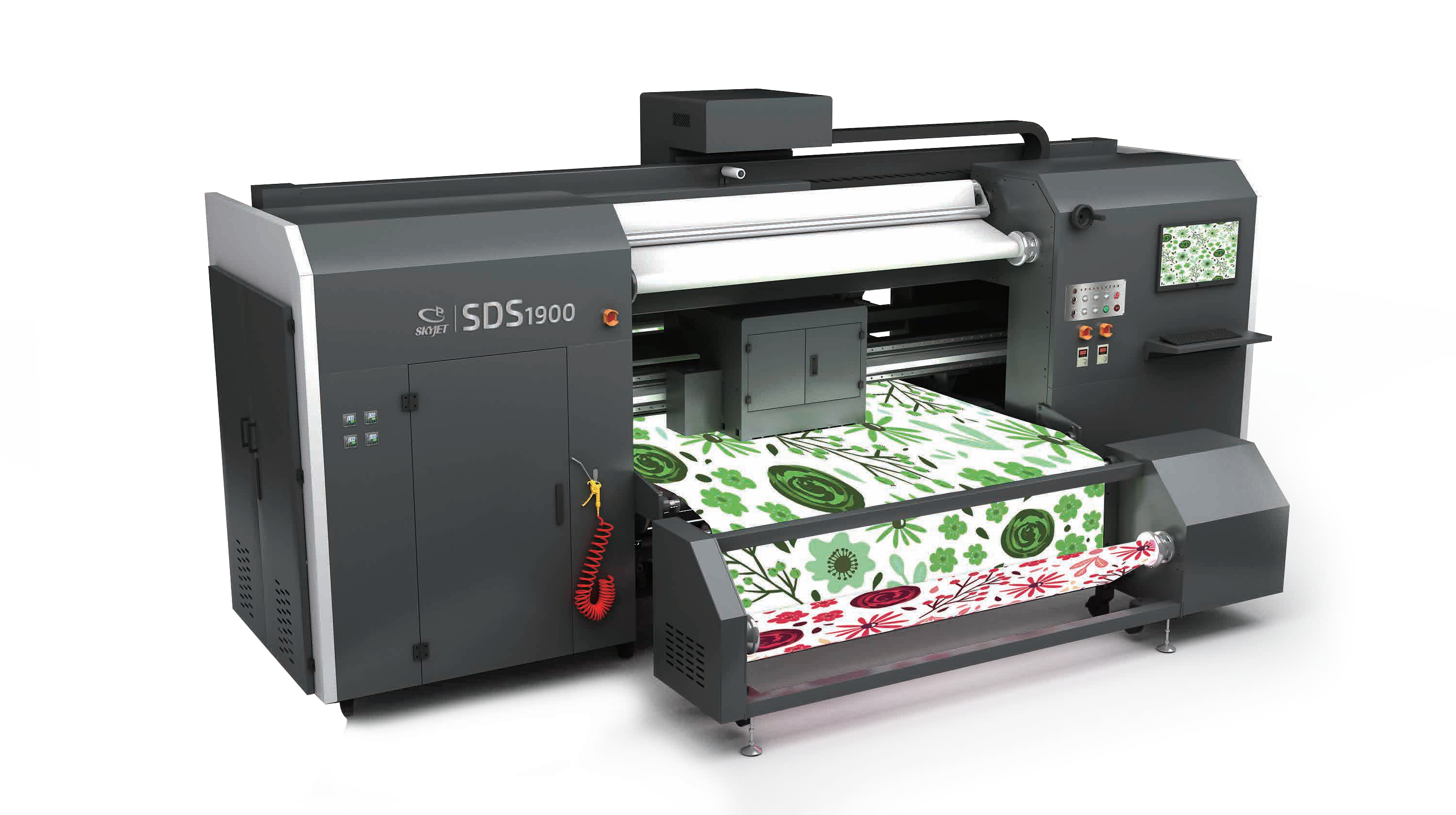
The Role of True Colors Machines in Digital Textile Printing In digital textile printing, TRUE COLORS machines are more than hardware — they are the backbone of production. The right machine ensures precision, speed, and consistency, helping businesses deliver high-quality fabrics on time. But buying a machine in isolation often leads to compatibility issues with inks, papers, and fabrics. This can result in poor print quality, wasted resources, and costly downtime. For exporters and fashion brands, the smarter choice is to work with an integrated partner. What Makes Machine Buying Complex? When investing in digital textile machines, businesses often face challenges such as: Without a unified solution, even the most advanced machines can fall short of expectations. TRUE COLORS Machines: Simplifying the Process of Machine Buying At TRUE COLORS, machines are not sold as standalone equipment. Instead, they are offered as part of a complete ecosystem — perfectly aligned with fabrics, inks, and sublimation papers. Here’s why this makes buying simple and reliable: This integration transforms machine buying from a risky investment into a trusted, ready-to-produce solution. Best Practices When Investing in Printing Machines To make the most of your digital printing setup: These practices ensure machines deliver not just speed, but also reliability and long-term value. Conclusion For exporters and fashion brands, machine buying is more than a purchase — it’s a commitment to production quality. By offering machines alongside fabrics, inks, and sublimation papers under one roof, TRUE COLORS eliminates the usual risks of mismatch and inefficiency. The result? Seamless printing, reduced downtime, and confidence in every order. When it comes to simplifying machine buying, TRUE COLORS delivers an ecosystem you can trust.
Reactive, Disperse, or Pigment Inks: Which is Right for Your Export Market?
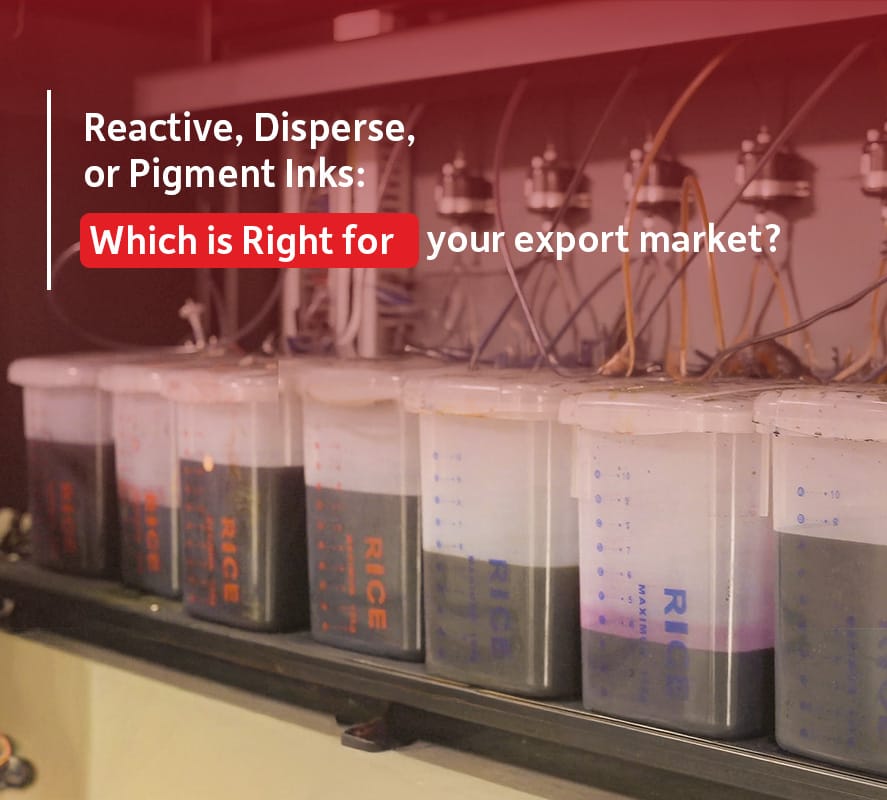
For Indian textile exporters, choosing the right ink is just as important as selecting the right fabric. Global buyers demand consistency, durability, and compliance with eco-standards. But with multiple chemistries available, many mills wonder: reactive, disperse, or pigment inks— which is the best fit for export markets? Reactive Inks: Brightness and Durability Best suited for natural fibers like cotton, viscose, and linen, reactive inks form chemical bonds with fabric. They deliver: However, reactive printing involves more water and energy in post-processing, which exporters must manage carefully. Disperse Inks: Polyester Specialist For sportswear, home décor, and technical textiles—where polyester dominates—disperse inks are the top choice. Their benefits include: Disperse inks align perfectly with markets demanding functionality, such as Europe and North America. Pigment Inks: Sustainable Versatility As buyers push for sustainable practices, pigment inks are gaining traction. Suitable across multiple fabrics, they offer: While not as bright as reactive, pigments’ eco-friendly appeal makes them attractive for markets with strict environmental norms. Matching Inks to Your Export Market Ultimately, the choice between reactive, disperse, or pigment inks depends on: Smart machines like the Hopetech G1 give exporters flexibility to work with multiple inks—ensuring export-grade consistency across diverse markets. Conclusion In a competitive export landscape, ink choice can be the difference between acceptance and rejection. Whether reactive, disperse, or pigment inks, selecting the right chemistry ensures compliance, durability, and customer trust. 👉 Next Step: Book a test print with True Colors to find the perfect ink-fabric match for your export orders.
Understanding Kyocera Printhead Technology: A Game-Changer for Export-Ready Fabrics
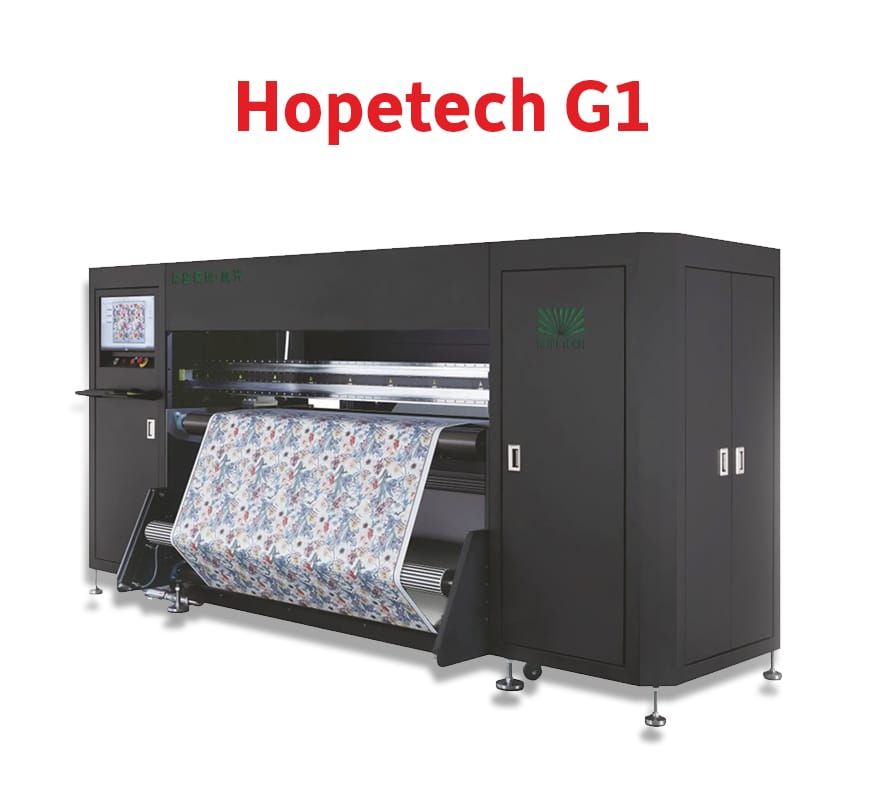
In global textile markets, fabric quality is non-negotiable. Exporters must deliver precision, consistency, and compliance to meet the high standards of international buyers. This is where Kyocera printhead technology is changing the game—providing unparalleled accuracy, scalability, and efficiency for digital textile printing. Why Printhead Technology Matters At the heart of every digital textile printer lies the printhead, the critical component that defines speed, droplet control, and image clarity. Traditional heads often struggle with fine detailing, color consistency, and long-run stability, creating challenges for exporters. Kyocera printheads overcome these barriers with advanced engineering that ensures longer life cycles, stable jetting, and superior control—key requirements for export-grade fabrics. Advantages of Kyocera Printhead Technology Application in Export-Ready Fabrics Indian exporters work with diverse materials—cotton, polyester, viscose, and linen. Kyocera printhead technology allows seamless adaptability across these bases with reactive, disperse, and pigment inks. This versatility makes it a preferred choice for mills targeting international buyers who demand variety without sacrificing consistency. Machines like the Hopetech G1—powered by Kyocera heads—enable mills to scale operations confidently while delivering fabrics that pass stringent quality checks abroad. Conclusion In today’s competitive landscape, Indian exporters need more than speed—they need precision and reliability. Kyocera printhead technology provides exactly that, making it a true game-changer for producing export-ready fabrics. By adopting machines built with this innovation, manufacturers can align with global standards and future-proof their business. 👉 Next Step: Schedule a consultation with True Colors to explore Kyocera-powered solutions for your fabric portfolio.
Sustainable Digital Textile Printing: Reducing Waste with Smart Machines
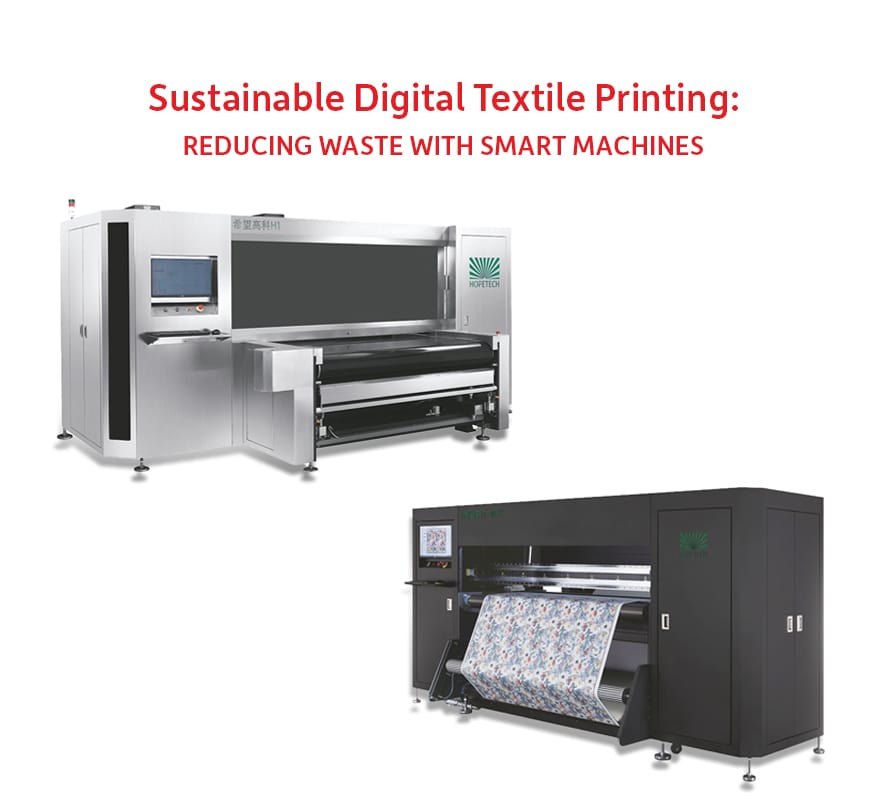
Global fashion and home textile buyers are demanding more than speed—they want eco-conscious partners. The Indian textile industry is responding by embracing sustainable digital textile printing, which reduces waste, conserves water, and cuts energy usage. Powered by smart machines, this approach is transforming how manufacturers balance efficiency with environmental responsibility. The Environmental Challenge of Traditional Printing Conventional rotary and screen printing methods consume enormous amounts of water, dyes, and energy. Wastewater discharge, long setup times, and excess fabric rejections make them increasingly unsustainable for modern buyers. For exporters competing in eco-conscious markets, these inefficiencies are no longer acceptable. Smart Machines Driving Sustainability Smart textile printers are built to minimize waste while maximizing productivity. By using precision droplet control and advanced ink systems, these machines ensure: Machines like the Mallard 2.0 and Hopetech G1 demonstrate how Indian manufacturers can meet high-volume demands without compromising sustainability goals. Export-Ready Fabrics with Eco-Compliance International buyers are holding suppliers accountable for eco-certifications and green production practices. Sustainable digital textile printing enables mills to work confidently with cotton, polyester, viscose, and blends while meeting global compliance requirements. This not only reduces environmental impact but also strengthens trust with overseas clients. Conclusion The shift to sustainable digital textile printing is more than a trend—it’s a business imperative. With smart machines delivering efficiency, consistency, and eco-compliance, Indian mills can reduce waste and align with the expectations of global buyers. 👉 Next Step: Book a test print with True Colors and experience smart, sustainable printing on your own fabrics.
How Fabric Type Influences Ink Choice: Cotton, Polyester, Viscose & More
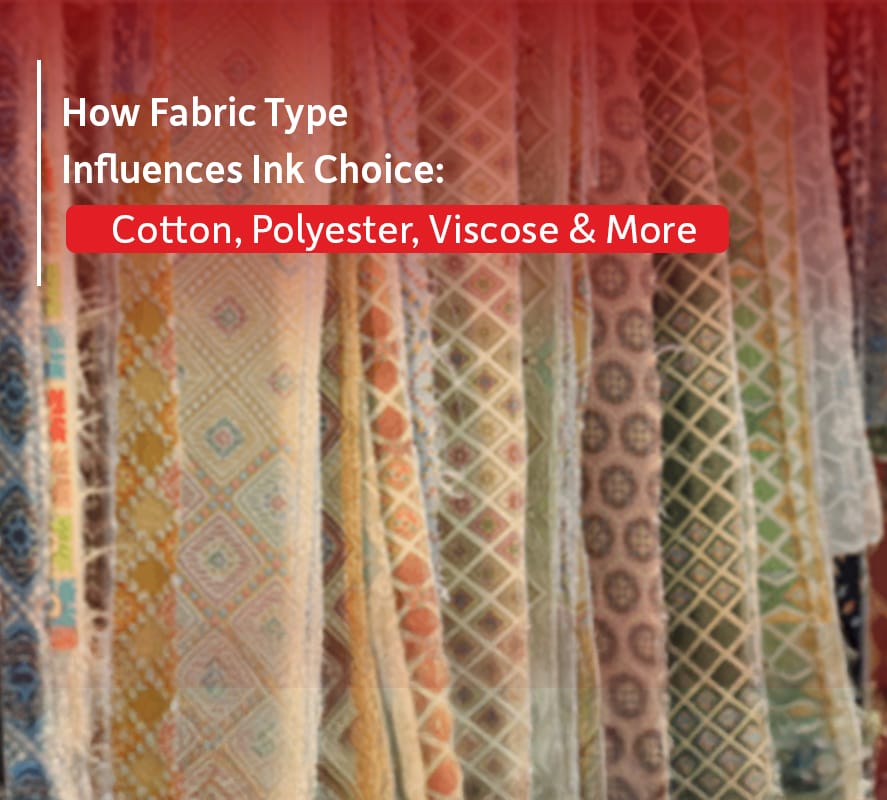
In digital textile printing, one size does not fit all. Different fabrics require different ink chemistries to achieve vibrant colors, durability, and compliance with export standards. Understanding how fabric type influences ink choice is essential for mills and exporters who want consistent, high-quality results across cotton, polyester, viscose, linen, and blends. Cotton: Reactive Inks for Vibrancy Cotton is one of India’s most printed fabrics, especially for fashion and home textiles. Reactive inks bond strongly with natural fibers, delivering: Polyester: Disperse Inks for Strength For sportswear, home décor, and technical textiles, polyester dominates. Here, disperse inks are the best choice, providing: Viscose & Blends: Flexibility with Multiple Inks Viscose, often used in fashion exports, demands versatility. Depending on end-use, mills can use reactive inks to achieve desired effects. Blended fabrics (like cotton-polyester) may require specialized workflows to balance color vibrancy and durability. Smart Machine Advantage Modern printers such as the Hopetech G1 (powered by Kyocera heads) allow mills to switch between inks with minimal downtime. This flexibility helps manufacturers handle diverse fabrics—cotton, polyester, viscose, and linen—while ensuring export-grade consistency. It reinforces why knowing how fabric type influences ink choice is critical for long-term competitiveness. Conclusion Every fabric tells a different story, and ink choice determines how that story is printed. By understanding how fabric type influences ink choice, manufacturers can achieve superior quality, meet compliance demands, and deliver fabrics trusted by global buyers. 👉 Next Step: Schedule a test print with True Colors to see how the right ink unlocks the full potential of your fabric.
Ensuring Consistency in Export-Grade Printing Across Multiple Fabrics
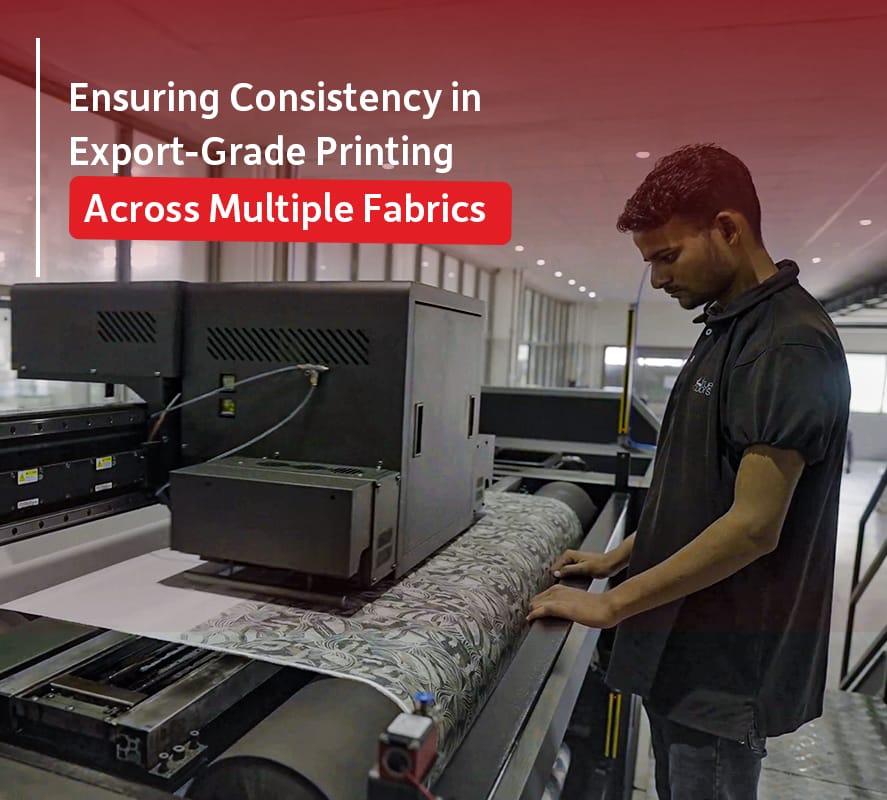
For Indian exporters, success is measured not just by speed but by reliability. International buyers expect every shipment to meet the same high standards—whether it’s cotton for fashion, polyester for sportswear, or viscose for home textiles. Achieving consistency in export-grade printing across these diverse fabrics is the true test of a manufacturer’s capability. The Fabric Challenge Each fabric behaves differently during the printing process: Without the right machines, inks, and processes, results can vary-putting export contracts at risk. Smart Machines for Reliable Results Modern printers like the Hopetech G1 (Kyocera-powered) are designed to handle multiple fabric types with consistent precision. Features such as stable jetting, advanced droplet control, and scalable speed ensure that mills can switch fabrics without compromising quality. This machine-driven reliability supports exporters in meeting global compliance requirements and buyer expectations. Integrated Ecosystem Advantage Consistency is not just about the machine—it’s about the entire workflow. By integrating Machines, Ink, Paper, and Service under one roof, manufacturers can maintain quality across fabric categories. With India’s largest after-sales service network, True Colors ensures quick resolutions, so consistency isn’t interrupted by downtime. Conclusion Delivering flawless fabrics every time builds trust with global buyers. By investing in the right technology and workflows, mills can achieve consistency in export-grade printing across cotton, polyester, viscose, linen, and blends. This consistency isn’t just technical—it’s a competitive edge that secures long-term export success. 👉 Next Step: Book a test print with True Colors and see how your fabrics perform under real export conditions.
How After-Sales Service Defines Long-Term ROI in Textile Printing
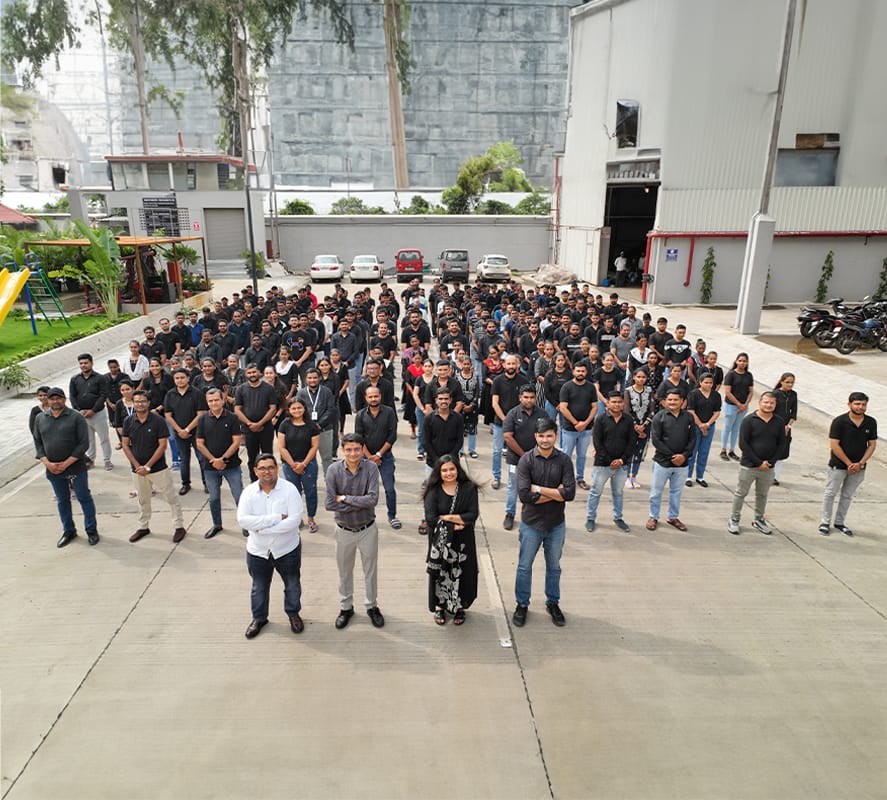
Buying a textile printing machine is a significant investment, but the real value emerges over years of production. For mills and exporters, profitability depends not only on machine speed or precision but also on after-sales service in textile printing. A strong service backbone ensures machines run at peak performance, directly influencing long-term ROI. Why After-Sales Matters More Than Ever In export-driven markets, downtime is costly. A single missed shipment can erode buyer trust and damage reputations. Without reliable service, even the most advanced machine loses its advantage. The key lies in: True Colors Service Leadership True Colors operates India’s largest after-sales service network, ensuring clients receive assistance within 24 hours. With a team of 650+ professionals across design, engineering, and after-sales, mills get: This robust service structure transforms machines from one-time purchases into long-term profit centers. Service as a Growth Multiplier Strong after-sales service doesn’t just solve problems—it enables growth. By ensuring uptime and consistency, mills can: Thus, after-sales service in textile printing becomes a growth multiplier, not just a support function. Conclusion Machines deliver speed and precision, but it is after-sales service that ensures these benefits translate into sustained profitability. For exporters, investing in a provider with proven service strength guarantees long-term ROI and peace of mind. 👉 Next Step: Schedule a consultation with True Colors and discover how our after-sales leadership can secure your returns.