The Science Behind Long-Lasting Textile Printing Ink

Digital textile printing ink plays a critical role in determining how long a printed fabric maintains its color, sharpness, and overall appearance. A textile print usually does not fail immediately. The fading starts slowly. First, the colors begin losing depth. Then blacks stop looking rich, edges appear softer, and after repeated washing the fabric no longer carries the same visual strength it had during production. Interestingly, machines often get blamed first when this happens. However, the actual issue frequently begins inside the chemistry of the ink itself. That is why textile ink durability has become one of the most important factors in modern textile printing.High-quality digital textile printing ink is designed to maintain color integrity even under demanding production and washing conditions. Today, buyers expect fabrics to maintain their appearance even after continuous washing, stretching, and regular usage. Because of this, textile businesses are paying much more attention to long-term print stability instead of focusing only on initial color brightness. How Digital Textile Printing Ink Improves Print Life One major factor behind long-lasting prints is pigment stability. Low-grade pigments tend to weaken faster under heat, washing conditions, and environmental exposure. As the pigments start breaking down, colors become dull, shades shift unevenly, and visual sharpness decreases. High-performance ink systems are developed to maintain stronger pigment stability during production and after usage. This directly improves overall print life and consistency. Digital Textile Printing Ink and Fabric Absorption Ink durability is not controlled by ink alone. Fabric behavior also affects how the final print performs over time. Some fabrics absorb ink unevenly, while others allow pigments to remain too close to the surface. Initially, the output may still look vibrant. However, repeated washing slowly exposes the instability. Experienced production teams usually monitor absorption balance very carefully because proper penetration improves wash resistance, color retention, and surface consistency. This creates more reliable textile output in large-scale production environments. Heat Fixation and Digital Textile Printing Ink Performance Even premium ink can underperform if curing conditions are inconsistent. A small variation in temperature or fixation timing can completely affect how the print behaves later. In many textile units, durability problems actually originate during fixation rather than printing itself. Proper heat processing helps stabilize pigments, improve bonding strength, maintain color depth, and increase flexibility of the print layer. This is one reason why advanced textile operations maintain strict control over curing conditions. Why Modern Digital Textile Printing Ink Must Remain Stable Production speeds in textile printing continue increasing every year. Because of this, inks must remain stable during long runs without changing viscosity or flow behavior. If the ink becomes unstable, shades begin varying across batches, print sharpness decreases, and machine consistency becomes difficult to maintain. Modern ink systems are therefore engineered not only for visual quality but also for production reliability. Durability Now Impacts Brand Reputation In today’s market, customers expect textile products to maintain quality after repeated use. Fading prints quickly affect customer trust, especially in fashion and export-oriented businesses. Strong textile ink durability helps brands maintain better customer satisfaction, stronger product perception, and more consistent production quality. In competitive markets, durability has become part of the overall product experience itself. Conclusion Digital textile printing ink is not evaluated only by initial color vibrancy but also by its ability to deliver consistent performance over time. Businesses that prioritize textile ink durability are generally able to achieve better print consistency, stronger wash performance, and more dependable long-term fabric quality.This is where ink quality starts influencing results beyond appearance alone. Inkia by True Colors is developed to support stable color behavior, controlled ink performance, and reliable output consistency across production cycles. When paired with the right printing conditions and process control, the objective is not just creating vibrant prints — but helping printers build durability into every stage of production.
How to Reduce Ink Consumption Without Compromising Quality

In many textile printing units, rising ink costs quietly eat into profit margins every single month. Most businesses initially assume the solution is simple — buy cheaper ink or reduce ink density. However, that approach usually creates bigger problems like dull colors, unstable shades, and customer complaints. The real challenge is not using less ink. The real challenge is learning how to reduce textile ink usage while still maintaining sharp output, proper color depth, and production consistency. Interestingly, a large amount of ink wastage happens long before the final fabric even reaches dispatch. The Problem Often Starts with Incorrect Machine Settings Many operators increase ink levels thinking it will improve brightness or richness. In reality, excessive ink application often creates oversaturation instead of better quality. You can usually notice this when: Digital textile printing works best when ink deposition remains balanced and controlled. Proper machine calibration helps achieve cleaner output while consuming less ink overall. Poor Maintenance Creates Hidden Ink Loss One of the most overlooked reasons behind high ink consumption is inconsistent machine maintenance. When print heads are partially clogged or misaligned, operators often compensate by increasing print passes or ink flow. This temporarily hides the issue but silently increases ink wastage throughout production. Regular maintenance helps maintain: As a result, machines perform more efficiently without unnecessary ink usage. Color Profiles Matter More Than Most Businesses Realize In many factories, production teams repeatedly adjust colors manually during printing. This trial-and-error method wastes both ink and production time. Proper color profiling creates a more predictable workflow. Once profiles are optimized correctly: This directly helps businesses reduce textile ink usage without affecting visual quality. Fabric and Paper Selection Also Affect Consumption Not every fabric behaves the same way during printing. Some materials absorb excessive ink, while poor transfer paper may fail to release ink efficiently during sublimation. Because of this, compatible fabrics and reliable paper play a major role in controlling ink consumption. Better material compatibility improves: Reducing Rework Improves Profitability In textile printing, rework is one of the biggest sources of hidden cost. A rejected batch does not only waste fabric — it also wastes ink, production hours, and machine capacity. Businesses that maintain stable workflows usually experience: Over time, this creates a significant difference in operational profitability. Conclusion Trying to reduce ink consumption by simply lowering ink density rarely creates long-term improvements in professional textile printing. Real efficiency comes from understanding how the entire production process works together — machine calibration, print settings, maintenance, color control, and material compatibility. Businesses that focus on process optimization instead of shortcuts are generally able to reduce textile ink usage while maintaining stronger print quality, better consistency, and more stable production performance. This is where the role of the ink itself becomes equally important. Inkia by True Colors is developed to support controlled ink behavior, stable color output, and smoother production efficiency across printing operations. Combined with the right workflow and printing conditions, the objective is not just reducing ink usage — but achieving more predictable and reliable textile printing results over time.
5 Signs Your Digital Textile Printing Machine Needs an Upgrade

Sometimes Machines Don’t Stop — They Slowly Start Falling Behind In textile manufacturing, machine problems rarely appear dramatically. Most of the time, production continues. Orders keep moving. Operators adjust settings and find temporary workarounds. On the surface, everything seems operational. But gradually, small inefficiencies begin appearing. A batch takes slightly longer than usual. Color consistency starts fluctuating. Sampling cycles become difficult to manage. Maintenance requests become more frequent. These signs often indicate that the issue is not production management anymore — it may be time to evaluate whether the current digital textile printing machine is still supporting business growth. When Downtime Starts Becoming Part of Daily Production Every factory expects occasional maintenance. However, there is a difference between planned maintenance and repeated production interruption. If operators regularly stop production for calibration, troubleshooting, or unexpected adjustments, the machine may already be creating hidden operational losses. Downtime affects much more than output. It changes scheduling, increases pressure on teams, and reduces overall production predictability. When Quality Looks Different Across Similar Jobs One of the earliest indicators of an aging system appears in output consistency. The design file remains the same. The fabric remains the same. But somehow the result looks different. Colors start shifting slightly between batches. Fine detailing becomes harder to maintain. Repeat production no longer feels predictable. Modern buyers expect stronger repeatability than before, and older systems often struggle to maintain that consistency over long production cycles. When Production Demand Starts Moving Faster Than Your Workflow Textile markets are changing quickly. Shorter runs, faster approvals, rapid sampling, and frequent design updates have become normal production expectations. Machines built for older workflows sometimes create bottlenecks because they were designed for a different production environment. When production teams start adjusting schedules around machine limitations, that usually signals a larger operational gap. When Operating Costs Quietly Keep Increasing Machine upgrades are often delayed to avoid investment. Ironically, older systems sometimes become more expensive over time. Extra maintenance, unstable output, repeated calibration, increased material usage, and slower workflows create costs that are difficult to notice day-to-day. However, over months of production, these losses become significant. When Your Production Goals Have Already Changed Many textile businesses purchase equipment based on current requirements. But production rarely stays the same. Customer expectations evolve. Product categories expand. Output expectations increase. At some point, the machine that once supported growth may begin limiting it. That does not always mean the machine has failed. Sometimes it simply means the business has evolved faster than the equipment. Choosing the Right Upgrade Matters More Than Upgrading Fast Upgrading a digital textile printing machine is not only about buying newer technology. It is about understanding: The right machine should improve production without creating complexity. How True Colors Supports the Transition As textile printing continues evolving, selecting the right technology becomes increasingly important. True Colors focuses not only on supplying advanced digital textile printing solutions but also on helping printers build a more complete production ecosystem through technology understanding, compatible consumables, and technical support. From printing systems to inks, sublimation paper, and operational guidance, the goal is to help textile businesses move toward more stable, scalable, and future-ready production. Conclusion A machine upgrade should never happen simply because equipment becomes old. The better question is whether your current setup still supports the way your business wants to grow. Recognizing these early signs helps textile businesses make smarter decisions before production limitations start affecting long-term performance.
Top Trends Transforming the Textile Printing Industry in 2026

The textile industry is entering a new phase of modernization, where speed, adaptability, and precision are becoming critical for growth. In 2026, textile printing trends 2026 are no longer limited to better machines alone. Instead, the industry is moving towards intelligent workflows, sustainable production, and highly responsive manufacturing systems. As global demand continues to evolve, textile businesses are adopting advanced technologies to improve efficiency, reduce wastage, and handle customized production more effectively. Rise of Hyper-Flexible Production Systems One of the biggest transformations in 2026 is the shift towards hyper-flexible production. Traditional workflows were mainly designed for long and repetitive production runs. However, modern buyers now demand shorter runs, rapid sampling, and quick design modifications. Because of this, textile manufacturers are implementing production systems that support: As a result, businesses can react faster to changing fashion cycles and market demands. Intelligent Automation in Printing Operations Another major development among textile printing trends 2026 is the rise of intelligent automation. Textile businesses are increasingly integrating automated monitoring systems into production environments. These systems help manage: Consequently, production becomes more stable and less dependent on manual adjustments. Sustainable Printing Becoming Standard Sustainability is no longer just a marketing concept. In 2026, it is becoming an operational requirement. Textile businesses are actively reducing water usage, chemical wastage, and unnecessary material consumption. Modern digital printing technologies support this transition by enabling: Therefore, sustainable production is becoming both environmentally and commercially beneficial. Demand for Precision and Color Stability Global brands now expect highly accurate and repeatable output. Because of this, precision-focused printing systems are gaining importance. Modern technologies now deliver: This improves quality assurance and reduces rejection rates in large-scale production. Integrated Printing Ecosystems Instead of managing separate vendors for machines, inks, paper, and servicing, businesses are now preferring integrated ecosystems. This approach improves: As a result, operations become more predictable and scalable. Smarter Data-Driven Production Decisions Data is becoming an important asset in textile printing operations. Businesses are analyzing production metrics to improve efficiency and reduce operational bottlenecks. This includes monitoring: Therefore, decision-making is becoming more analytical and performance-oriented. Conclusion The future of textile printing is becoming faster, smarter, and more adaptive. The major textile printing trends 2026 clearly show that businesses must focus on automation, sustainability, precision, and integrated operations to remain competitive. Companies that embrace these changes early will be better positioned to improve efficiency, maintain quality, and scale production successfully in the years ahead.
Reimagining What Ink Can Do: INKIA Digital Printing Inks by True Colors

At True Colors Limited, we are constantly pushing the boundaries of innovation, and with INKIA Digital Printing Inks, we continue to redefine what’s possible in the world of digital printing. Designed with smarter formulations and engineered for sharper results, INKIA Digital Printing Inks offer high-performance solutions that are tailored for the modern digital printing landscape. In an industry where quality and consistency matter most, INKIA Printing Inks stand out by providing reliable performance, reduced downtime, and vibrant colors that ensure your print work stays true to life. Whether it’s textile printing, signage, or commercial applications, our inks guarantee optimal results with every print, helping you stay ahead in a competitive market. Experience Innovation at the FESPA Global Print Expo 2026 True Colors Limited is proud to showcase INKIA Digital Printing Inks at the upcoming FESPA Global Print Expo 2026, one of the most renowned events in the global print industry. This event, which takes place in Barcelona, will bring together the best in digital printing technology, and we are excited to present our groundbreaking ink solutions that will shape the future of digital printing. At INKIA, we believe that digital printing inks are more than just a medium; they are a tool for transformation. Our latest advancements are designed to offer smarter formulations that provide sharper results, supporting cleaner output, consistent color performance, and better production confidence. Key Features of INKIA Digital Printing Inks: Our team is excited to demonstrate how INKIA Digital Printing Inks can support cleaner printing, help you achieve accurate color reproduction, and ultimately streamline your production process. The innovation behind INKIA is all about improving the printing experience for professionals, manufacturers, and businesses that rely on top-tier ink products for their operations. Join Us at FESPA Global Print Expo 2026 If you are looking to elevate your printing capabilities, INKIA Printing Inks offer the perfect solution. Whether you’re a business owner or part of a larger corporation, you can see firsthand how advanced digital printing inks technology can benefit your printing processes. INKIA will be on display at the FESPA Global Print Expo 2026 in Barcelona, where we will be unveiling new products, formulations, and ink solutions. This is an opportunity to engage with experts, learn about the latest in digital printing inks technologies, and explore the future of digital printing. We welcome you to visit our booth and discover how we can help take your print business to the next level. Event Details: This year’s expo promises to be an exciting showcase of cutting-edge technologies, and we are thrilled to be part of it. Join us and witness the transformative power of INKIA Digital Printing Inks. For more details, visit our website truecolorsgroup.com.
Why Smart Textile Businesses Prefer Integrated Printing Solutions

In today’s textile industry, integrated textile printing solutions help businesses improve efficiency, consistency, and overall production control. Instead of relying on standalone machines or disconnected processes, companies are now shifting towards systems where machines, inks, sublimation paper, fabrics, and after-sales service work together in one connected setup. What Are Integrated Textile Printing Solutions? Integrated textile printing solutions combine all essential components of the printing process into one ecosystem. This includes machines, inks, sublimation paper, fabrics, and after-sales service, all working in sync. As a result, businesses no longer need to manage multiple vendors or deal with compatibility issues. Instead, they operate through a unified system that simplifies production and improves control. How Integrated Textile Printing Solutions Improve Workflow One of the biggest advantages of this approach is a smoother and more efficient workflow. When machines and materials are aligned, production becomes more streamlined. Therefore, businesses can manage time better and increase output without increasing operational complexity. Consistent Output with a Connected Printing Ecosystem In textile printing, even small inconsistencies can affect the final product. When machines, inks, sublimation paper, and fabrics come from different sources, maintaining uniform quality becomes difficult. Integrated textile printing solutions solve this by ensuring compatibility between all components. This results in: Reduced Operational Risks Managing separate systems often creates unexpected issues such as compatibility problems or performance variations. Consequently, production slows down and downtime increases. However, when everything works as one system, these risks are minimized. This improves reliability and ensures smoother operations. Better Technical Support and Maintenance Another key benefit is centralized support. Instead of dealing with multiple service providers, businesses get unified after-sales service. This ensures: Cost Efficiency in the Long Run Although integrated systems may seem like a larger investment initially, they reduce hidden costs over time. As a result, businesses achieve better profitability and predictable operations. Scalability for Growing Businesses As textile businesses grow, managing operations becomes more complex. However, integrated systems make scaling easier. With a complete setup including machines, inks, sublimation paper, fabrics, and service support, businesses can expand without losing efficiency or quality. Conclusion Smart textile businesses are shifting towards integrated solutions because they offer better control, improved efficiency, and consistent results. In a fast-moving industry, having a connected system is no longer optional — it is essential for long-term success.
Why Paper Quality Directly Impacts Your Printing Output
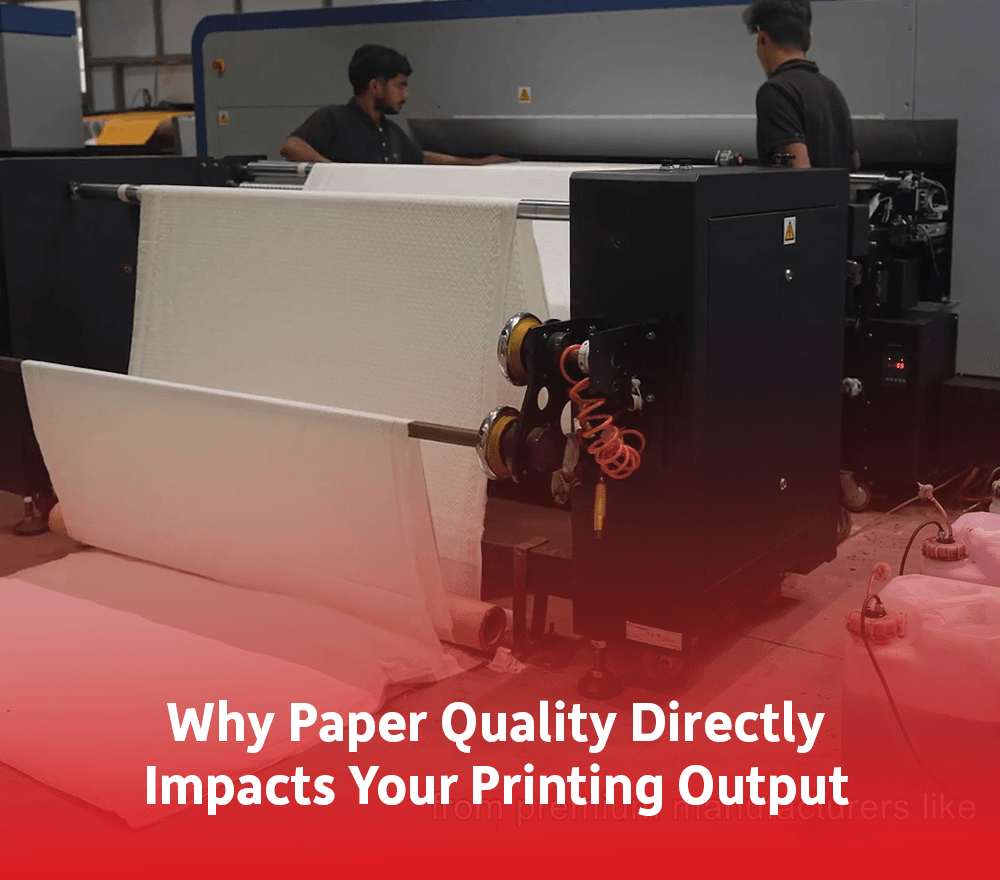
Sublimation paper in textile printing plays a crucial role in determining final output quality. While machines and inks usually get most of the attention, paper directly affects how accurately designs transfer onto fabric. Therefore, even with advanced equipment, poor paper can reduce overall print performance. The Role of Sublimation Paper in Printing In sublimation printing, the design is first printed onto paper and then transferred onto fabric using heat. As a result, the paper acts as a bridge between the design and the final product. If the paper does not perform correctly, the entire transfer process gets affected. Because of this, choosing the right sublimation paper becomes essential for consistent results. Impact on Ink Transfer Efficiency The coating of sublimation paper controls how ink is absorbed and released during the transfer process. If the coating is not balanced: However, high-quality sublimation paper ensures efficient ink release. Therefore, designs appear more vibrant and accurate. Effect on Print Sharpness and Detail Low-quality paper often causes ink spreading or uneven absorption. As a result, design clarity gets affected, and prints may look dull or blurred. On the other hand, good sublimation paper in textile printing helps maintain: Consistency Across Production Maintaining consistency is important, especially in bulk production. Poor paper quality often creates variation between prints, even when the same settings are used. Reliable sublimation paper ensures: Reduction in Wastage and Rework When prints do not meet quality standards, rework becomes necessary. Consequently, both time and material get wasted. By using better paper, businesses can: Why It Matters for Printing Businesses In competitive markets, output quality directly impacts customer satisfaction. Even small defects can affect brand perception. Therefore, selecting the right paper helps businesses deliver consistent and reliable results. Conclusion Paper is not just a supporting element — it is a critical part of the printing process. From ink transfer to final design clarity, everything depends on paper performance. Focusing on the right sublimation paper in textile printing helps ensure better accuracy, consistency, and efficiency.
How Premium Ink Improves Textile Print Quality and Consistency
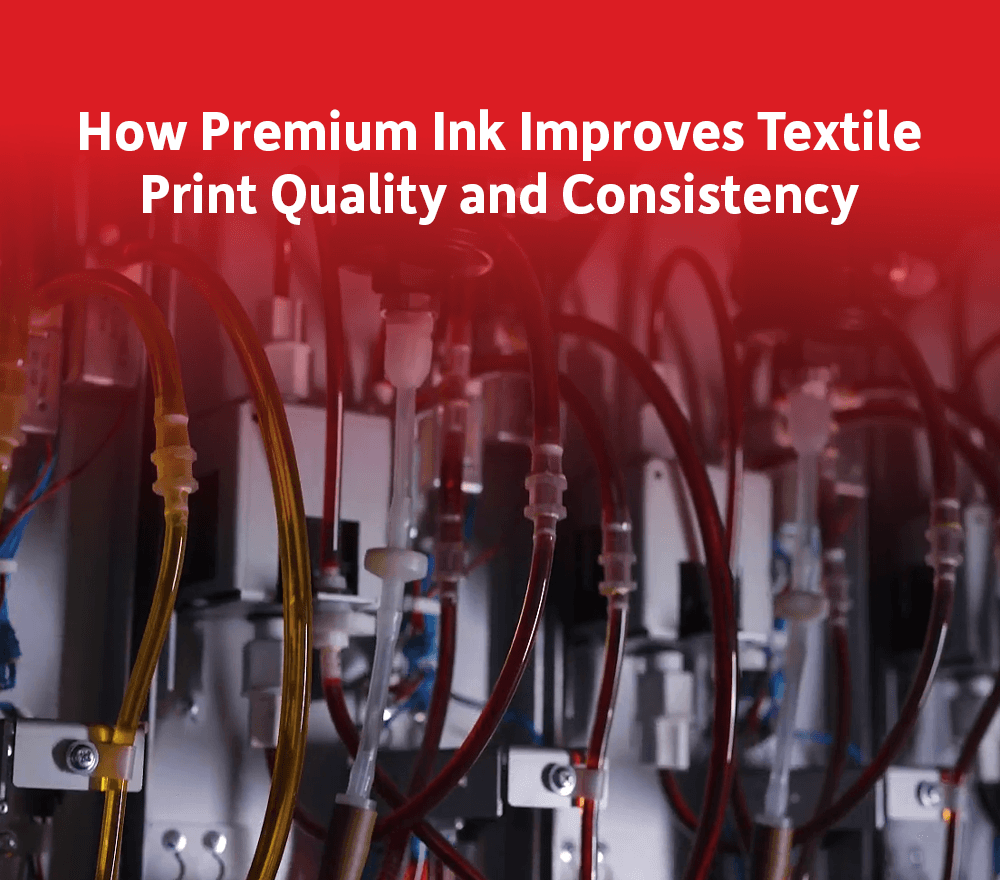
Textile printing ink quality plays a critical role in achieving consistent and high-quality output in modern textile production. While machines and processes matter, the performance of ink directly influences the final result. Therefore, choosing the right ink becomes essential for maintaining production standards. Accurate and Vibrant Color Output Color accuracy is essential in textile printing, especially for branded designs and export orders. High-quality ink delivers precise and vibrant colors, so designs appear sharp and consistent. Moreover, better textile printing ink quality helps maintain uniform shades across multiple production runs, which reduces variation. Stable Performance Across Production Runs Consistency is a key requirement in large-scale production. However, low-quality ink often behaves differently over time, which leads to uneven output. On the other hand, premium ink provides stable performance across long runs. As a result, every print matches the required standard, and customer trust improves. Better Ink Flow and Print Head Protection Smooth ink flow is essential for maintaining print quality. Premium ink ensures controlled and consistent flow within the system, which reduces clogging and uneven distribution. In addition, good textile printing ink quality helps protect the print head, thereby increasing machine lifespan. Reduced Rework and Material Wastage Poor print quality often leads to rejected prints and rework. Consequently, production costs increase and efficiency drops. However, premium ink maintains consistent results, so businesses can avoid unnecessary reprinting. This not only reduces wastage but also improves overall productivity. Compatibility with Modern Printing Systems Premium inks work efficiently with advanced textile printers. They are optimized for different printheads and technologies, which ensures smooth performance. Furthermore, this compatibility helps maintain stable results and prevents technical issues during production. Improved Overall Production Efficiency When print quality remains consistent, production becomes more predictable. Therefore, businesses can plan operations better and complete orders on time. In addition, premium ink supports uninterrupted production by delivering reliable results. Conclusion Textile printing ink quality remains a key factor in achieving high-quality and consistent output. It improves color accuracy, reduces wastage, and supports efficient production. Overall, businesses that focus on ink quality can maintain better performance and long-term reliability.
How High-Speed Textile Printers Improve Profit Margins
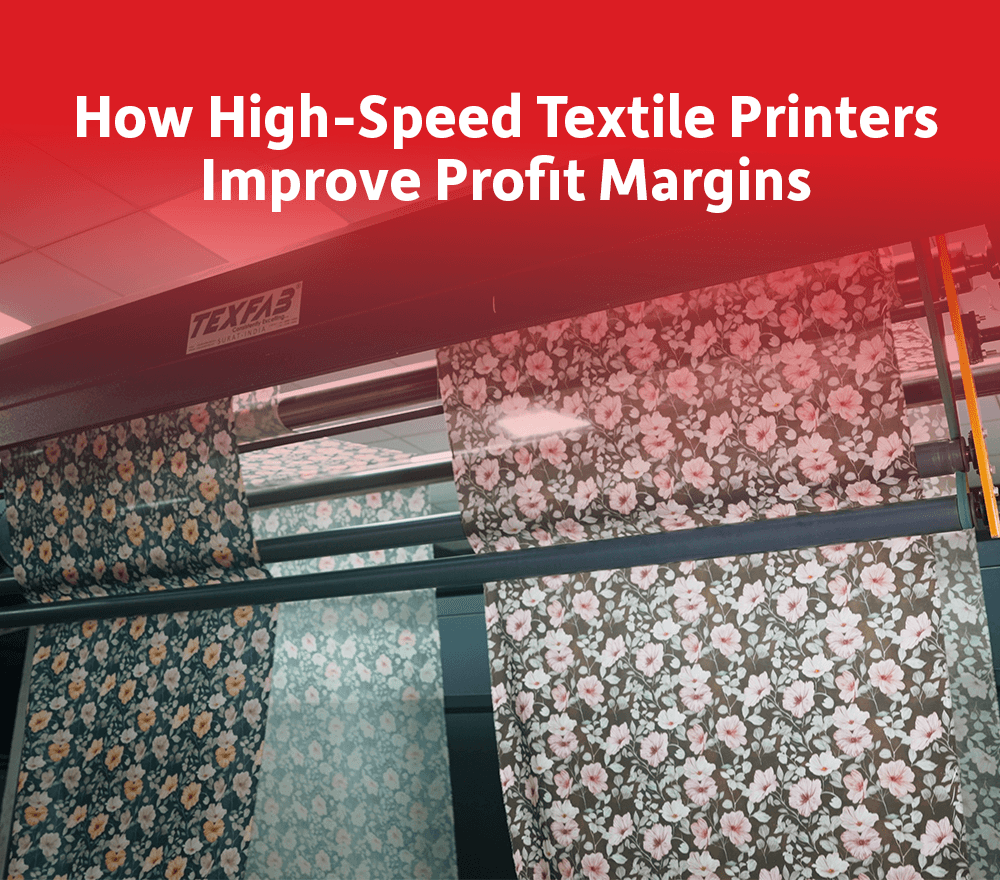
High speed textile printers are helping textile businesses improve profitability by increasing production speed and reducing operational costs. In a competitive market, profit margins depend on how efficiently a business can produce high-quality output within a limited time. Faster machines play a major role in achieving this balance. Faster Production, More Output One of the biggest advantages of high-speed printers is the ability to complete more orders in less time. Traditional printing methods often involve long setup processes and slower production cycles. Modern printing systems reduce these delays, allowing businesses to handle higher volumes without increasing working hours. This increased output directly contributes to higher revenue without requiring additional infrastructure. Reduced Operational Costs Faster machines help reduce multiple cost factors. Since production is quicker, energy consumption per unit decreases. At the same time, fewer manual processes are required, which reduces labor dependency. They also minimize setup waste, helping save raw materials. Lower wastage means better cost control and improved overall efficiency. Improved Consistency and Less Rework Rework is one of the hidden costs in textile production. Inconsistent prints often lead to rejected batches and repeated production. With stable and high-speed output, businesses can maintain better consistency. This reduces errors and eliminates unnecessary reprinting, saving both time and cost. Better Utilization of Existing Resources Instead of expanding floor space or adding more machines, businesses can increase their production capacity using high speed textile printers. This allows better utilization of existing manpower and infrastructure. Production processes become more streamlined, enabling businesses to achieve higher output without major investment. Handling Market Demand Efficiently Market demand in the textile industry is often unpredictable. Businesses need to respond quickly to bulk orders or urgent requirements. High-speed printers provide the flexibility to scale production instantly. They also allow quick design changes, making it easier to manage changing market needs. Long-Term Profitability Improving profit margins is not just about increasing revenue but also about controlling costs and maintaining efficiency. High-speed systems support both by optimizing production and reducing wastage. With better output, consistency, and efficiency, businesses can achieve more stable and long-term growth. Conclusion High speed textile printers are a key factor in improving profit margins for modern textile businesses. By increasing output, reducing costs, and improving efficiency, they create a strong foundation for sustainable growth.
Why Export Houses Are Switching to Digital Textile Printing
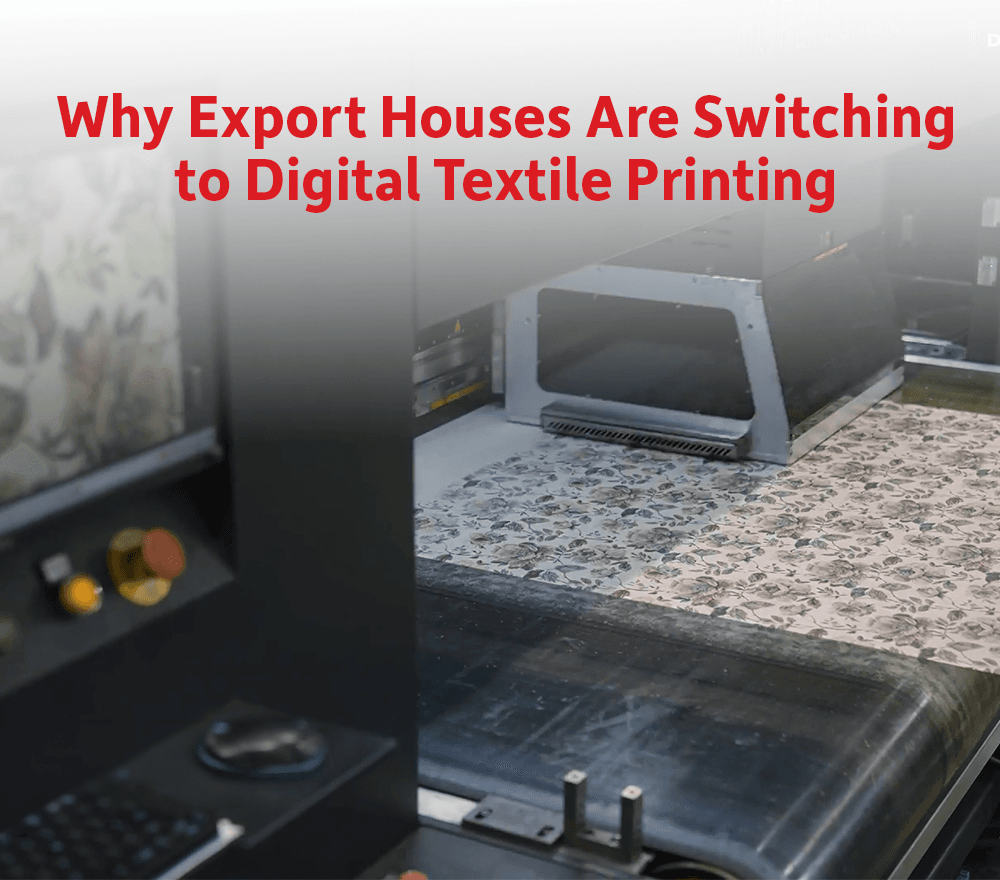
Printing for export houses is changing rapidly as global buyers demand faster delivery, consistent quality, and flexible design options. Export businesses often work with strict timelines, bulk orders, and international quality expectations. Because of this, traditional printing methods are becoming harder to rely on for modern production needs. Meeting Fast Global Demand Export houses often manage tight deadlines and large order volumes. Traditional printing processes involve longer setup times and complex preparation. This slows down production, especially when multiple designs or urgent orders are involved. Digital printing helps reduce setup time and allows faster production cycles. As a result, export businesses can complete orders more efficiently and respond quickly to buyer requirements. Consistency Across Bulk Orders One of the biggest challenges in printing for export houses is maintaining consistent quality across large batches. Even small color or design variations can create problems during quality checks. Digital systems help maintain accurate color reproduction and uniform output. This supports better batch consistency and reduces the chances of rejection from international clients. Flexibility in Design and Production Global markets often require frequent design changes, short runs, sampling, and customized prints. Traditional systems are not always suitable for such flexible requirements. Digital printing allows easy design changes without heavy setup effort. This makes it easier for export houses to manage different buyer demands and seasonal collections. Reduced Wastage and Better Efficiency In export production, wastage directly affects profitability. Traditional methods may require extra material during setup and trials. Digital printing offers a more controlled process, helping reduce material wastage and improve overall efficiency. This also supports better cost management. Sustainable Printing Approach Sustainability is becoming more important in global trade. Many international buyers prefer suppliers that follow efficient and responsible production practices. Modern digital printing methods use fewer resources compared to traditional processes. This makes them more suitable for export businesses focused on long-term growth. Competitive Advantage in Global Markets Export houses that adopt advanced printing methods gain better control over speed, quality, and customization. This helps them meet global standards and build stronger relationships with buyers. For growing businesses, printing for export houses is no longer just about volume. It is about delivering speed, consistency, and reliability together. Conclusion Digital printing is becoming a practical choice for export houses aiming to stay competitive. It supports faster turnaround, better quality control, reduced wastage, and flexible production.