Digital Printing for Kidswear Fabrics: Quality, Comfort and Production Care
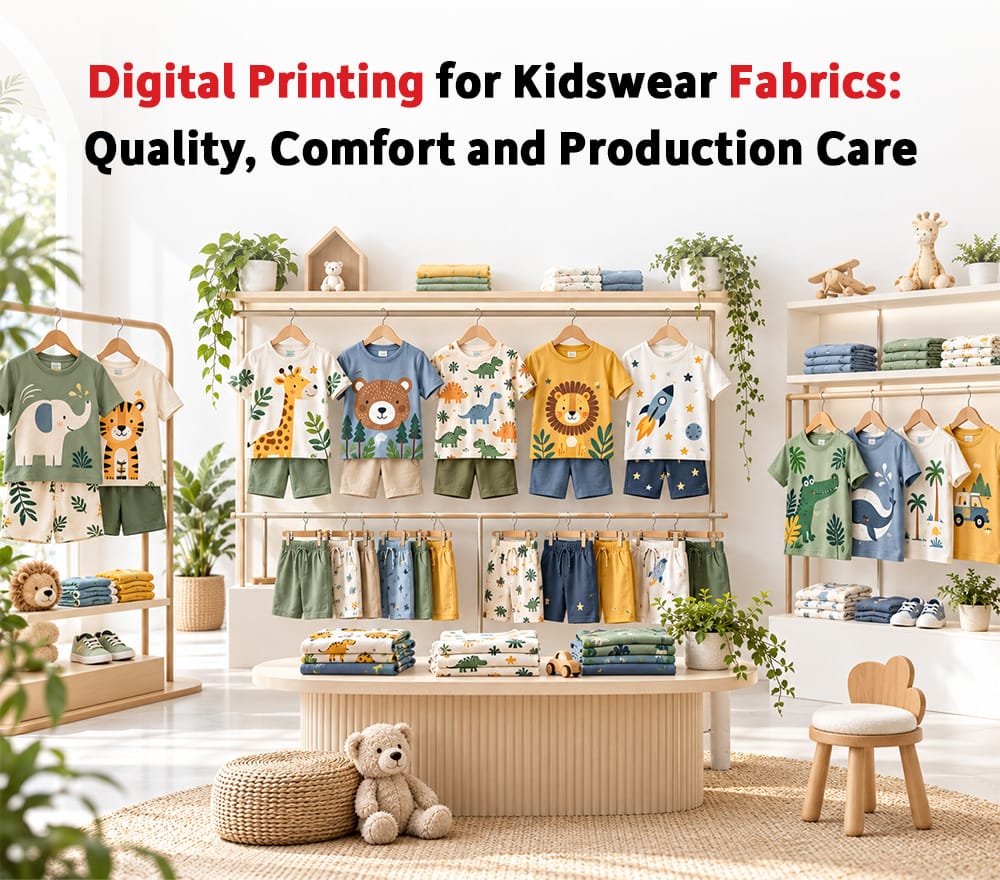
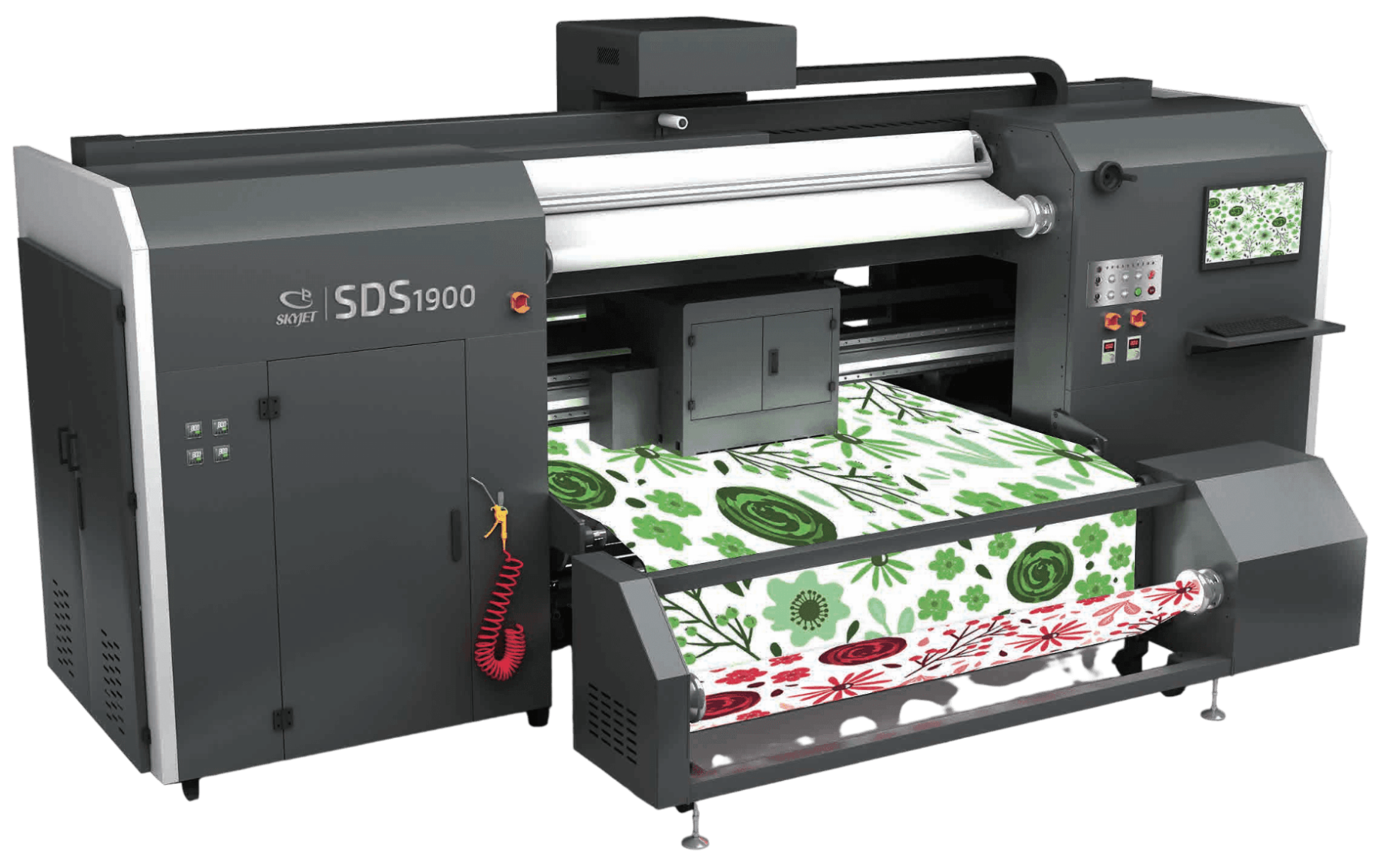
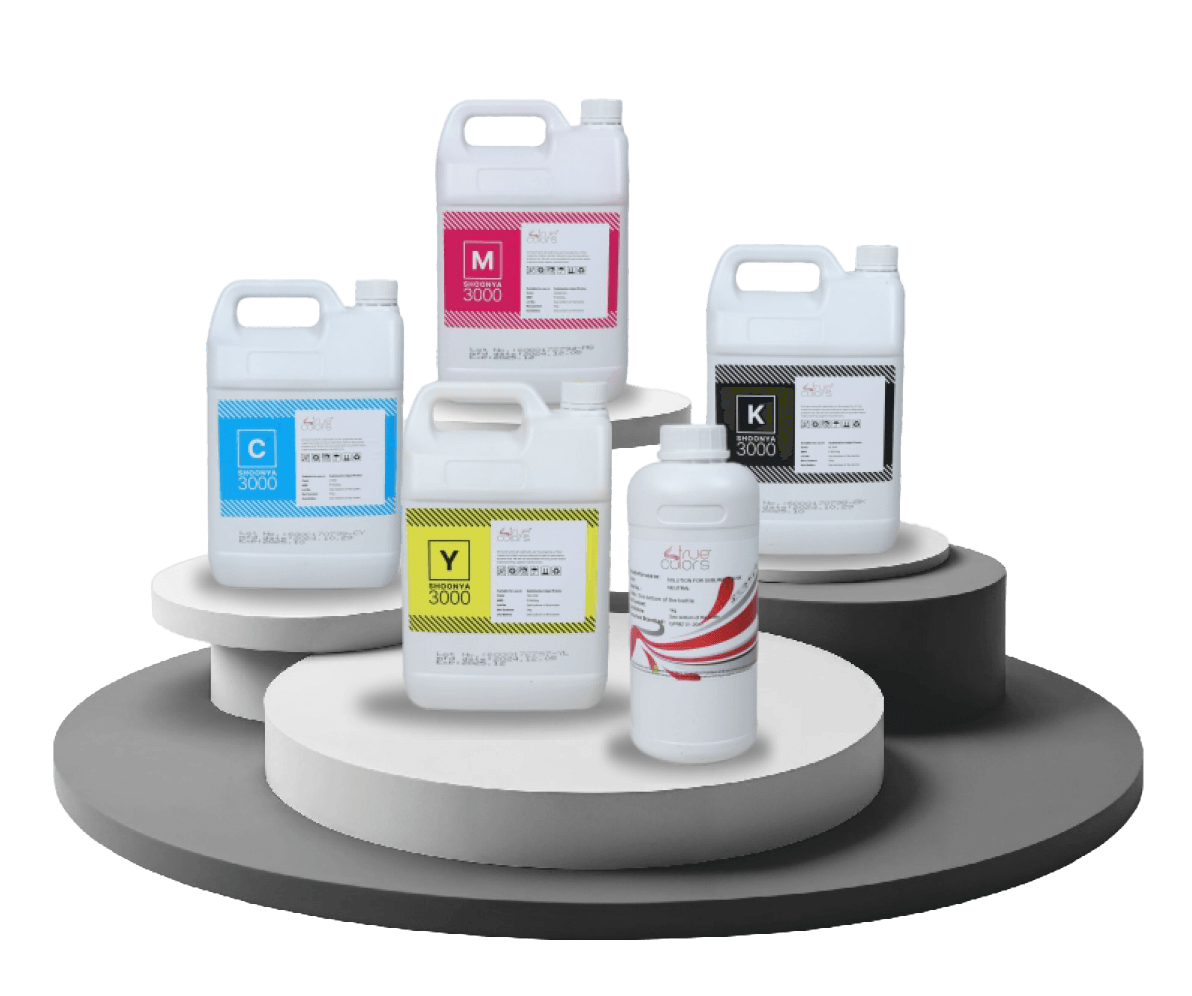
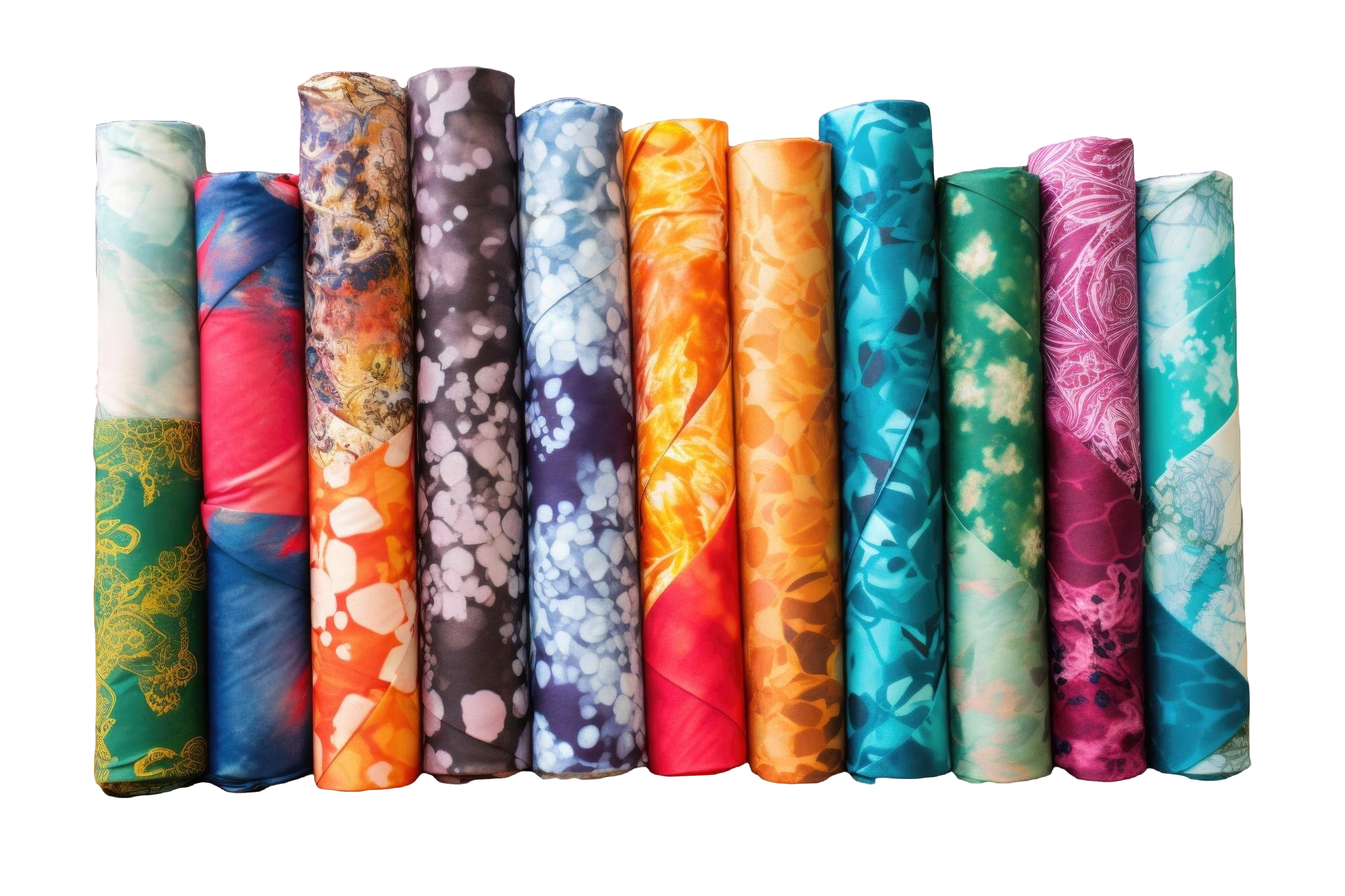
Kidswear Printing Requires Extra Care Kidswear is a sensitive category in textile production. The fabric must look attractive, feel comfortable, and perform well during regular use. Prints for kidswear often use playful colors, small motifs, character-inspired artwork, seasonal themes, and soft fabric bases. Digital printing for kidswear fabrics gives brands and manufacturers flexibility to create varied designs without depending on very large production runs. However, kidswear printing should be approached with extra care. The final fabric should not only look good. It should be comfortable for the child, suitable for garment use, and consistent during production. Fabric Comfort Is a Priority Kidswear fabrics are expected to feel soft and comfortable. Rough texture, heavy print feel, poor finishing, or stiff surface behavior can reduce product appeal. Before selecting a printing process, manufacturers should evaluate the fabric type, ink system, finishing requirement, and final garment use. Cotton, blends, and polyester-based fabrics may each need different printing routes depending on the product. The goal should be to create prints that support both visual appeal and comfort. Colors Must Stay Consistent Across Sets Kidswear collections often include multiple garments, coordinated prints, or repeated designs across sizes. If the shade changes between batches, the collection may look inconsistent. Digital printing can support detailed and colorful artwork, but repeat consistency depends on ink stability, machine settings, fabric control, and production discipline. Manufacturers should maintain approved samples and standard production settings so that repeat lots stay closer to the expected output. Small Motifs Need Sharp Printing Kidswear designs often include small elements, fine details, and playful patterns. These designs need print sharpness and clean edges. If file preparation, fabric surface, machine control, or ink behavior is not suitable, small motifs may appear blurred or unclear. Good digital printing helps maintain detailing when the workflow is controlled properly. For kidswear brands, sharp and clean printing improves product finish and customer appeal. Production Testing Reduces Risk Before bulk printing kidswear fabrics, manufacturers should test print output, fabric feel, washing behavior, shrinkage, and finishing result. Testing helps identify whether the selected process is suitable for the intended product. Since kidswear products are used frequently and washed often, production teams should not rely only on the first visual impression of the print. A controlled testing process helps reduce rejection and improves confidence before production begins. Conclusion Digital printing for kidswear fabrics supports colorful designs, short runs, coordinated collections, and flexible production. However, the process must give equal importance to comfort, fabric choice, print sharpness, color consistency, and careful testing. True Colors can support kidswear fabric production by helping manufacturers choose the right combination of machine, ink, fabric, sublimation paper, and process guidance. With Inkia by True Colors inks, digital textile printing machines, fabrics, and service support, True Colors helps printers manage quality where comfort and consistency matter together. For kidswear-focused businesses, True Colors brings a production approach that supports both creative print design and reliable fabric output.
How Print Density Affects Ink Usage, Drying and Final Fabric Feel
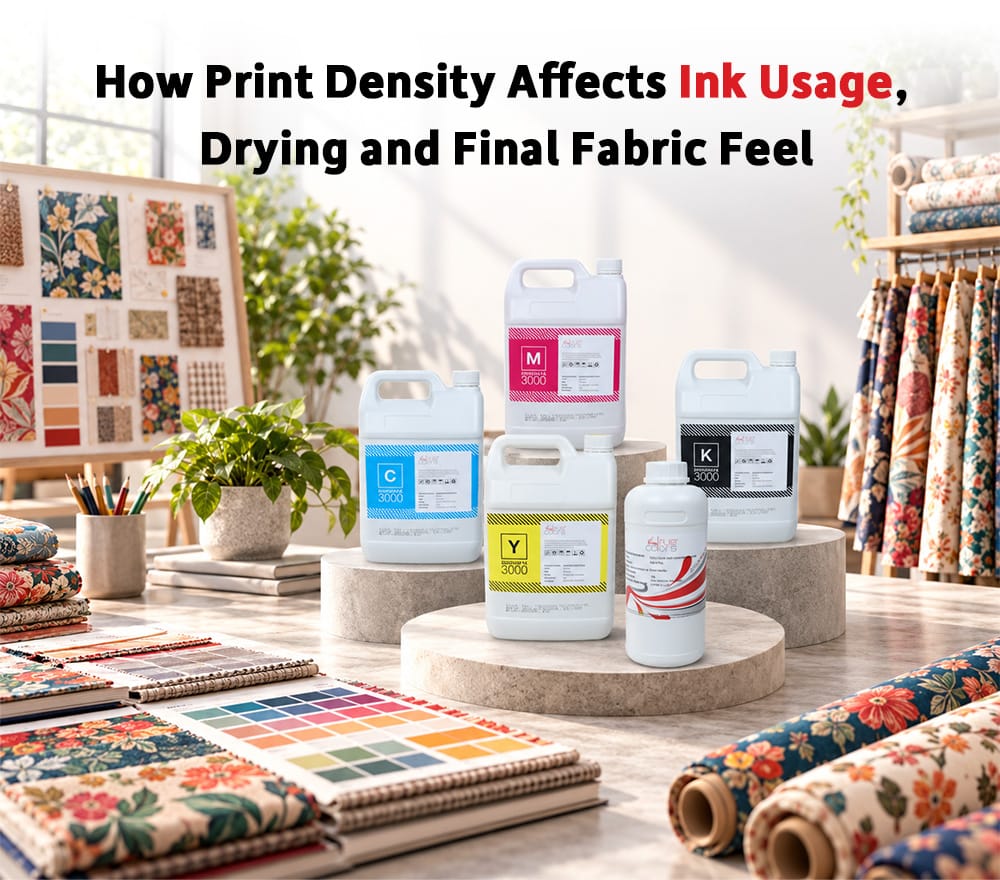
Print Density Shapes the Final Output In digital textile printing, two designs printed on the same fabric may behave very differently. One may be light, open, and easy to process, while another may have heavy coverage, deep colors, and dense artwork. This difference is often connected to print density. Print density in digital textile printing refers to the amount of ink and color coverage used in a design. It affects ink usage, drying behavior, color strength, fabric feel, processing time, and production cost. Many manufacturers focus on fabric and ink type but do not evaluate how design density changes production behavior. This can lead to unexpected cost and quality issues. Heavy Designs Consume More Ink A design with dark backgrounds, deep shades, large solid areas, or high color coverage will naturally require more ink than a light design with open spaces. This affects cost per meter and may also influence machine speed, drying time, and post-processing. If print density is not considered during quotation, the printer may underestimate the real production cost. Two jobs of the same fabric length can have very different ink consumption depending on artwork coverage. Understanding print density helps businesses price jobs more accurately. Drying and Transfer Behavior Can Change Heavy ink coverage may require more drying control. If the print does not dry properly, it can create smudging, transfer defects, handling marks, or uneven output. In sublimation printing, heavy designs may also place greater demand on sublimation paper and heat transfer control. The paper must handle the ink load properly and release it evenly during transfer. If the paper, ink, and process are not suitable for the design density, the final fabric may show dull areas, bleeding, or inconsistency. Fabric Feel Can Be Affected In some printing methods, heavy print coverage can influence the feel of the final fabric. This is especially important for apparel, scarves, kidswear, activewear, and premium fashion fabrics where softness matters. A design may look attractive visually but feel unsuitable if the printing process creates stiffness or surface heaviness. Manufacturers should consider final product use before approving high-density designs for bulk production. Print quality is not only about appearance. It is also about how the fabric feels and performs. Design and Production Teams Should Work Together Print density should be discussed before production begins. Designers may create artwork based on visual appeal, while production teams understand ink usage, drying, fabric feel, and cost impact. When both teams communicate early, design decisions can be adjusted without affecting creativity. This helps reduce production surprises and improves customer satisfaction. A good digital printing workflow connects creative design with practical production requirements. Conclusion Commercial digital printing ink plays a critical role in print quality, drying behaviour, media interaction, colour consistency, and overall production efficiency. Evaluating ink only by its purchase price can overlook the factors that influence actual production performance. Inkia by True Colors is designed as part of True Colors broader digital printing ecosystem, helping printers approach ink selection with a focus on application requirements, production performance, and compatibility. For commercial printers seeking consistent output and dependable production, the right ink is not simply what goes into the machine. It is part of what determines how effectively the complete printing system performs.
When Standard Print Is Not Enough: How Digital Embellishment Creates Premium Print Value
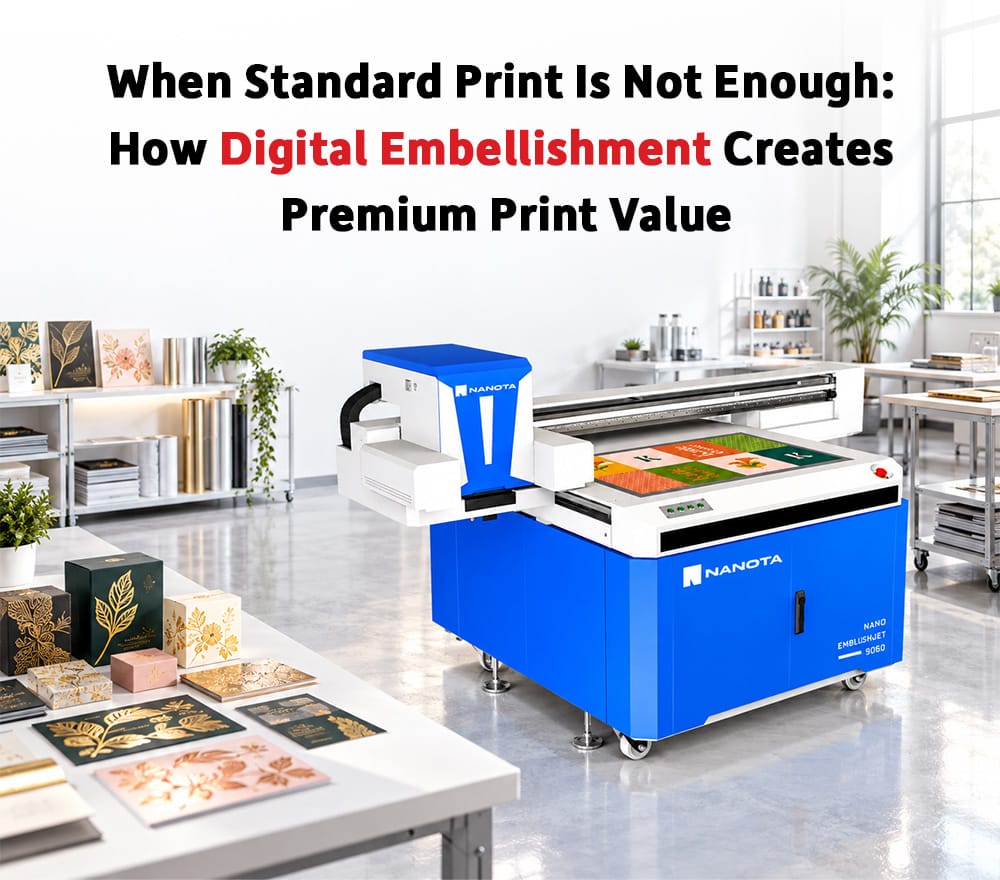
The Print Does Not Always End With Ink In commercial printing, getting the design onto paper is only one part of the final product. As brands compete for attention, printed materials increasingly need something more than colour, sharpness, and good reproduction. They need a physical quality that makes the product stand out. This is where digital print embellishment becomes increasingly relevant. Techniques such as spot UV, digital varnish, texture effects, and foiling can add visual and tactile elements to printed products, turning an ordinary printed surface into a premium communication piece. For commercial printers, this creates an opportunity to move beyond volume-based printing and offer higher-value finishing applications. Why Premium Finishing Is Becoming More Relevant Packaging, labels, invitations, brochures, promotional material, luxury stationery, and brand collateral often compete for attention in crowded environments. A standard printed surface can communicate information, but a premium finish can change how the product is perceived. Gloss highlights can draw attention to specific elements of a design. Varnish can create contrast between matte and glossy areas. Foiling can introduce metallic effects. Texture can add a physical dimension that cannot be achieved through conventional four-colour printing alone. The objective is not to embellish every part of a print. The real value comes from applying finishing selectively where it strengthens the design. Digital Embellishment Changes Short-Run Possibilities Traditional embellishment processes can become difficult to justify for smaller jobs because of preparation requirements and production complexity. Digital embellishment changes the economics of these applications by making premium effects more accessible for short-run and customized production. This is particularly useful when printers are working with seasonal packaging, limited editions, promotional campaigns, premium labels, event material, or customized commercial print. Instead of requiring extremely large quantities to justify a premium finish, businesses can explore smaller and more targeted production opportunities. Spot UV Can Create Visual Hierarchy Spot UV is not simply about making a surface glossy. When used strategically, it can direct attention toward specific elements of a printed design. A logo can receive a gloss highlight. A product image can be emphasized. Typography can be given additional visual depth. Certain design elements can contrast against an otherwise matte background. This makes digital varnish and spot UV useful tools for designers and printers looking to create stronger visual hierarchy without changing the underlying artwork. Embellishment Can Increase the Value of a Print Job For commercial printers, premium finishing can create an additional value proposition. Instead of competing only on the number of pages printed or the lowest cost per sheet, printers can offer differentiated products with higher perceived value. This can be particularly relevant in packaging, cosmetics, premium labels, luxury stationery, corporate communication, and promotional applications where appearance directly influences brand perception. The printer moves from being only a production provider to becoming a partner in creating a premium finished product. Why Digital Control Matters Digital embellishment becomes particularly interesting when the finishing process needs to remain flexible. Different jobs may require different areas to receive varnish, different artwork versions, or changing production quantities. A digital workflow can support these variations without making every job dependent on a completely fixed finishing setup. This is valuable for commercial printers handling diverse customer requirements. Nano EmblishJet 9060: Bringing Digital Finishing Into the Production Workflow The Nano EmblishJet 9060 from the True Colors commercial printing portfolio is designed for digital spot UV, varnish, and embellishment applications. The system supports UV-curable varnish printing and includes features such as precision CCD registration, automated paper feeding, and in-line foiling capability. It is positioned for commercial printers, packaging manufacturers, label printers, digital print service providers, and print finishing businesses looking to add premium effects to their existing production capabilities. The significance is not simply the finishing effect itself. It is the ability to bring premium embellishment into a more flexible short-run and on-demand production environment. From Printing More to Creating More Value Commercial printing is increasingly moving toward differentiated output. When customers can choose between a standard printed product and a premium version with selective embellishment, the printer has an opportunity to participate in a higher-value segment. Digital embellishment provides one route toward that transition. It allows printers to explore new applications without changing the fundamental purpose of printing. Instead, it adds another layer of value to what has already been produced. Conclusion Digital print embellishment is changing how commercial printers can approach premium production. Spot UV, varnish, foiling, and specialty effects can help transform standard printed products into more distinctive and higher-value applications. With the Nano EmblishJet 9060, Nanota by True Colors brings digital embellishment into its broader commercial printing portfolio, giving printers and converters an opportunity to explore premium finishing across packaging, labels, commercial print, and other applications. For businesses looking beyond conventional print production, the opportunity may not always be about printing more. Sometimes, it is about making every printed piece worth more.
Why Heat Transfer Accuracy Matters in Sublimation Production

Sublimation Output Depends on Controlled Transfer In sublimation printing, the printer is only one part of the production process. The design is first printed on sublimation paper and then transferred to polyester-based fabric through heat and pressure. This means the final print quality depends strongly on the transfer stage. Heat transfer accuracy in sublimation printing affects color strength, sharpness, ghosting, fabric feel, repeatability, and production stability. If the heat transfer process is not controlled properly, even good ink and good sublimation paper may not deliver the expected output. Temperature Control Influences Color Development Sublimation printing depends on the correct use of heat. If the temperature is too low, the ink may not transfer fully, resulting in dull color or weak output. If the temperature is too high, the fabric may face damage, shade shift, or unwanted marks. The correct temperature depends on the fabric, ink, paper, machine speed, and transfer equipment. Manufacturers should avoid assuming that one fixed setting will work for every job. A sportswear fabric, flag fabric, home textile fabric, and soft signage fabric may each respond differently. Controlled temperature helps improve color development and reduces transfer-related defects. Pressure and Time Affect Transfer Consistency Heat alone is not enough. Pressure and dwell time also influence sublimation output. If pressure is uneven, some areas may transfer better than others. If the transfer time is too short, color may appear weak. If the time is too long, it may affect fabric behavior or cause unwanted changes. In roll-to-roll sublimation production, transfer accuracy must remain stable throughout the run. Small variations can create visible differences across the final fabric. Ghosting Can Happen During Poor Transfer Handling Ghosting is a common sublimation issue where the image appears slightly doubled or blurred. It can happen when paper or fabric shifts during the transfer process. This affects sharpness and makes the final product look unprofessional. Proper tension, stable paper movement, fabric control, and careful handling help reduce ghosting. The transfer stage must be managed with the same discipline as printing. Sublimation Paper Performance Connects with Transfer Accuracy Sublimation paper must hold and release ink properly during transfer. If the paper has poor stability, curls, absorbs moisture, or releases unevenly, transfer accuracy may suffer. This shows how closely paper quality and heat transfer control are connected. For high-quality sublimation printing, manufacturers should consider paper, ink, fabric, and transfer equipment as one production system. Conclusion Heat transfer accuracy in sublimation printing is essential for strong color output, sharp details, fabric quality, and repeatable production. Temperature, pressure, time, paper movement, and fabric handling all influence the final result. True Colors Sublimation Paper supports printers in achieving dependable transfer output when used with the right production discipline. Along with Inkia by True Colors inks, digital printing machines, fabrics, and technical support, True Colors helps sublimation businesses understand how printing and transfer work together. For manufacturers who want better sublimation consistency, True Colors brings practical value by connecting paper performance with the full transfer printing workflow.
From Ink to Output: Why Ink Chemistry Matters in Commercial Digital Printing
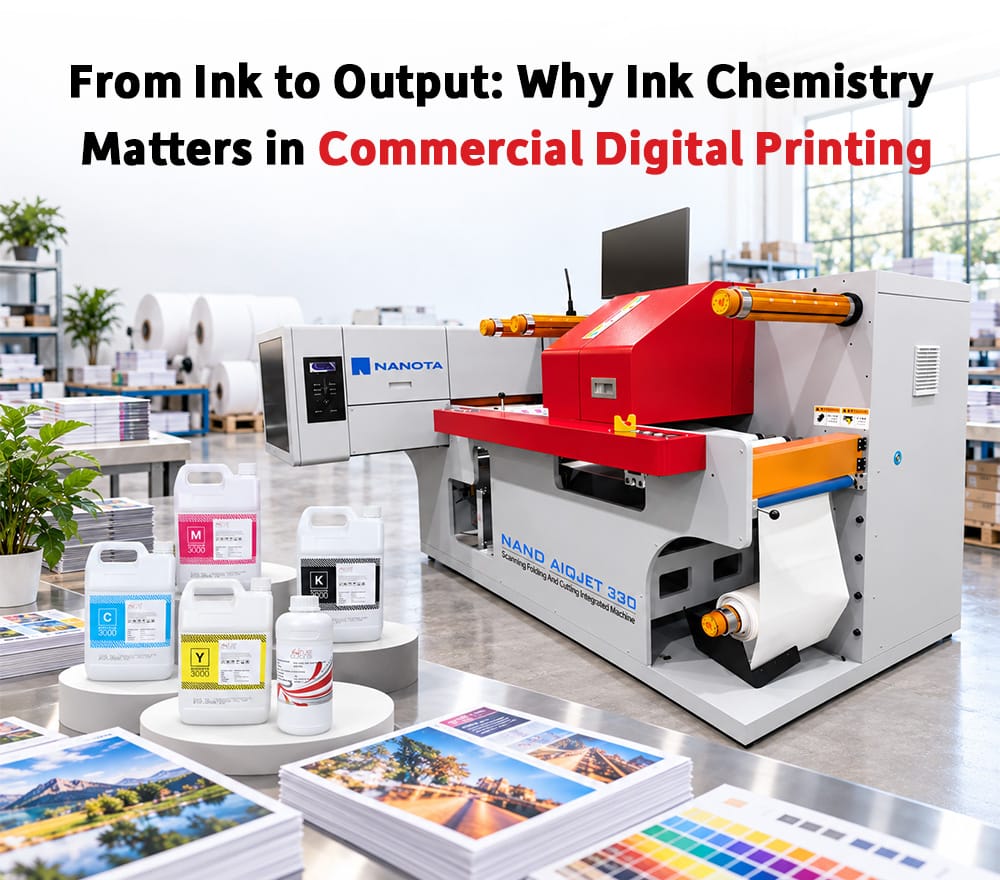
Ink Is More Than a Consumable In commercial digital printing, ink is often evaluated by its colour output and price. However, the role of ink extends much further. Commercial digital printing ink influences how a machine performs, how quickly prints dry, how colours appear on different media, and how consistently a production line can operate. This becomes particularly important when printers handle different applications and media types within the same production environment. The right ink therefore needs to be evaluated as part of the complete printing system. Ink Chemistry Influences Print Behaviour Digital printing depends on extremely controlled ink delivery. The ink must move through the system consistently and form accurate droplets at the printhead. Its viscosity, surface tension, particle characteristics, drying behaviour, and interaction with the printing media all influence the final result. If these characteristics are not suitable for the printing system, a printer may experience inconsistent output, drying problems, image quality issues, or increased maintenance requirements. This is why ink chemistry matters just as much as the visual appearance of the final print. Media Compatibility Can Change the Final Result The same digital ink does not necessarily behave identically on every substrate. Paper characteristics, coating, absorbency, surface treatment, and intended application can influence how the ink behaves after printing. A commercial printer handling multiple media types therefore needs to understand how the ink and substrate interact. Good ink performance should create a predictable relationship between the machine, ink, and media. Drying Behaviour Affects Production Speed Commercial printing often depends on fast turnaround. If printed output cannot be handled, finished, stacked, or converted efficiently, production speed is affected. Ink drying behaviour therefore becomes an operational consideration. The right ink system should support the required production speed while maintaining image quality and avoiding issues such as set-off, smearing, or insufficient drying. For high-throughput commercial printers, this can directly influence workflow efficiency. Colour Consistency Matters Across Repeat Jobs Commercial printers frequently receive repeat orders where customers expect the same visual appearance. If ink behaviour changes between production runs, colour consistency can become difficult to maintain. Stable ink performance helps printers achieve more predictable results and reduces the need for repeated adjustments. This becomes particularly important for brand communication, marketing material, packaging-related applications, and other work where colour accuracy influences customer perception. The Ink and Machine Should Be Viewed Together One of the biggest mistakes in digital printing is evaluating ink independently from the machine. Printhead technology, ink delivery system, software, print settings, media, and environmental conditions all influence the final result. A commercial printer should therefore evaluate the complete ink ecosystem rather than choosing a product purely on litre price. The objective should be predictable production, not simply low input cost. INKIA by True Colors INKIA by True Colors is part of True Colors broader approach to digital printing consumables, where ink is considered alongside the technology and application for which it is being used. For commercial printers, this approach is important because the right ink needs to work within a production environment rather than simply perform well in a sample. By combining ink expertise with digital printing technology and application understanding, Inkia by True Colors helps businesses make more informed decisions around commercial digital printing. Conclusion Commercial digital printing ink plays a critical role in print quality, drying behaviour, media interaction, colour consistency, and overall production efficiency. Evaluating ink only by its purchase price can overlook the factors that influence actual production performance. Through INKIA by True Colors and its broader digital printing expertise, Inkia by True Colors helps printers look at ink as an important part of the complete printing equation. For commercial printers seeking consistent output and dependable production, the right ink is not simply what goes into the machine. It is part of what determines how effectively the machine performs.
Why Sublimation Paper Quality Matters When Print Becomes a Business
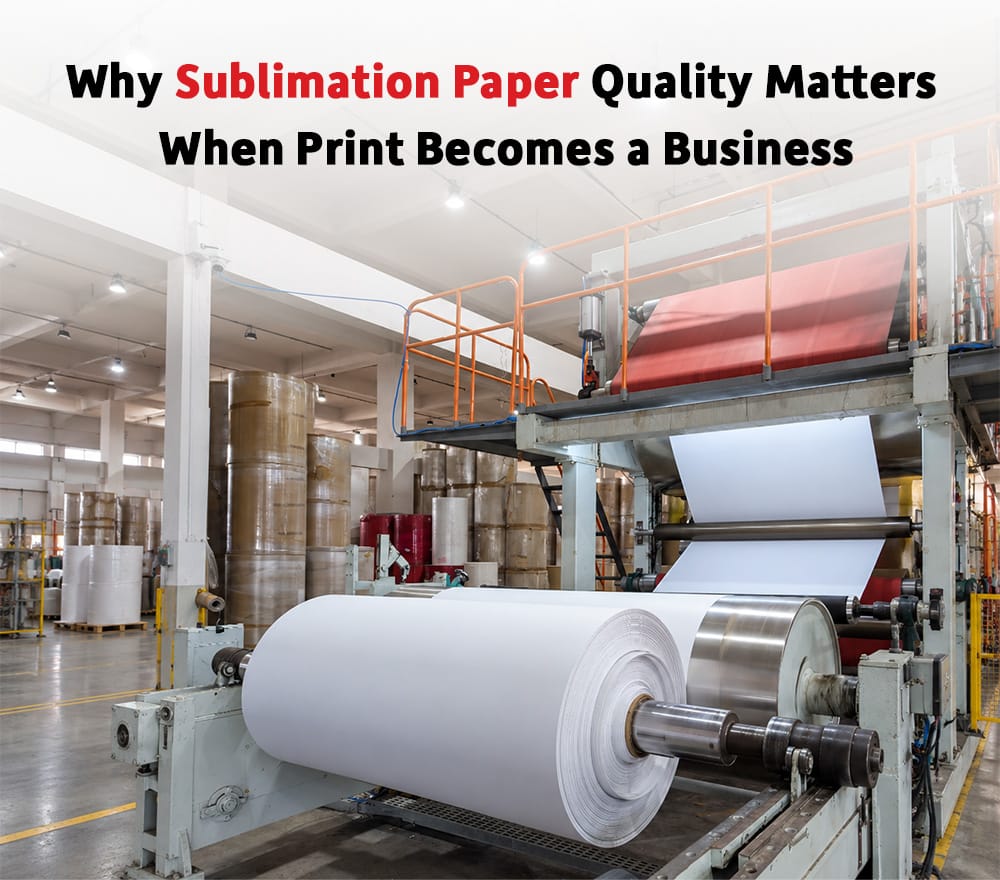
Sublimation Paper Is Part of the Production Equation In sublimation printing, the paper is sometimes treated as a supporting material rather than an important production component. However, the paper sits directly between the printed image and the final transferred output. Its performance can influence how effectively ink is held, released, and transferred during production. For commercial printers, this becomes especially important because the objective is not simply to produce one good print. The objective is to reproduce the expected result consistently across an entire production run. That makes sublimation paper for commercial printing a production decision rather than just a consumable purchase. Transfer Performance Affects Final Output A sublimation workflow depends on controlled ink transfer from paper to the final substrate. The paper needs to handle the printed ink appropriately and release it during the transfer process in a consistent manner. If this behaviour changes, the final output can also change. Differences in colour intensity, image sharpness, tonal reproduction, and overall appearance can become visible when production quantities increase. For businesses handling commercial orders, consistency across the run is often more important than achieving one impressive sample. Paper and Ink Need to Work Together Sublimation paper does not operate independently from ink. The interaction between the two influences how the printed image behaves before and during transfer. Ink load, colour density, drying behaviour, coating characteristics, and transfer conditions all contribute to the final result. This is why changing paper without evaluating its interaction with the existing ink system can create unexpected production differences. A commercial printing workflow should consider paper and ink as connected elements. Production Requirements Are Different from Sampling Requirements A paper that performs well during a small sample may not necessarily deliver the same production efficiency during longer commercial runs. As production volume increases, small inconsistencies become more visible. Paper feeding, printed image handling, transfer behaviour, and repeatability become increasingly important. Commercial printers therefore need to evaluate sublimation paper under actual production conditions rather than relying only on short demonstrations. The real question is not whether the paper can produce a good print. It is whether it can continue producing the expected result throughout the job. Consistency Becomes More Valuable as Orders Grow A commercial printing business may handle repeat orders where customers expect the same colour and appearance across different production cycles. If the paper behaves differently between jobs, achieving repeatability becomes more difficult. Consistent sublimation paper performance helps create a more predictable production environment. This can simplify quality control and reduce unnecessary adjustments during repeat orders. For businesses working with demanding customers, this predictability can become an important competitive advantage. Paper Selection Can Influence Production Efficiency Production efficiency is not determined only by machine speed. If paper causes frequent handling issues, inconsistent transfer, or additional production adjustments, the practical output of the printing operation can be affected. Reliable paper performance allows operators to spend less time correcting avoidable issues and more time maintaining the planned production flow. This becomes increasingly relevant for businesses operating commercial sublimation printing at scale. True Colors Sublimation Paper True Colors Sublimation Paper is part of the wider True Colors digital printing ecosystem, designed to support sublimation applications where transfer quality and production consistency are important. The value of a sublimation paper solution should be considered within the complete printing process, where ink, printing technology, paper, substrate, and transfer conditions work together. For commercial printers, this approach helps move the discussion away from simply comparing paper prices and toward evaluating actual production performance. Conclusion Sublimation paper for commercial printing plays an important role in transfer quality, colour reproduction, consistency, and production efficiency. As printing volumes increase, the performance of the paper becomes increasingly important because even small variations can affect larger quantities of output. With True Colors Sublimation Paper, True Colors brings paper into a wider digital printing ecosystem that also includes printing technology, Inkia by True Colors inks, and application-focused expertise. For businesses looking to build a dependable sublimation production setup, the right paper is not just a consumable. It is part of what determines how consistently the complete printing process performs.
Why Commercial Printers Are Looking Beyond Traditional Inkjet Production
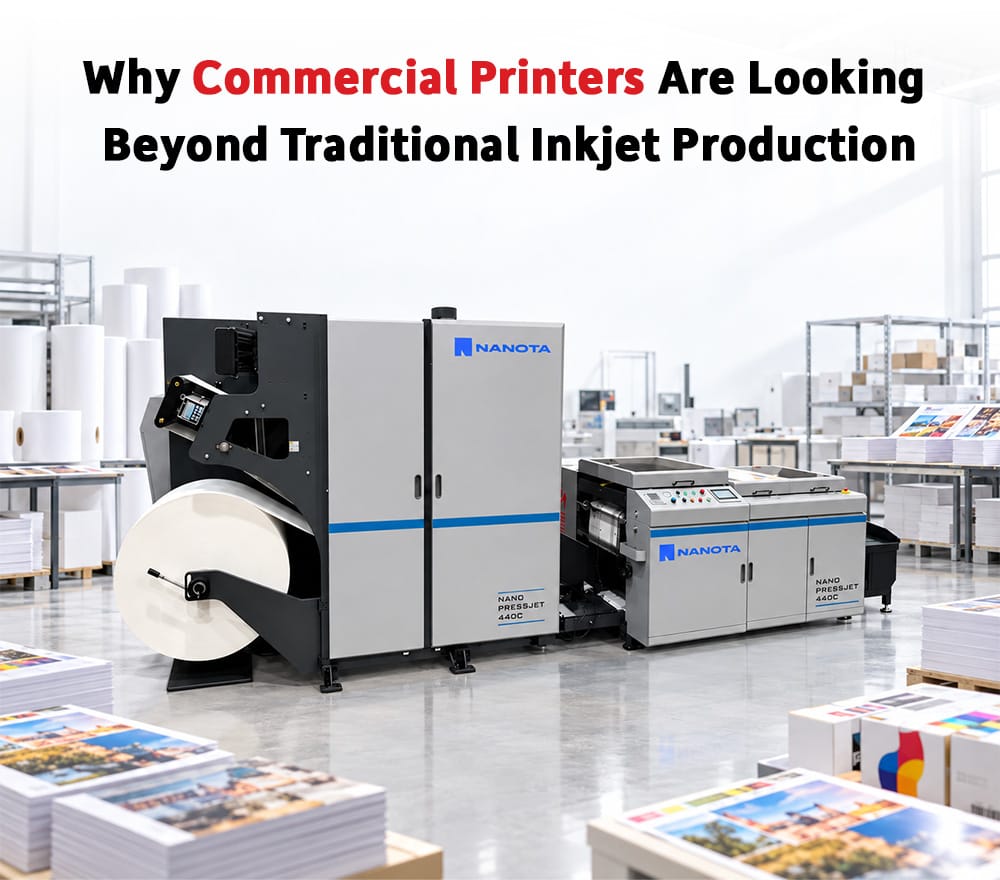
Commercial Printing Is Entering a More Flexible Phase Commercial printing has traditionally been associated with high-volume, standardized production. However, print buyers today are asking for shorter runs, faster turnaround, personalized content, variable data, and more frequent design changes. This shift is changing how commercial printers evaluate production technology. Commercial inkjet printing solutions are becoming increasingly relevant because they allow businesses to respond to these requirements without treating every job as a large-volume production exercise. The opportunity is not simply about replacing an existing printing process. It is about creating a more flexible production capability that can handle the way customers now buy print. Shorter Runs Are Changing Production Economics A commercial printer may receive one large order today and several smaller customized jobs tomorrow. Traditional production workflows can become inefficient when every job requires significant preparation before printing begins. Digital inkjet production changes this equation by reducing the dependency on lengthy setup processes. This makes shorter jobs more practical and allows printers to accept work that may previously have been difficult to execute profitably. For commercial printers, this can create additional revenue opportunities without relying entirely on long production runs. Personalization Is Becoming a Commercial Requirement Personalized communication is another major driver of digital printing. Businesses increasingly want printed material with different names, addresses, offers, QR codes, promotional messages, images, or customer-specific information. Commercial inkjet technology can support variable data production because content can change from one printed piece to another while remaining part of the same production workflow. This opens opportunities across direct mail, transactional communication, publishing, marketing material, educational printing, and other commercial applications. Turnaround Time Has Become a Competitive Advantage Print buyers are increasingly conscious of deadlines. Marketing campaigns, events, product launches, publishing schedules, and business communication often operate within fixed timelines. A printer that can move from approved artwork to finished output quickly can offer a stronger value proposition. Commercial inkjet helps support this requirement by enabling digital production with faster job transitions and less dependence on traditional setup processes. The advantage is particularly relevant for printers competing for urgent and short-run work. Commercial Inkjet Can Expand a Printers Service Portfolio The biggest opportunity may not be replacing existing production. It may be adding new capabilities. A commercial printer can use digital inkjet technology to enter applications such as short-run books, personalized communication, educational material, variable data printing, marketing collateral, and customized print products. This allows businesses to diversify their revenue streams while responding to changing customer requirements. Technology Selection Still Needs a Business Perspective Commercial printers should evaluate digital inkjet technology based on the applications they want to serve rather than simply comparing machine specifications. The right solution depends on expected volumes, media requirements, print quality, personalization needs, turnaround expectations, workflow, and future business plans. A commercially useful printing system is one that creates new production possibilities while remaining practical for the business. Conclusion Commercial inkjet printing solutions are becoming increasingly relevant as print businesses move toward shorter runs, faster turnaround, personalization, and flexible production. Nanota by True Colors approaches the commercial printing segment with this broader perspective through its Commercial Inkjet Printing solutions. The focus is not simply on introducing another machine into a print room, but on helping businesses explore new applications and production opportunities through digital technology. For commercial printers evaluating their next growth opportunity, Nanota by True Colors can help connect technology with practical business applications, supported by its wider experience across digital printing solutions.
How Digital Printing Helps Textile Businesses Serve Multiple Industries
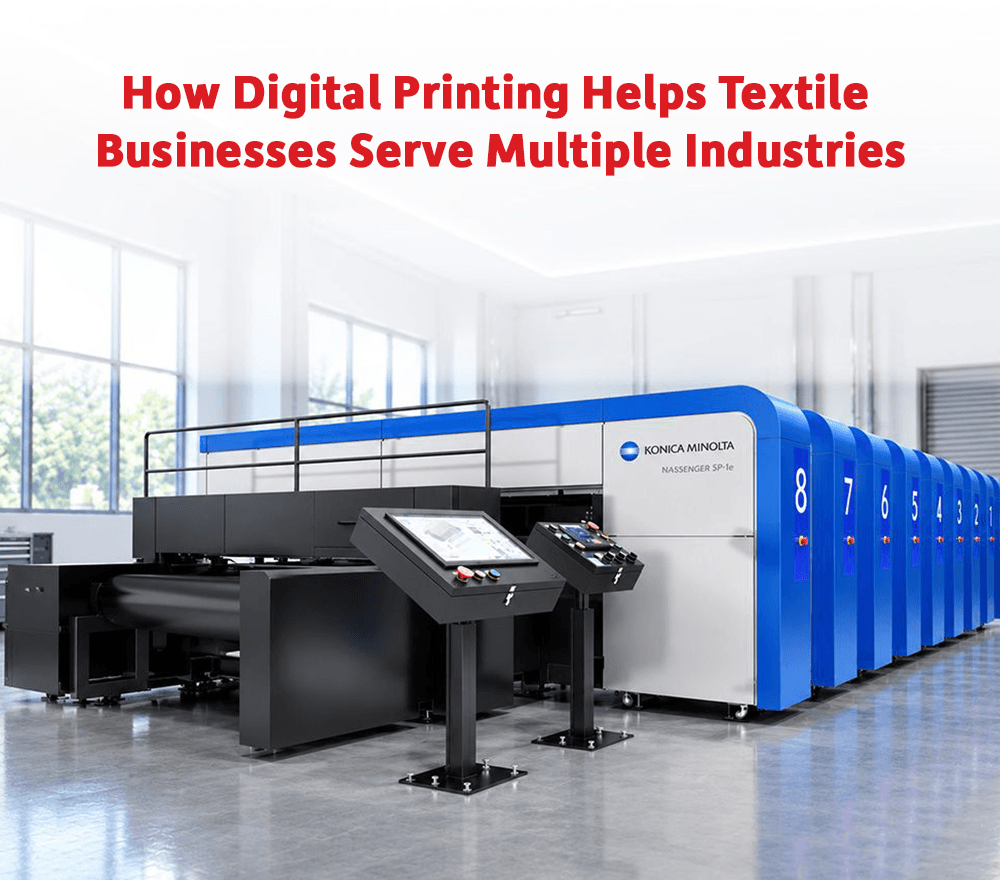
Textile Printing Is Serving More Markets Than Ever Digital textile printing is no longer limited to one type of fabric or one kind of customer. Today, textile businesses use digital printing to serve fashion, home textiles, sportswear, advertising, exports, uniforms, décor, and custom product categories. This makes digital printing for textile industries a strong growth opportunity. The same printing business can serve multiple markets if it has the right technology, fabric understanding, ink system, workflow, and production planning. For manufacturers, this creates a chance to diversify and reduce dependency on only one customer segment. Fashion Requires Speed and Design Flexibility Fashion brands need fresh prints, faster sampling, shorter runs, and frequent collection updates. Digital printing supports this by allowing manufacturers to print different designs without long setup delays. This helps brands test more ideas and respond faster to market trends. For textile printers, fashion can become a strong segment when they can maintain color consistency, fabric feel, and quick turnaround. Home Textiles Need Coordinated Collections Home textile businesses need printed fabrics for curtains, cushions, bedsheets, table linen, and décor products. Digital printing helps create coordinated collections with matching patterns and multiple colorways. This gives brands more creative freedom and helps manufacturers offer design variety across product categories. For home textile applications, fabric selection and print consistency are especially important because products are often sold as part of a visual theme. Sportswear and Advertising Need Polyester Printing Strength Sportswear, activewear, flags, banners, and soft signage often use polyester-based fabrics. Sublimation printing is commonly used in these segments because it can support vibrant color and durable transfer when the process is controlled well. For manufacturers, these industries offer opportunities in teamwear, promotional displays, event branding, fitness apparel, and performance fabrics. The right sublimation paper, ink, fabric, and transfer process are important for stable output. Export and Custom Production Need Reliability Export buyers need consistency, quality control, and timely delivery. Custom production needs flexibility and smaller batch handling. Digital printing can serve both types of demand when the production system is stable. Manufacturers who can manage different industries with proper process control can create stronger business opportunities. However, diversification should be planned carefully. Each industry has different expectations, and production should be aligned accordingly. Conclusion Digital printing for textile industries allows businesses to serve fashion, home textiles, sportswear, advertising, exports, and custom production with greater flexibility. It helps manufacturers diversify, respond faster, and build new revenue opportunities. True Colors supports this multi-industry approach through a complete digital printing ecosystem. With digital textile printing machines, Inkia by True Colors inks, True Colors Sublimation Paper, fabrics, commercial inkjet expansion, and TRUE TEAM service support, True Colors helps businesses prepare for different market applications. For textile manufacturers looking to grow across multiple industries, True Colors provides the ecosystem needed to move with flexibility while maintaining production reliability.
Why Fabric Testing Matters Before Bulk Digital Textile Printing
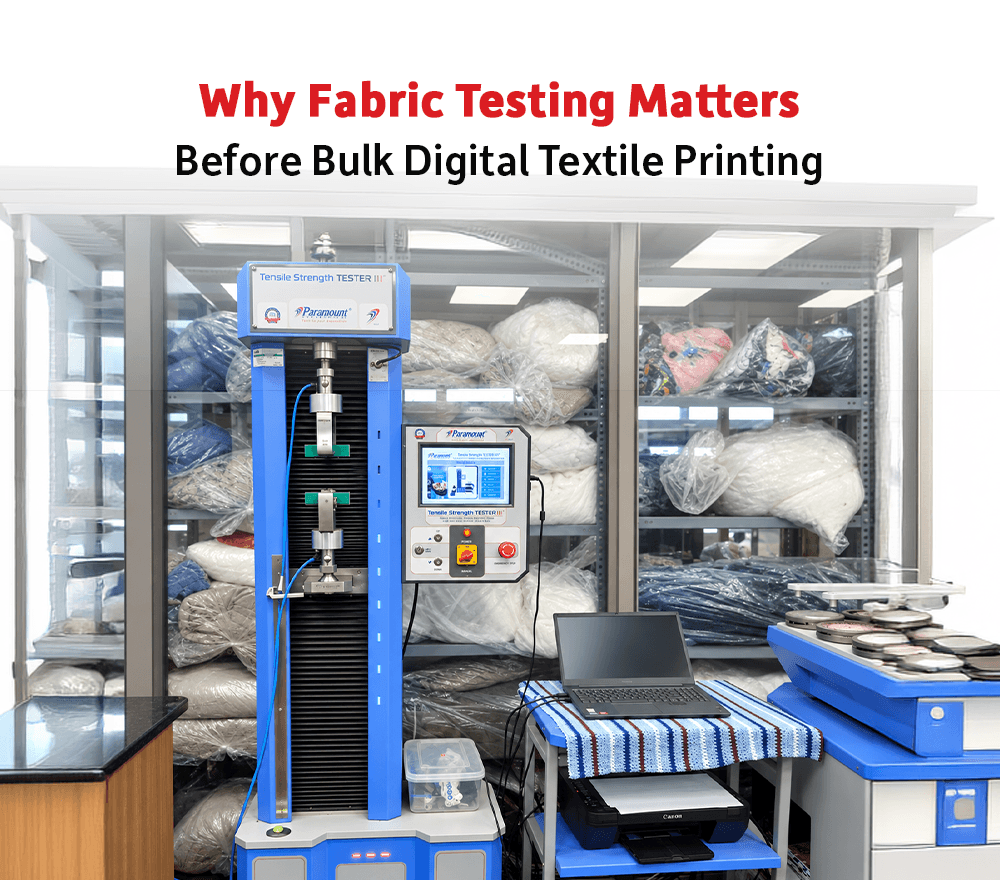
Bulk Printing Should Never Start Without Fabric Testing In digital textile printing, fabric testing is one of the most important steps before bulk production. A fabric may look suitable at first, but its behavior during printing, transfer, drying, washing, or finishing may reveal problems later. Fabric testing before digital textile printing helps manufacturers understand how a fabric will respond before large quantities are produced. Skipping this step can lead to color mismatch, print defects, shrinkage, poor fastness, uneven absorption, or rejection. For manufacturers handling serious production, fabric testing is not an extra step. It is a risk-control measure. Fabric Behavior Can Change During Printing Different fabrics respond differently to ink, heat, pressure, moisture, and finishing. A polyester fabric may behave differently during sublimation transfer based on its construction and coating. A cotton fabric may respond differently depending on pre-treatment and ink system. A blended fabric may create additional challenges because more than one fiber is involved. Testing helps identify these differences early. When manufacturers understand fabric behavior before bulk production, they can choose the right printing method and settings. Testing Helps Control Color Expectations Color output is strongly affected by fabric type. The same artwork and ink may appear different on different fabrics. Texture, whiteness, absorbency, surface finish, and fiber composition can all influence final color. Before confirming bulk printing, manufacturers should test the design on the actual fabric that will be used for production. This helps improve communication with customers and reduces the chances of shade disputes later. Shrinkage and Finishing Must Be Checked Printing is not the only stage where fabric changes. Drying, steaming, heat transfer, washing, curing, and finishing can also affect fabric size, feel, and appearance. Testing helps identify whether the fabric will shrink, distort, lose softness, or show color change after processing. This is especially important for garments, home textiles, export fabrics, and products where final measurement and feel matter. A fabric that prints well but performs poorly after finishing can still create production problems. Testing Reduces Wastage and Rework Bulk rejection is expensive. It affects fabric cost, ink cost, machine time, labor, delivery timelines, and customer trust. Fabric testing helps reduce this risk by allowing problems to be corrected before large-scale production begins. It gives manufacturers a clearer understanding of which fabric, ink, process, and settings should be used. This leads to better planning and more predictable output. Conclusion Fabric testing before digital textile printing helps manufacturers avoid color variation, shrinkage, poor fastness, wastage, and production rejection. It supports better decision-making before bulk orders begin. True Colors is strongly relevant in this area because the brand works across fabrics, digital printing machines, inks, sublimation paper, and technical support. This gives manufacturers a more complete way to evaluate fabric performance before scaling production. For businesses that want fewer surprises during bulk printing, True Colors can help connect fabric testing with the larger production ecosystem, making output more controlled and reliable.
How Commercial Inkjet Helps Businesses Manage Personalized Print Communication
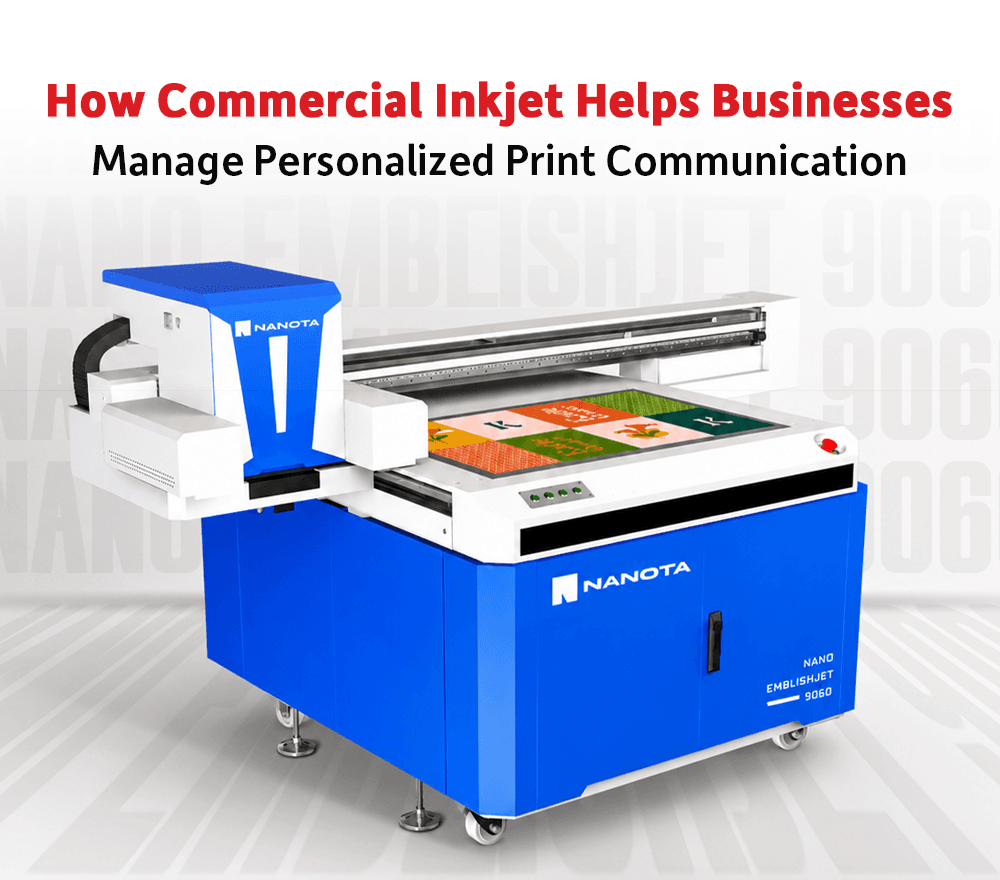
Print Communication Is Becoming More Personal Brands no longer communicate with every customer in the same way. Marketing, billing, education, publishing, finance, and service communication are becoming more targeted and data-driven. This has increased demand for personalized print communication. Commercial inkjet printing supports this shift because it allows print businesses to produce variable content at scale. Names, addresses, offers, codes, messages, images, and other details can change from one printed piece to another without stopping the production flow. For print businesses, this opens a strong opportunity in modern communication printing. Variable Data Printing Creates More Relevance Personalized print communication becomes powerful when printed material feels relevant to the recipient. A direct mail piece with a personalized offer, a statement with specific customer information, or an educational document customized for a group can create better engagement than generic communication. Commercial inkjet makes variable data printing practical because digital files can be connected with customer data and printed efficiently. This allows businesses to move beyond standard bulk printing into more targeted print solutions. Speed Helps Meet Campaign Timelines Marketing and communication campaigns often work with fixed dates. A delayed print job can affect the entire campaign. Commercial inkjet printing can help reduce turnaround time by supporting faster job changes and digital production workflows. This is useful for banks, telecom companies, retailers, publishers, educational institutions, and brands that need quick and accurate printed communication. Speed becomes more valuable when it is supported by consistency and reliable production. Short Runs Become More Practical Traditional print production may not always be suitable for small personalized batches because setup time and fixed costs can be high. Commercial inkjet makes short-run personalized printing more practical. Print businesses can produce smaller campaigns, segmented customer communication, regional content, or test campaigns without depending on large-volume commitments. This helps brands communicate more intelligently and helps printers offer more flexible services. Quality and Data Accuracy Must Work Together Personalized print communication requires both print quality and data accuracy. Even if the print looks good, incorrect personalization can damage customer trust. Print businesses must manage files, data, workflow, machine performance, and quality checks carefully. A successful personalized print job depends on technology as well as process discipline. Conclusion Personalized print communication is becoming more important as brands move toward targeted and customer-specific messaging. Commercial inkjet printing supports this need through variable data, faster production, short runs, and flexible campaign execution. True Colors Commercial Inkjet Printing division can help print businesses explore this opportunity with a solutions-focused approach. With digital printing experience and understanding of production reliability, True Colors supports businesses that want to move into modern commercial print applications. For printers looking to expand beyond standard jobs, True Colors can help build the foundation for personalized, flexible, and future-ready print communication.